Opening, June 9, 2026, 6 pm
Exhibition, June 10 – July 31, 2026
Tap, tap-tap, tap-tap, tap, tap, tap-tap… Only the unique fusion of stomping, clapping, and singing brings forth the typical rhythms of flamenco. This vocal-dance music, whose roots in southern Europe reach back throughout centuries and have branched out into a whole network of musical subgenres, is performed with instruments such as castanets, tambourines, and guitar. The lyrics often deal with unrequited love, jealousy, grief, and solitude. Feelings of oppression, desperation, animosity, and resilience in the face of adversity infuse many of the songs. Their quavering, impelling sound is owed to the interplay of rhythmic calls and responses. Improvisation plays a key role in this art form that is still celebrated in Andalusia as a folk tradition but in the meanwhile has also found its way into new musical genres and global pop culture. Thanks to the influences of Romani culture, Moorish-Arabic musical traditions, Sephardic Jewish heritage, and Andalusian-Spanish folk music, the historical legacy of cultural diversity thrives in flamenco to this day.
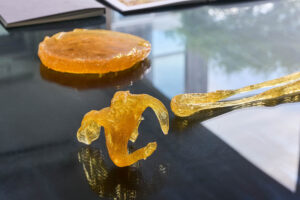
The term “Palos” refers to the various tempo variations of flamenco in 12/8, 4/4, or 3/4 time. In Spanish, “palo” means “stick,” “staff,” “twig,” or simply “wood”—words that allude to a tree. However, in this case, it is not about the sprawling roots or branches but rather the cross-section of the trunk with its growth rings, knotholes, and the scars of time inscribed into the wood. As such, each palo carries its own story, atmosphere, and rhythmic idiosyncrasy. It is this analogy between folkloric structures cultivated by humans over the centuries and natural growth processes that environmental scientist and artist Paula Bruna Pérez investigated for her exhibition Jaleo Forestal [Forest Fuss] at Kunstraum Lakeside.
Paula Bruna Pérez’s artistic practice explores ecological topics and the interdependencies of humans and nature to dissolve the borders between anthropocentric culture and biological processes. In installations, videos, and sculptures that materialize from her artistic fieldwork—often in the forest—the artist raises poignant questions about the artificial dividing lines between the human, animal, and plant kingdoms and the future role of humans within the ecosystem. Against this backdrop, Jaleo Forestal exemplifies that a true ecological awareness can only emerge if we humans acknowledge the existence of other forms of temporality, other spatial scales, and other protagonists.
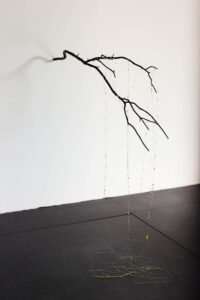
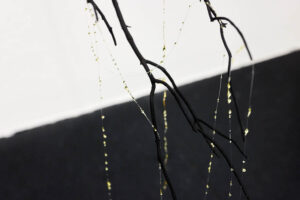
In her works for Kunstraum Lakeside, Bruna Pérez creates fictional scenarios that transcend the paradigm of the Anthropocene—the current geological epoch dominated by human beings. Abandoning our hegemony accesses a space for para-human relations, in which plants and other life forms are elevated as equal actors in the ecosystem. The artist investigates how our cultural narratives about nature and the environment influence our perception of non-human entities and calls for a new perspective on ecological and geological processes. By charting the political and philosophical dimensions of the Anthropocene, she simultaneously points out the pressing need to change the prevailing, human-centric view of nature. For it is no longer just humans and their technology that determine the fate of the Earth, rather a multitude of non-human agents collectively shape the planet. According to the artist, this understanding is pivotal for tackling ecological issues from a transdisciplinary and collaborative point of view and stimulate an alternative, sustainable aesthetic of nature.
But let’s return back to the clacking of castanets in southern Spain: tap, tap-tap, tap-tap, tap, tap, tap-tap… In Jaleo Forestal, Paula Bruna Pérez draws parallels between the evolution of this time-honored art form and a tree ring—like a diagram with concentric circles—that tells of the environmental influences on the plant’s growth. The work starts with air bubbles: emboli that form in the vascular system of trees when the surrounding environment was affected by prolonged drought, thereby blocking the indispensable transport of water through the plant. “Plant embolisms give off an ultrasonic sound,” says the artist. “Translated into the human hearing range, it is reminiscent of the sporadic clattering of castanets. Or a wooden voice, a flamenco cry hurled toward the sun. In a way, the forest becomes a choir singing its own state of vitality.” Musical manifestations that originate in nature, which Paula Bruna Pérez connects to Spain’s cultural heritage and, across Europe and beyond, to the ecological issues of our age.
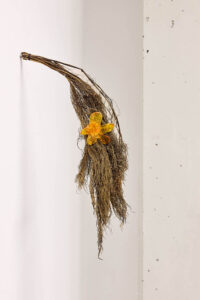
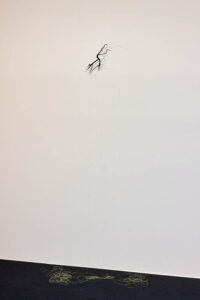
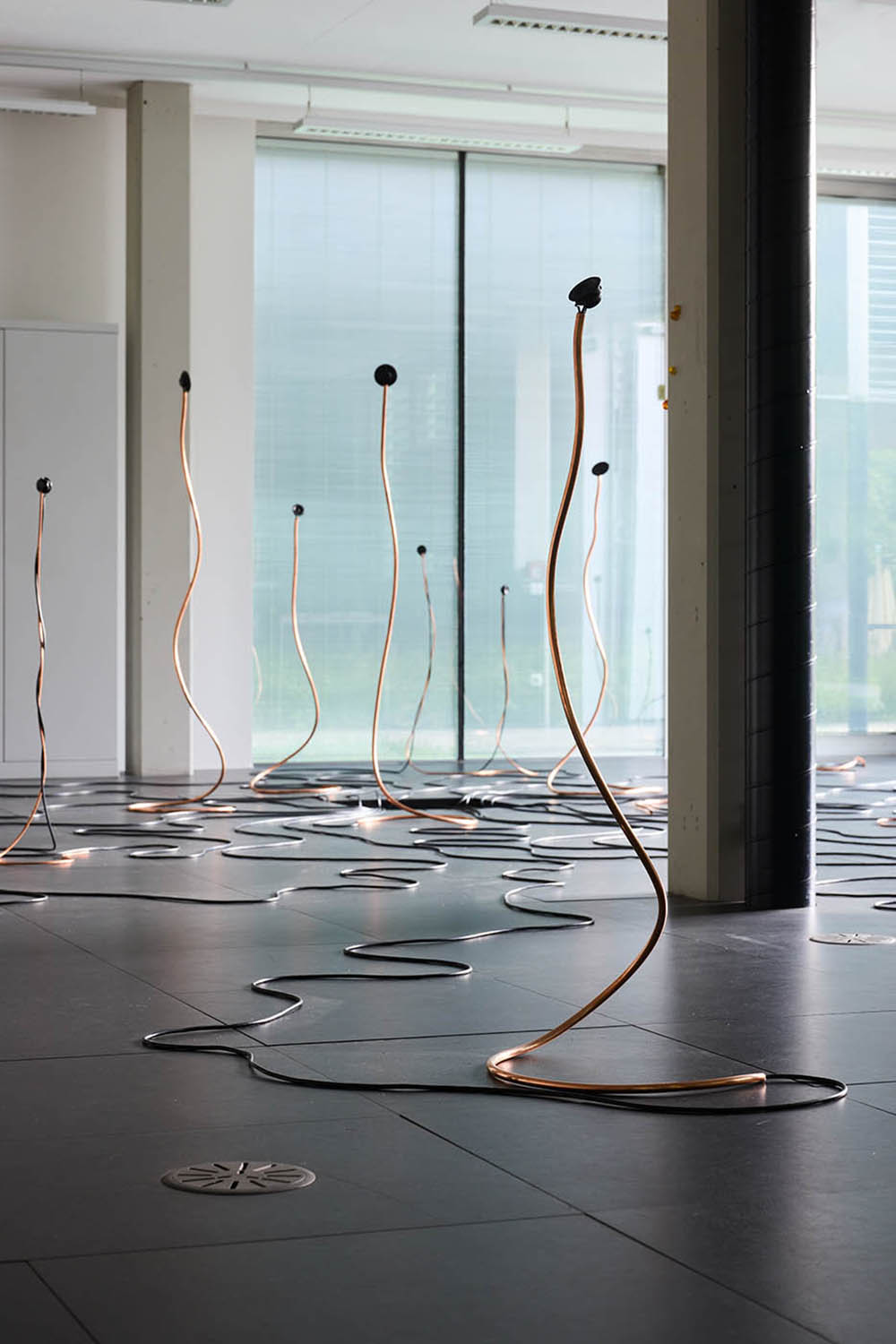
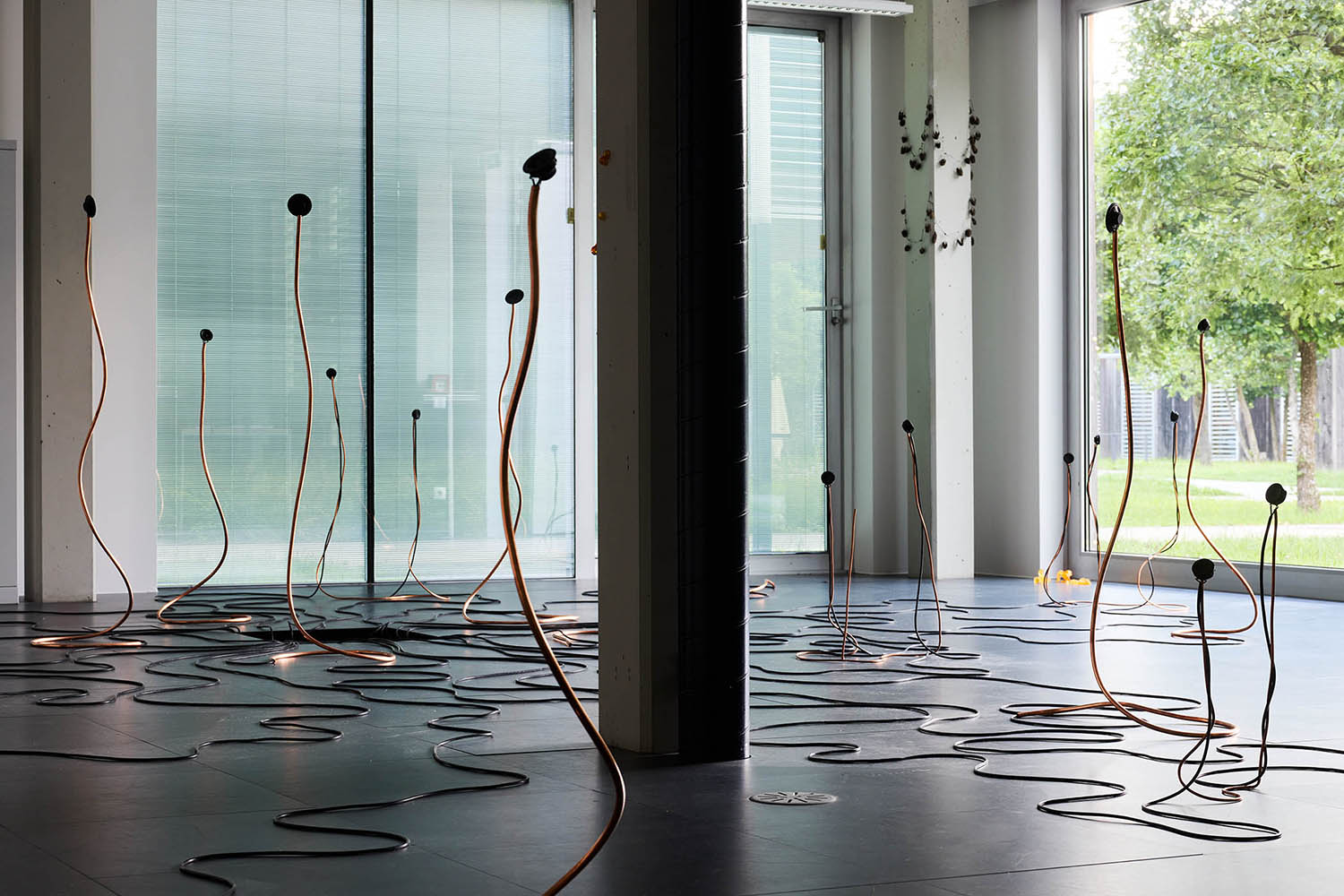
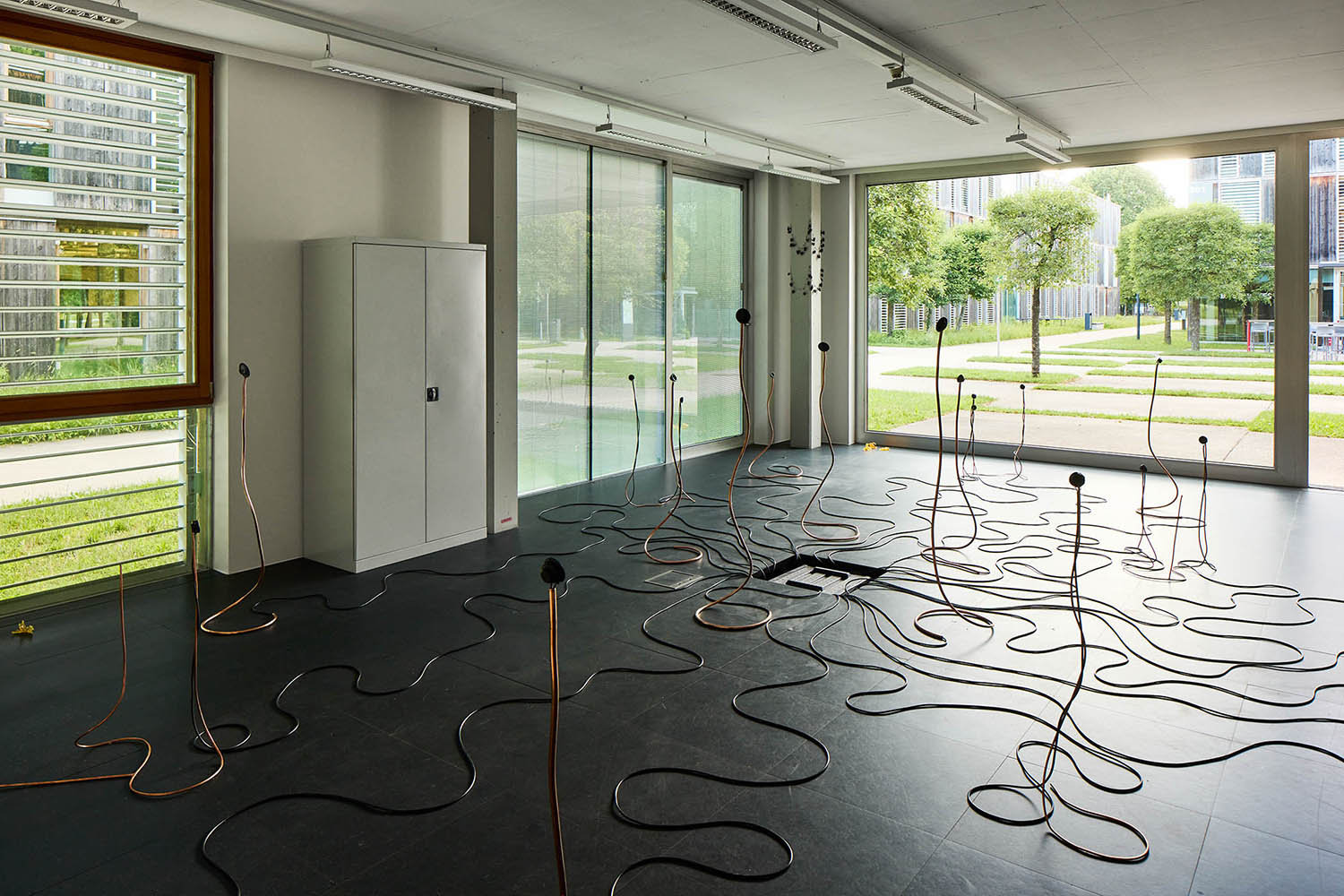
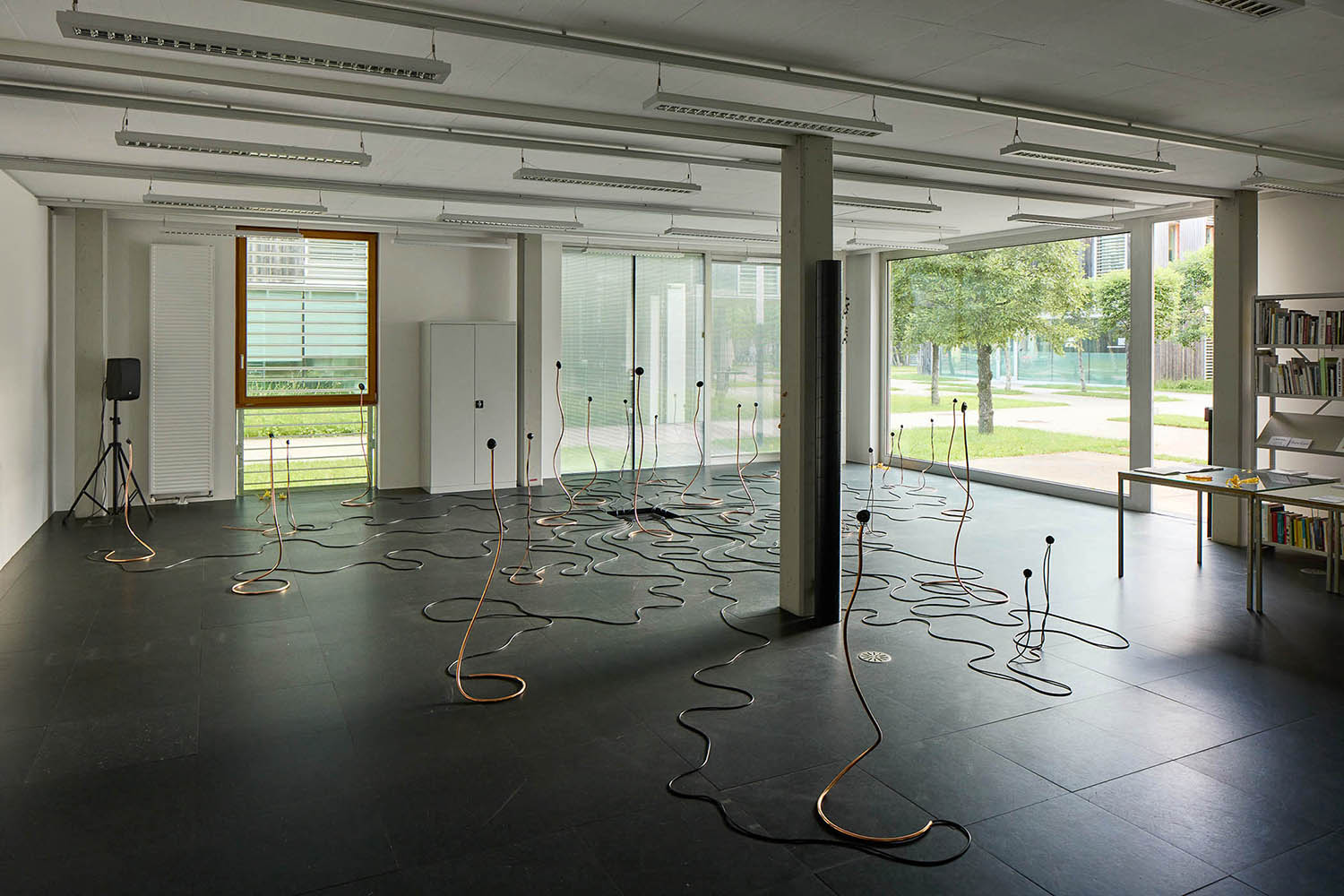
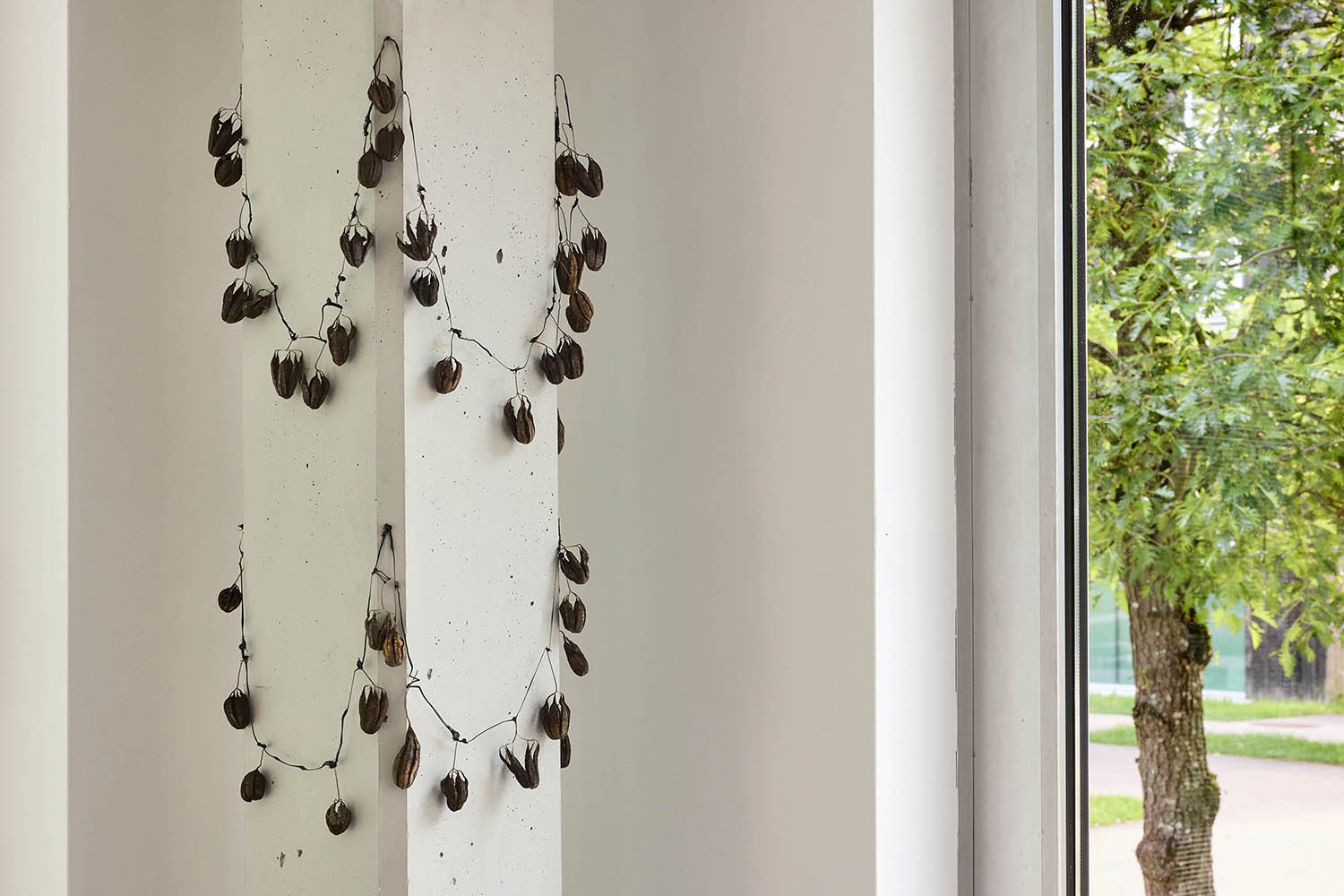
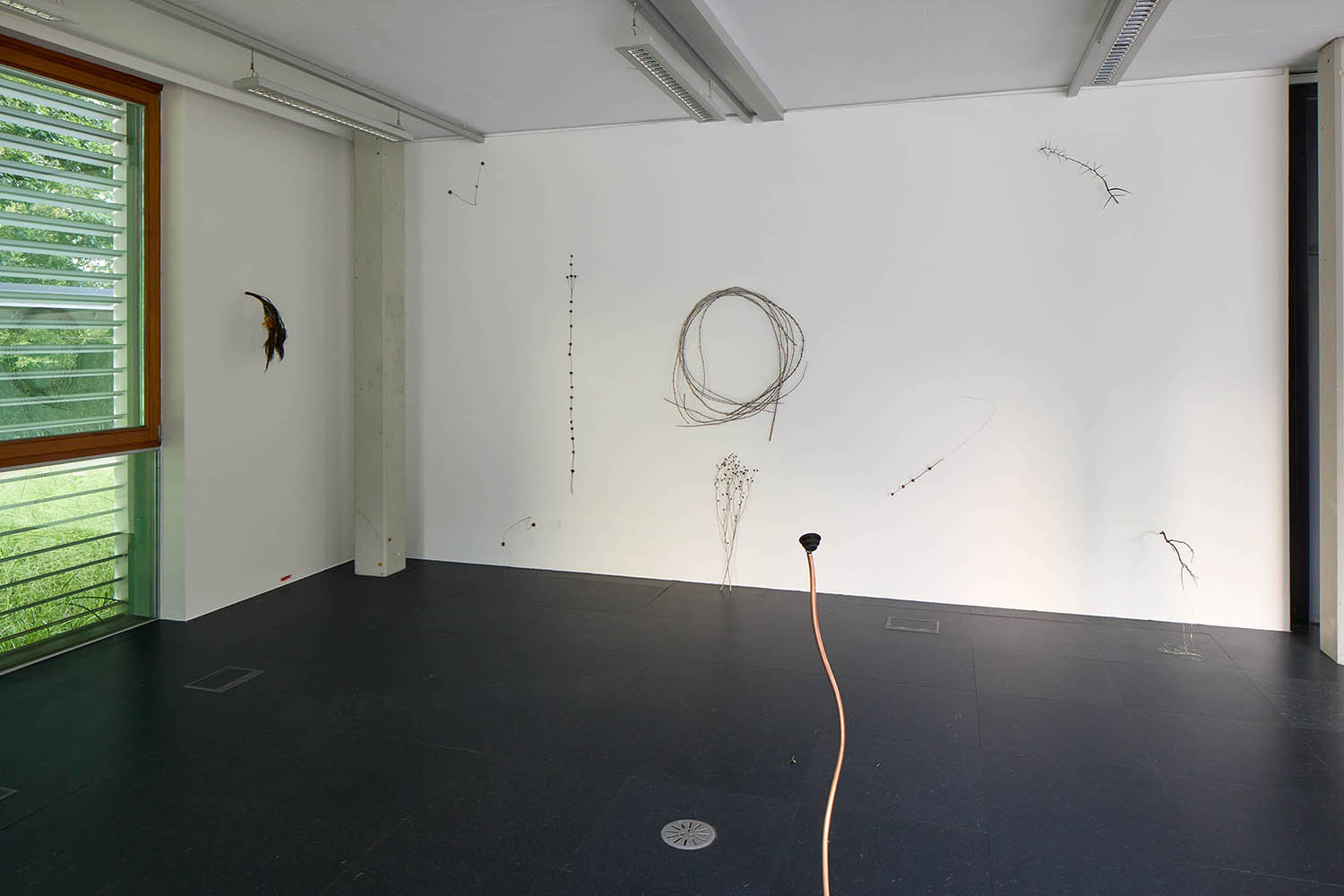
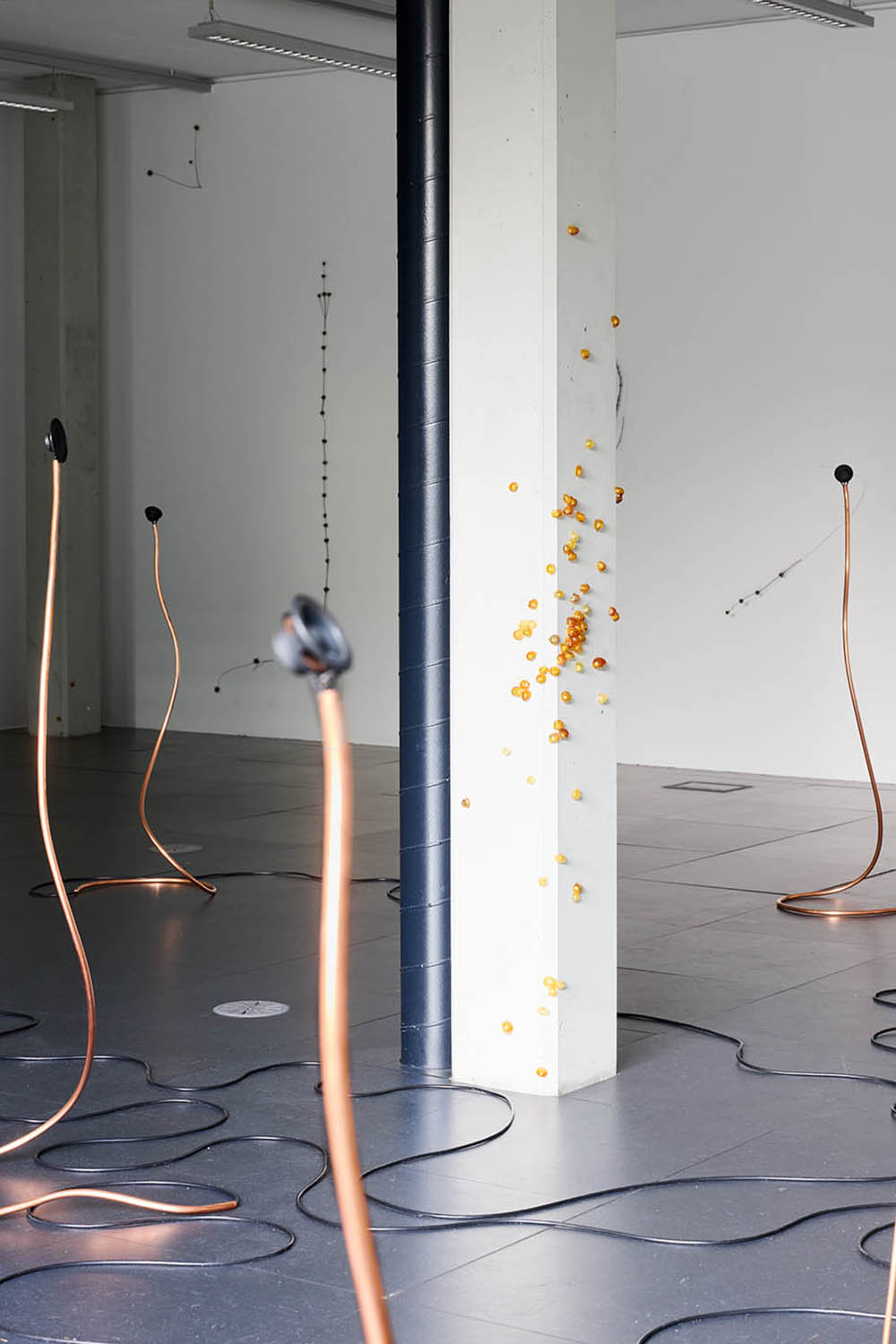
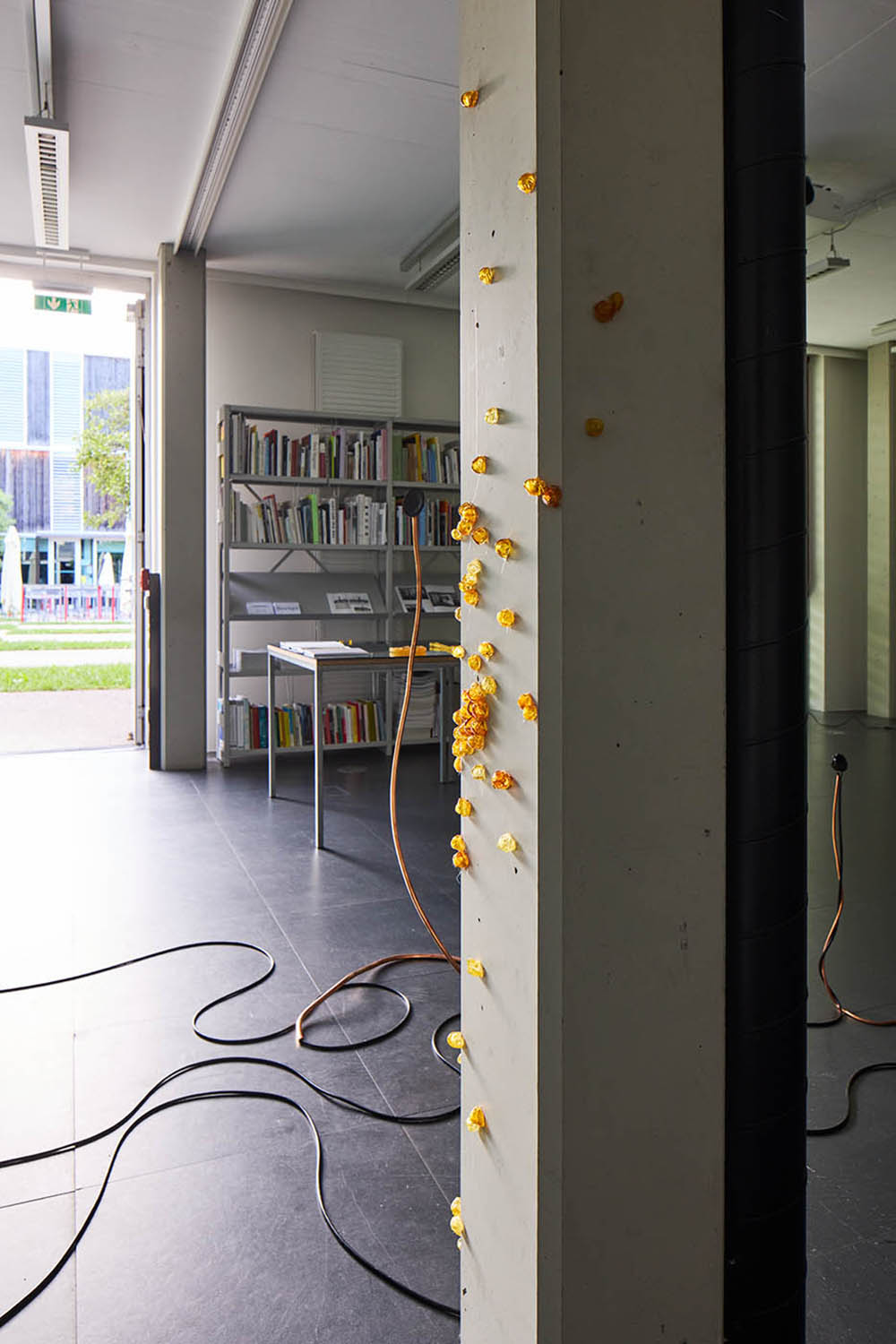
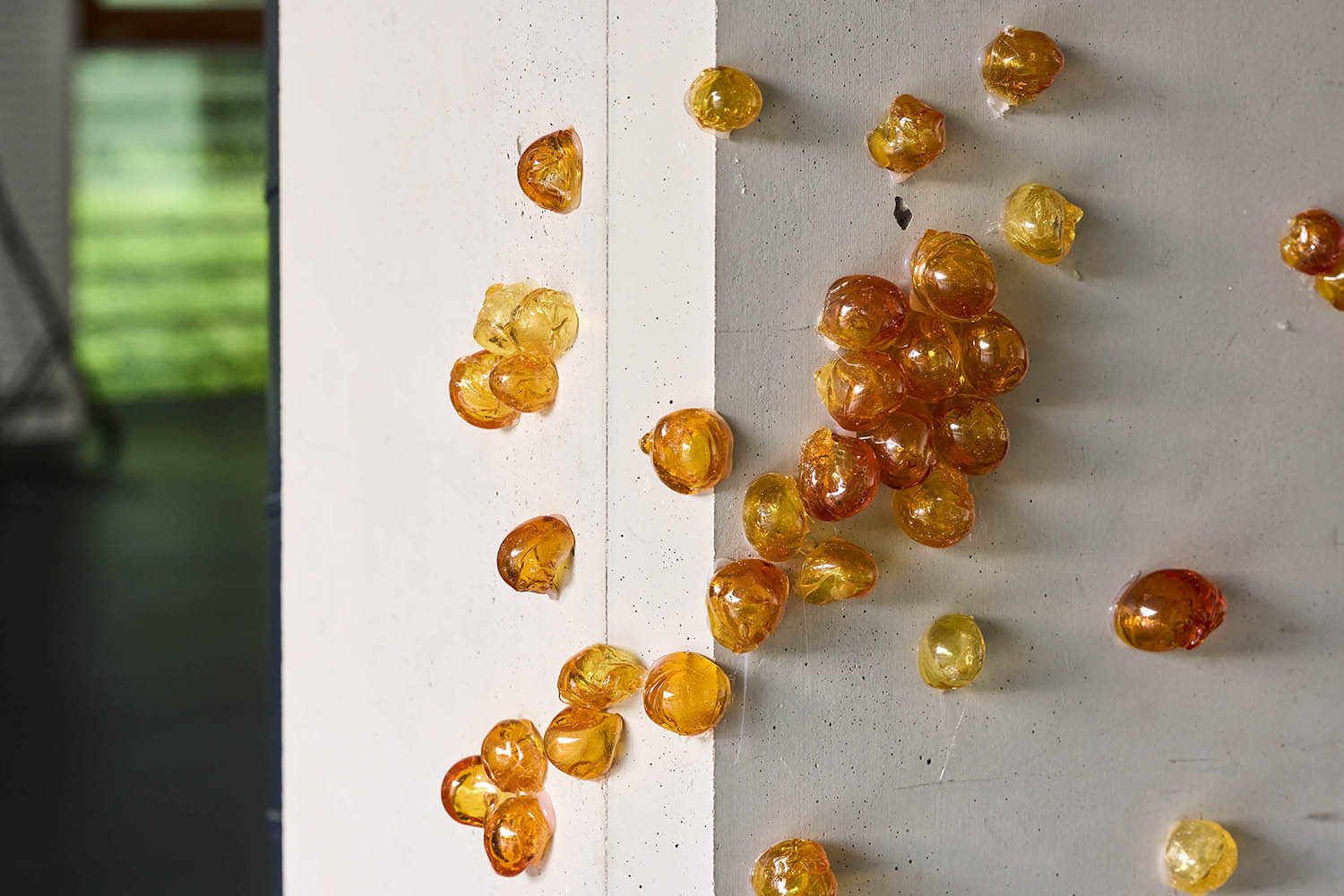
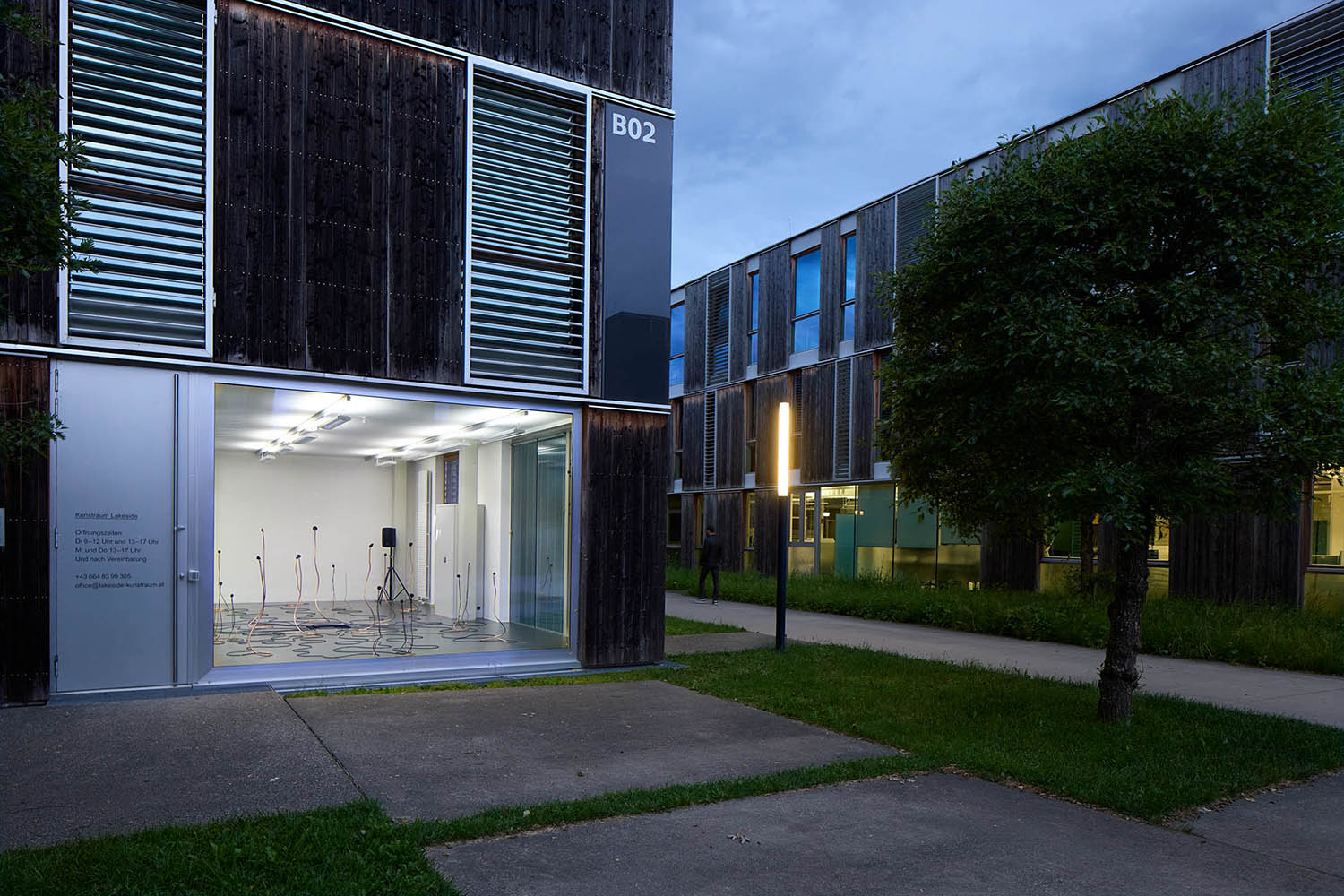
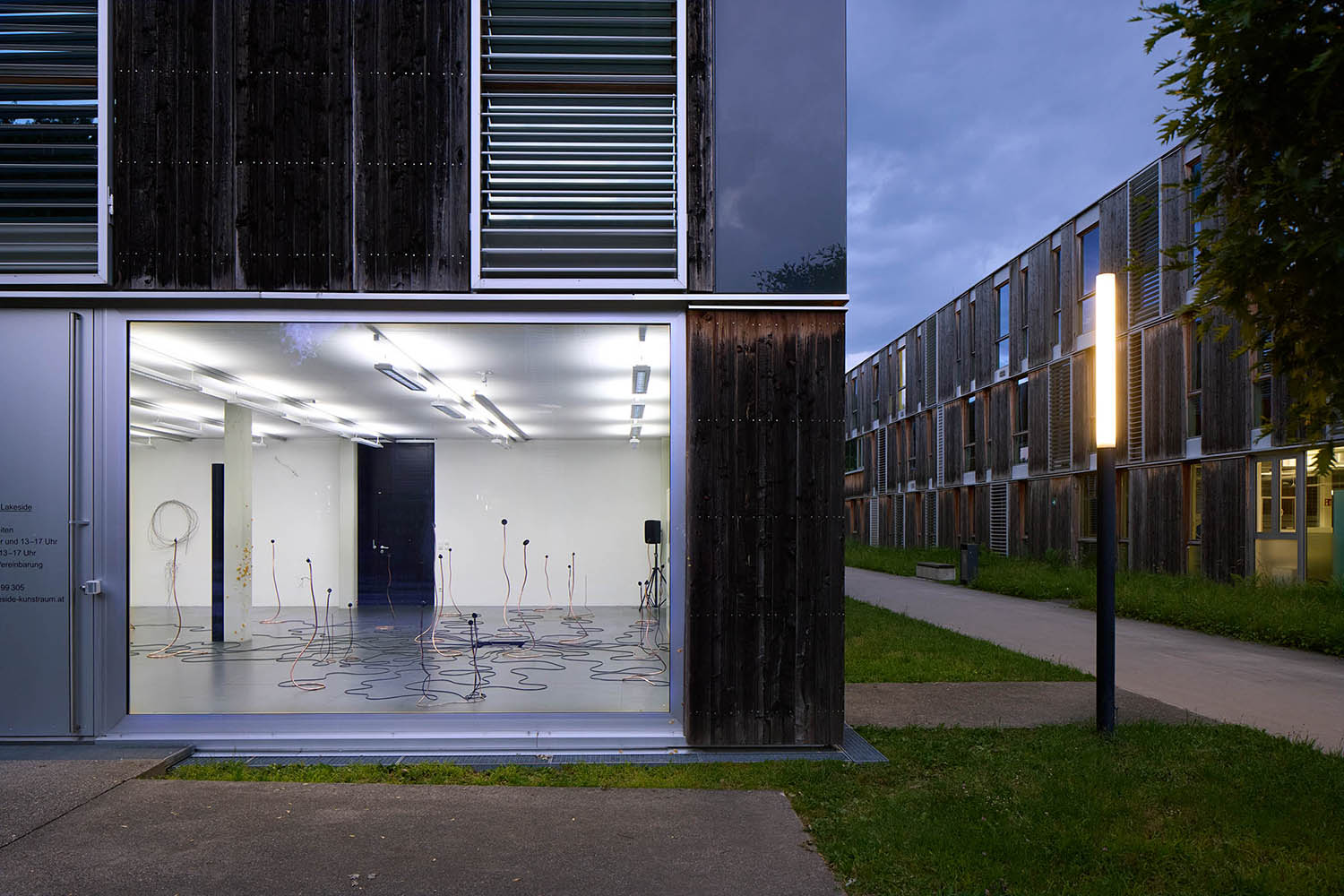
Alongside a sound piece transporting sounds otherwise inaudible to the human ear, the exhibition space hosts an installation whose form is inspired by Paula Bruna Pérez’s artistic research in a small forest in Mesa de Mazmúllar near Málaga in southern Spain. Small translucent objects made of tree resin—flowers, seed pods, and buds—are combined with dried findings from the forest. Thin branches, with their offshoots and knots, can be read like a musical notation: tap, tap-tap, tap-tap, tap, tap, tap-tap… In juxtaposition, delicate sculptures forged out of bent copper tubing, citing both young plant shoots and the hydraulic architecture of trees, form a circle. With their human-like dimensions, these elements scattered in the space seem to have convened for a collective ritual at the Kunstraum. They celebrate, they dance, they honor flamenco. Jaleo Forestal is an abstraction of a forest whose inhabitants sing their sensations in a choir. Each element emanates its own sound and thereby recounts its own story of pain and the struggle for survival in an inhospitable when not hostile environment. Layers and polyphony create a calculated disarray of sound and movement. In the cultural and especially musical tradition of flamenco, “jaleo” has an explicitly positive connotation: the shouts, cheers, and rhythmic interjections—be it clapping or calls from the audience—that drive and intensify the performance: “¡Olé!”, “¡Vamos!”
Paula Bruna Pérez conceives the forest as a “Panda [collective band] de Verdiales.” The Verdiales (originating from the olive-growing region of Los Verdiales) are a traditional fandango from the province of Málaga with historical ties to sun cults. The musicians and dancers perform outdoors, following a rhythm that might induce a trance-like state. Its members, the “Fiesteros,” gather in a circle to celebrate their flamenco. “In its own way, the forest, too, aligns itself with the sun as the source of life and transience,” says the artist on this entanglement with biological processes. “It grows, withers, and renews itself in the light that both nourishes and constrains it. In their ‘Song of the Forest,’ the Fiesteros give thanks and lament; they celebrate life and look forward to what is to come.” Together, they form a forest community that celebrates life in the rhythm of the sun and the seasons.
Folklore, compounded from the words “folk” (people) and “lore” (narrative), refers to more than just the traditions of a human collective; it conjures narrative itself as a social and at the same time open-ended process. The focus shifts. Not just on self-contained contents but the very questions of how stories come into being, who carries them (further), and which perspectives and habitats become visible in the process. Tap, tap-tap, tap-tap, tap, tap, tap-tap… This also expressly includes non-human protagonists. The forest, the wood, the flow of water within plants, or the rhythmic processes of biological charges and discharges. These entities do not “narrate” in an anthropomorphic sense; they manifest as material and acoustic traces that can only be accessed through an expanded understanding of perception and interpretation. In this light, folklore unfolds as a meshwork of narrative modes in which human and non-human voices collectively generate meaning. As such, it reminds us: Who actually determines the social, ecological, and technological scripts that shape our society today?
Paula Bruna Pérez (b. 1978 in Spain) lives and works in Barcelona.
www.paulabruna.com
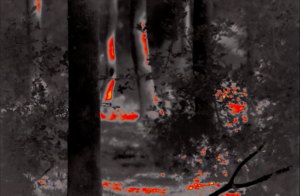
Scientific collaborations:
Institute of Botany, BOKU University (Sabine Rosner, Peter Hietz)
Department of Botany, University of Innsbruck (Stefan Mayr, Barbara Beikircher, Adriano Losso)
CREAF-UAB (Jordi Martínez Vilalta, Ivette Serral Montoro)
Technical collaborations:
Axolot (sound design)
Carlos Vásques Méndez (sound technician)
Carmen Romero Valverde (Verdiales singer)
Daniel Vilalta Lozano (Verdiales musician)
Ana García Villanueva (photography)
María Peinado (graphic design)
This work was developed as part of the Tabacalera Residency Programme (Promoción del Arte, Ministry of Culture of Spain), funded by the European Union – NextGenerationEU.


With the kind support of: