Curated by Huda Takriti
Film screening and talk
May 29, 2026, 6 pm
Christian Ghazi, Hundred Faces for a Single Day | 1972, 63 min
“I don’t care when or how I will die, as long as there are armed men who will continue the march, shaking the earth with their uproar so that the world won’t sleep heavily over the bodies of the laborious, miserable and oppressed men.”
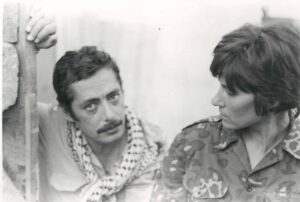
Christian Ghazi’s avant-garde masterpiece Hundred Faces for a Single Day ends with these incendiary words. With this fiction-documentary hybrid film, the Lebanese director and activist forged a fierce critique of bourgeois society in Beirut during the country’s so-called “Golden Age,” which would end in 1975 with the outbreak of civil war. The film is an essay on labor, class, social relations, and resistance. Ghazi considered it his “manifesto on cinema,” a powerful and polemical work that reaches back to the early decades of film experimentation while pioneering radical techniques in multivalent sound, disjunctive montage, and an embedded perspectives on direct action.
Born 1934 in Turkey to a Lebanese father and a French mother, Christian Ghazi grew up in Syria then settled with his family in Lebanon in 1939, where Christian studied, worked, lived, and ultimately witnessed the destruction of his work—the burning of all his films. His first twelve documentaries commissioned by the Ministry of Tourism in 1964 were all banned and burned for being subversive. The filmmaker had an abundant production of 29 films, mostly about the Palestinian resistance but also about the Lebanese war, the misery and refugees. The only remaining work from this time is Hundred Faces for a Single Day.
Huda Takriti (b. 1990 in Syria) lives and works in Vienna.
www.hudatakriti.com