Opening, November 25, 2025, 6 pm
Exhibition, November 26, 2025 – January 16, 2026
What if. What if the petro-elite of the United Arab Emirates were so absurdly rich that they flaunted their financial power not only by building artificial archipelagos off Dubai but also through the provenance of the ice cubes in their cocktails? What if there was a company that harvested blocks of glacier ice in Greenland to market it as the “most expensive ice in the world”? Ice that is over 100,000 years old and thus free of modern contaminants. Ice, according to the marketing slogan, that is ideally suited for cocktails when formed into small cubes or pearls. What if the company Arctic Ice not only brought this ice from the polar region to the desert but also found testimonials to promote this product? For example, top chef Alain Moreau, who is quoted as saying: “In over two decades of crafting haute cuisine, I have never encountered an ingredient as poetic as Arctic Ice. Its texture, its silence in the glass. It elevates a cocktail to an experience, a dish to a memory. This is not water. This is time, sculpted in ice.”*
The company Arctic Ice does exist. And yes, there are people who have lent their names to market this product, and there are employees taking care that the company makes profit. For example, by forging Arctic Ice’s vision statement, which states that the company is eager to meet the needs of its exclusive clientele, while also striving to protect the environment, support local communities, and promote social justice.** Alongside these copywriters, there are countless other people who are dedicated to marketing and selling this and similar items, including photographers who skillfully stage the finished product.
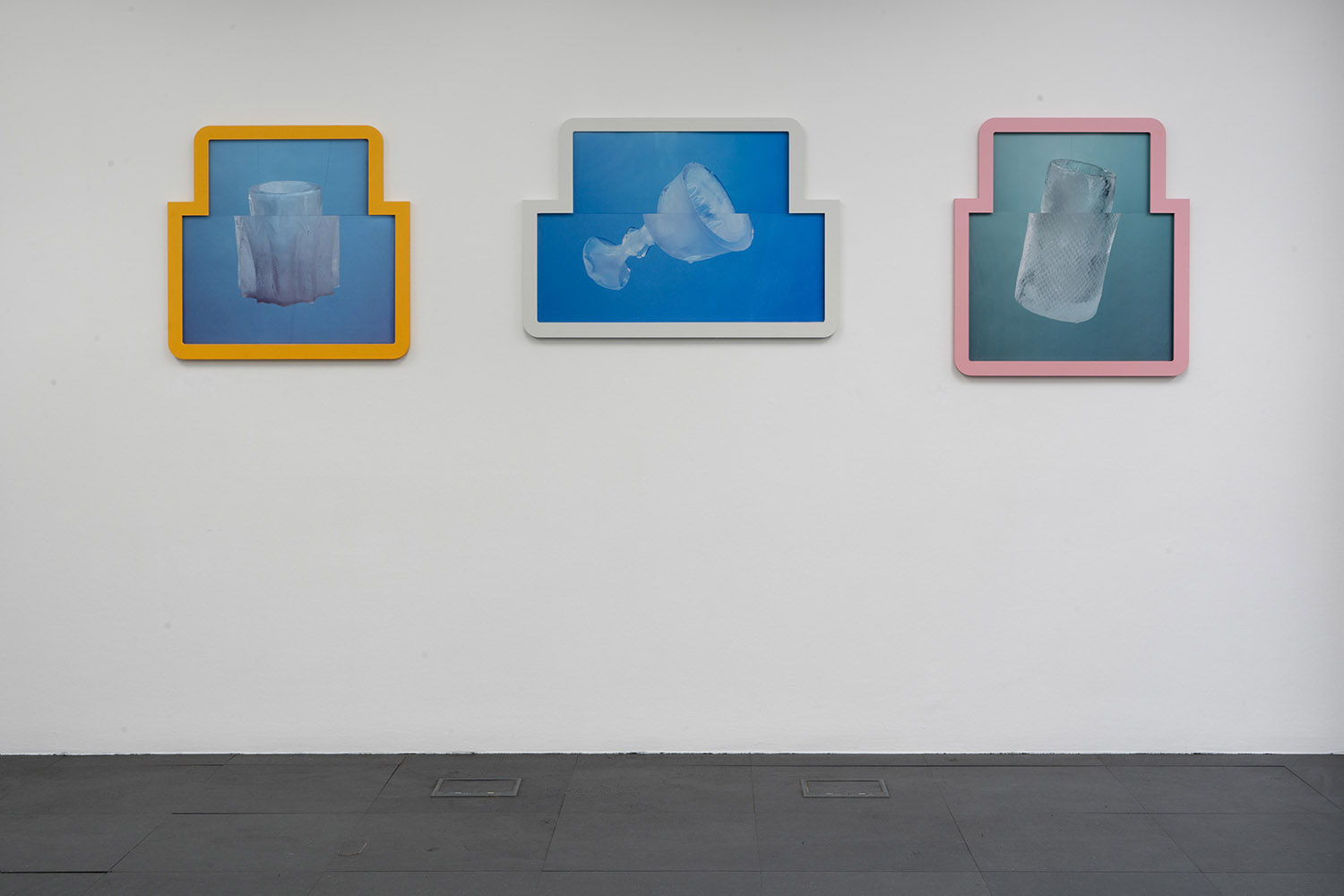
Arctic Ice is the starting point for Mara Novak’s photo series. She stages ice too, meticulously illuminating and photographing it. What’s more, she devotes her time to testing materials, making cocktail glasses out of ice, exposing them in the darkroom. But for her, it’s not about selling a product or selling her integrity. Rather, in a free experimental setup, she explores how the materials, processes, and conventions of photography intersect to ultimately conjure the image of a complex socio-media assemblage.
Etymologically, “photography” originates from “drawing with light.” To create a lasting image from something as immaterial as light requires chemical substances, optical procedures, and storage media. Furthermore, photography often requires complex apparatuses. The demand for such imagery, in turn, is rooted in a variety of socio-economic reasons. Mara Novak employs photographic processes to produce images that capture the conditions of their making, their underlying imperatives. Sometimes, quite literally: for example, when the artist uses techniques from the early days of photography, such as pinhole cameras, to photograph her studio or exhibition spaces and translate them into photographic works. This media-reflexive approach is also evident in Novak’s appropriation of commercial stock photos, which she integrates into real contexts to bring about breaks in perception. Other works explore the boundaries between (digital) images and (social) spaces. In her latest series, the artist applies analog product photography techniques to play with both the fetishization of goods and the aura of analog artistic photography.
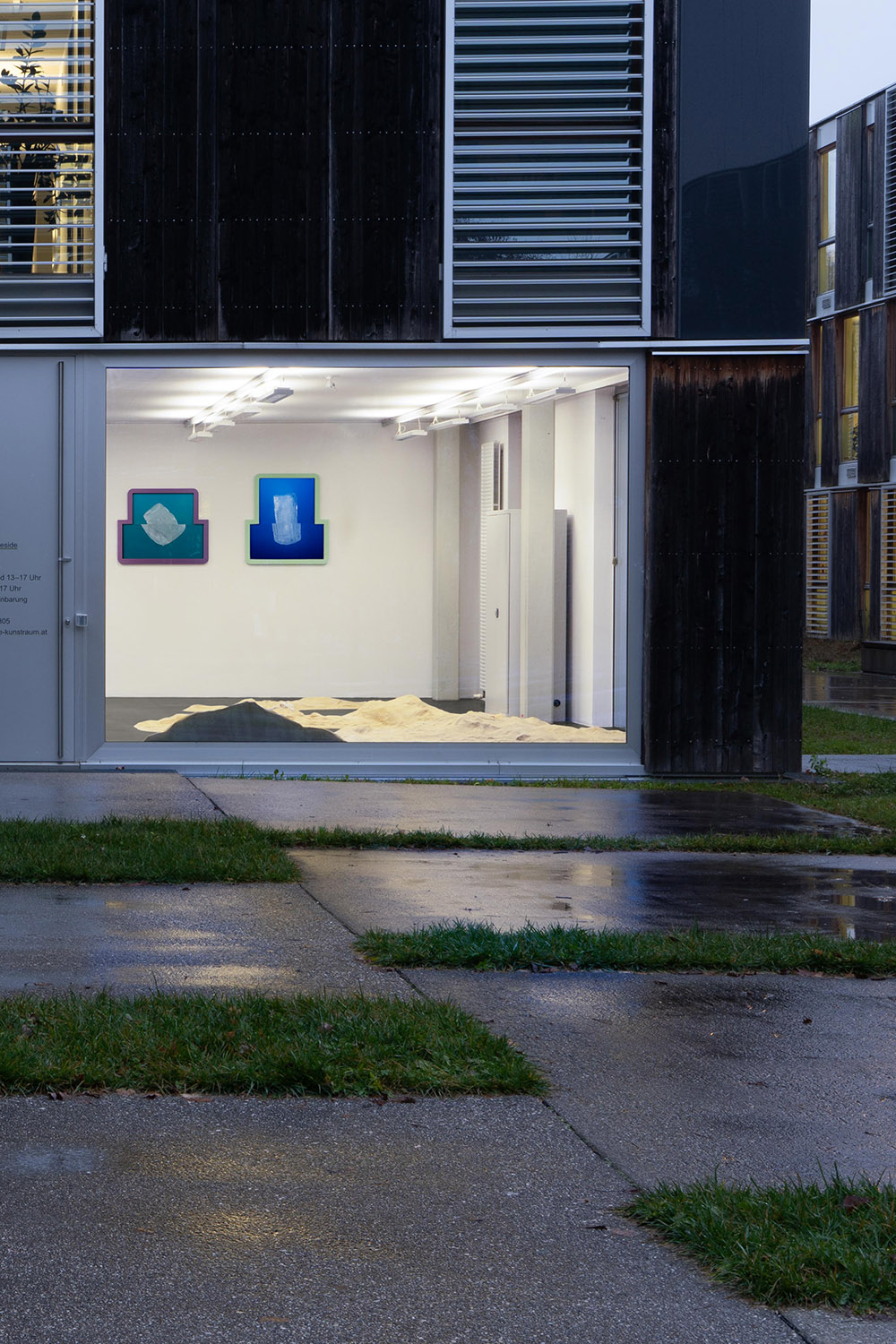
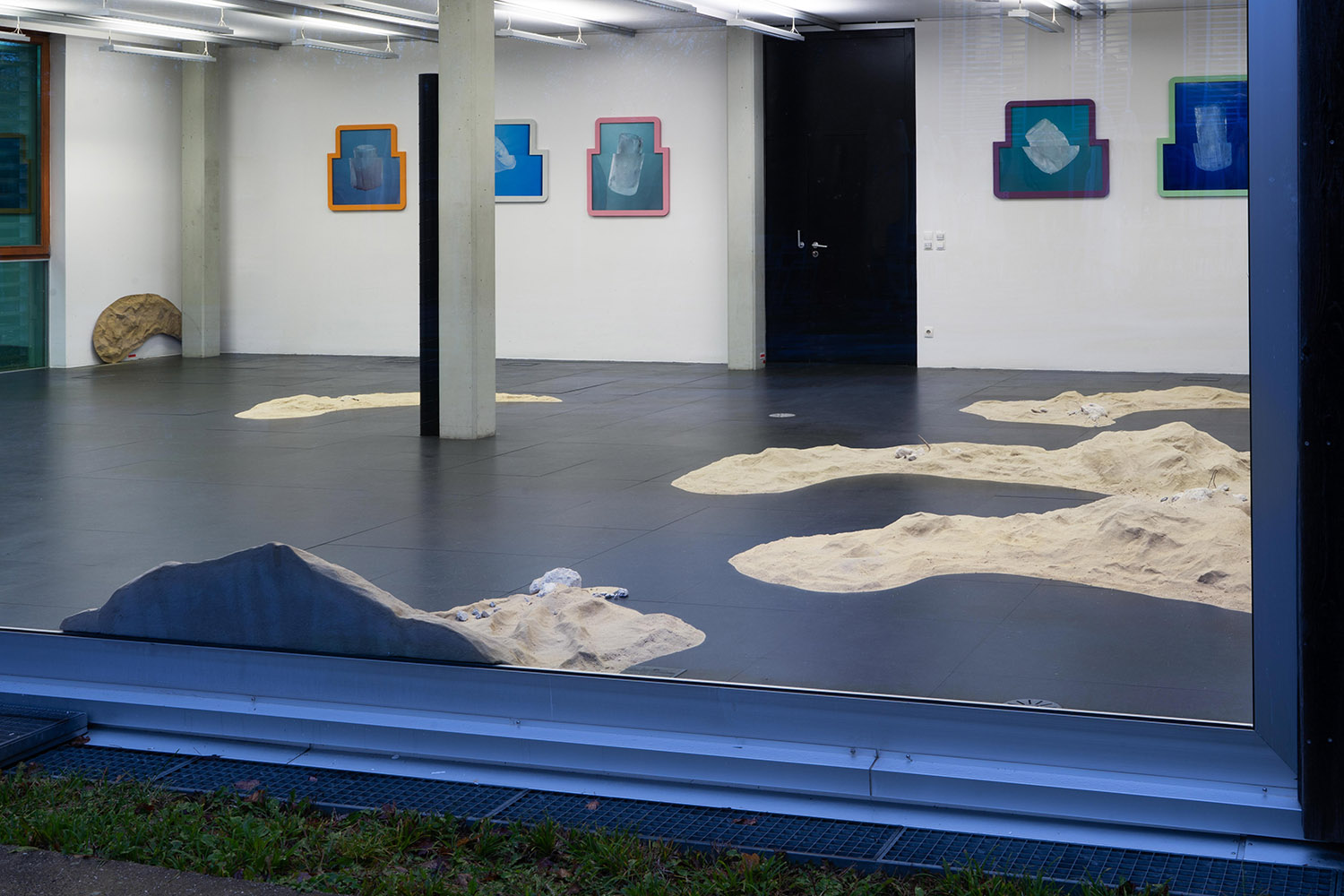
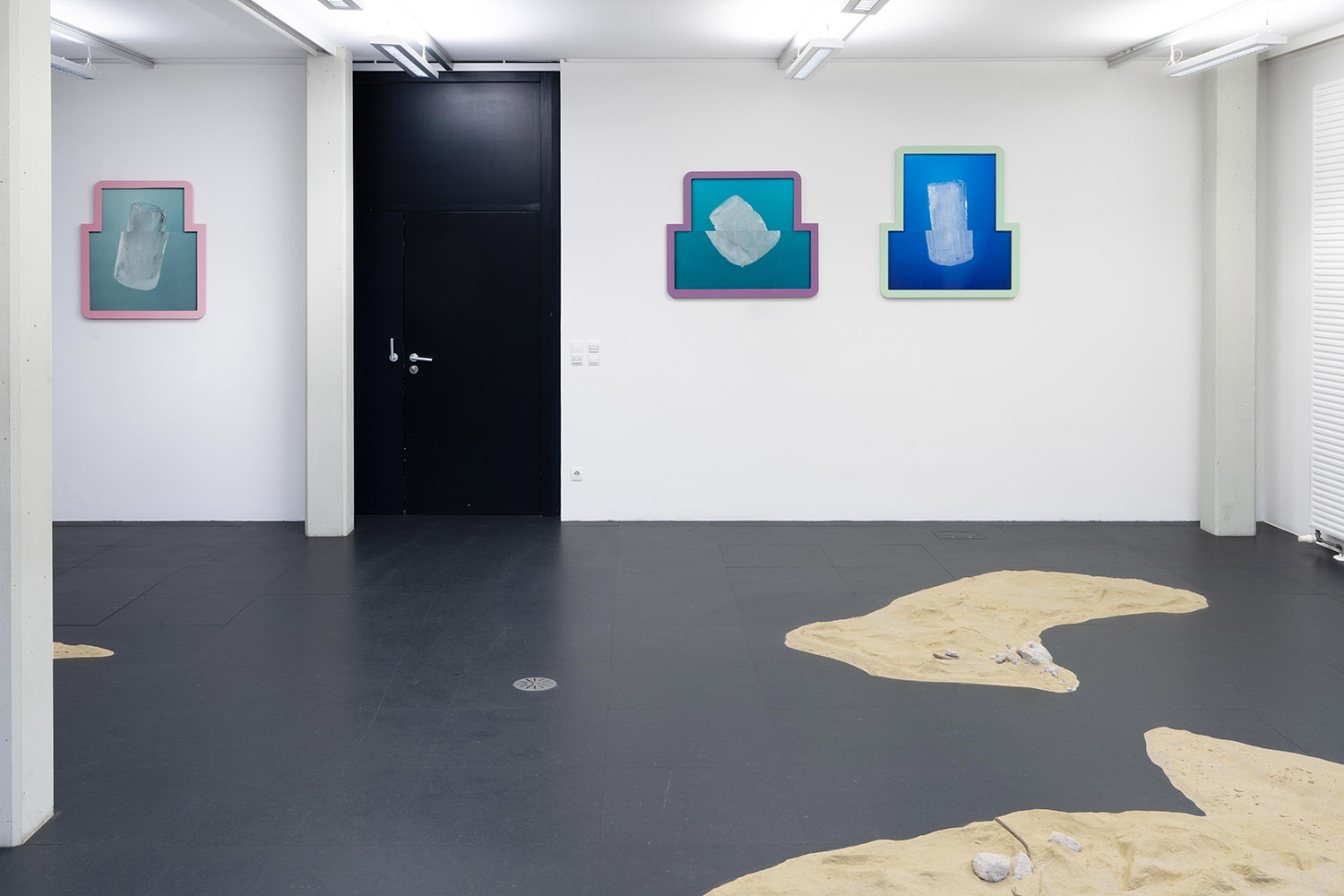
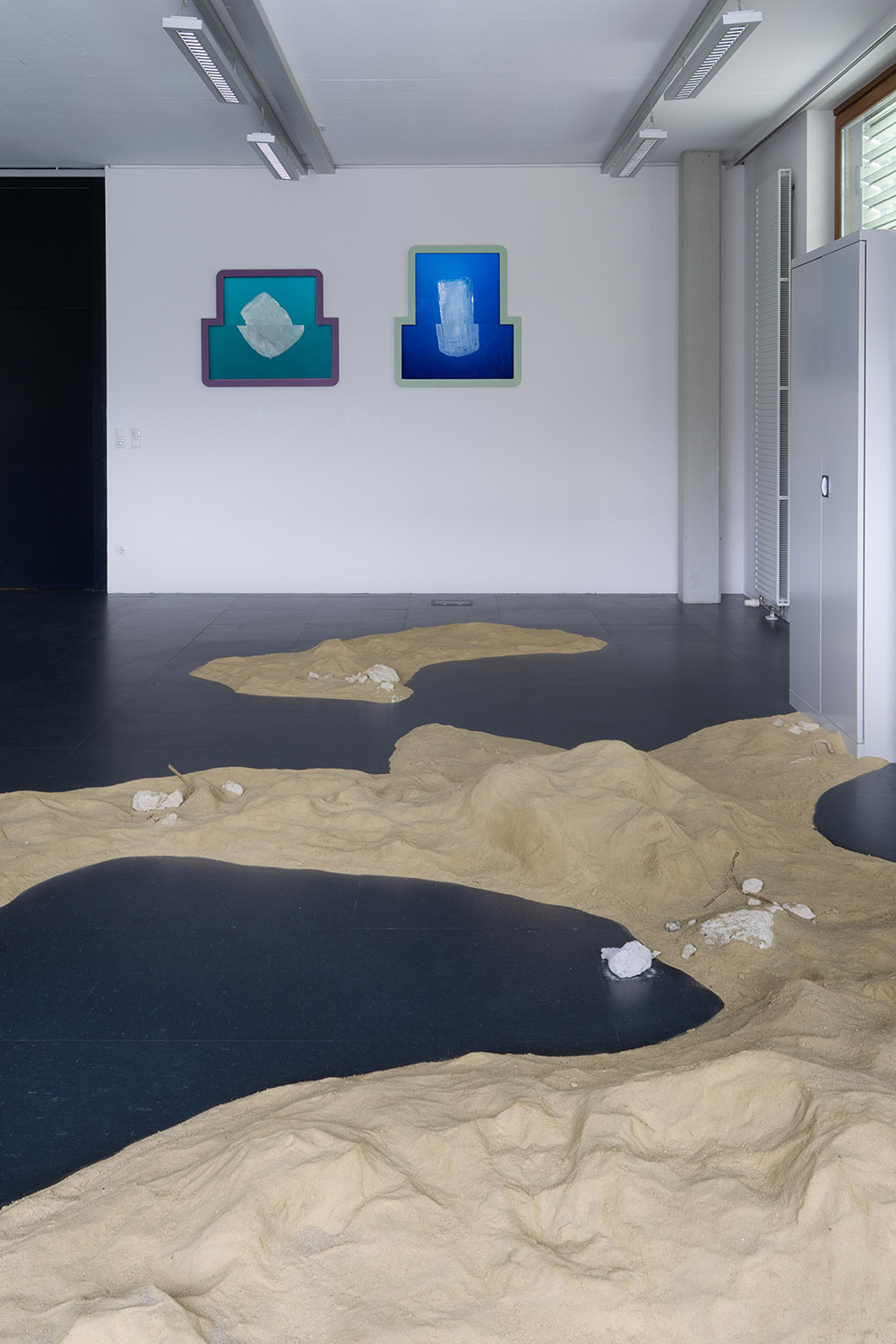
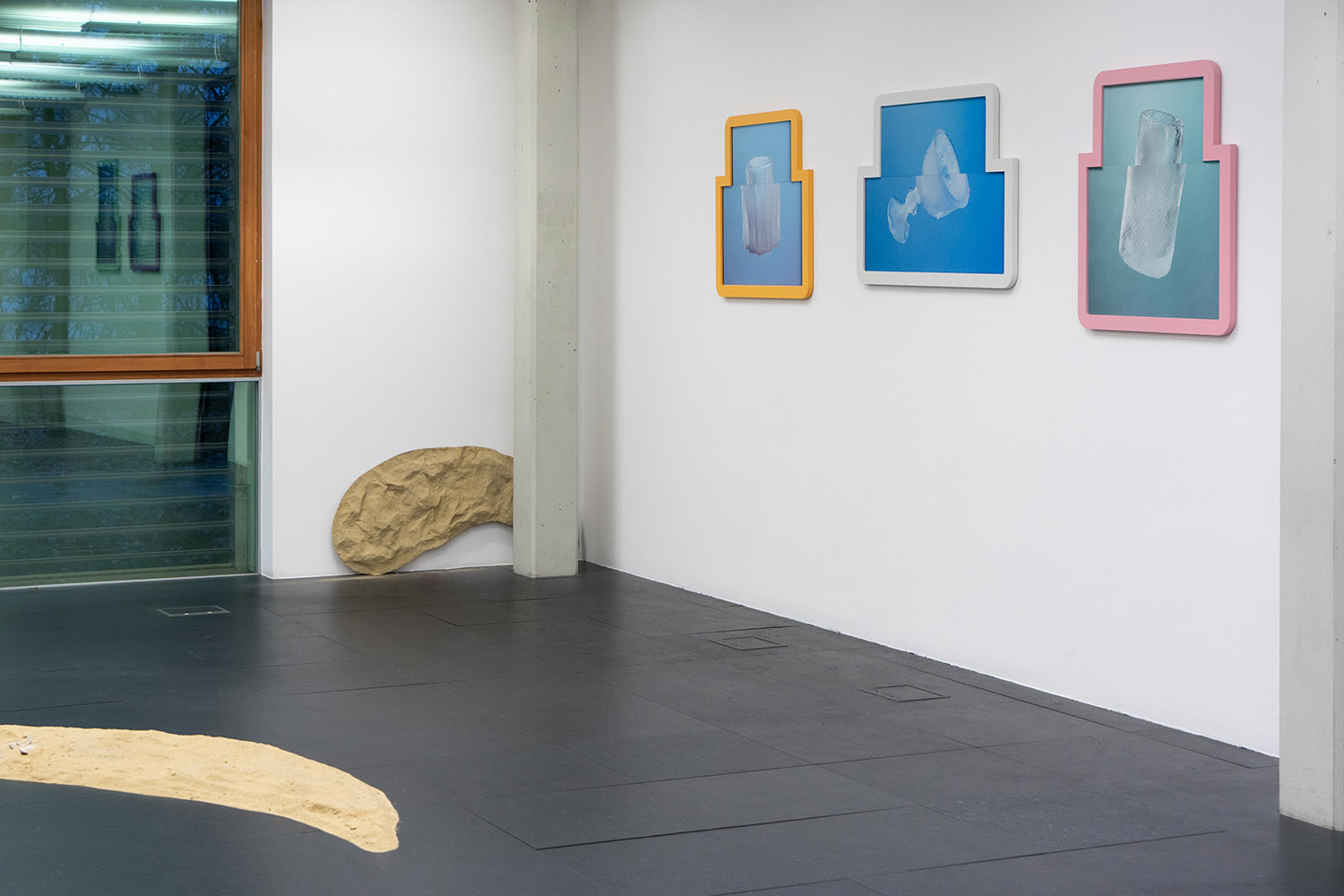
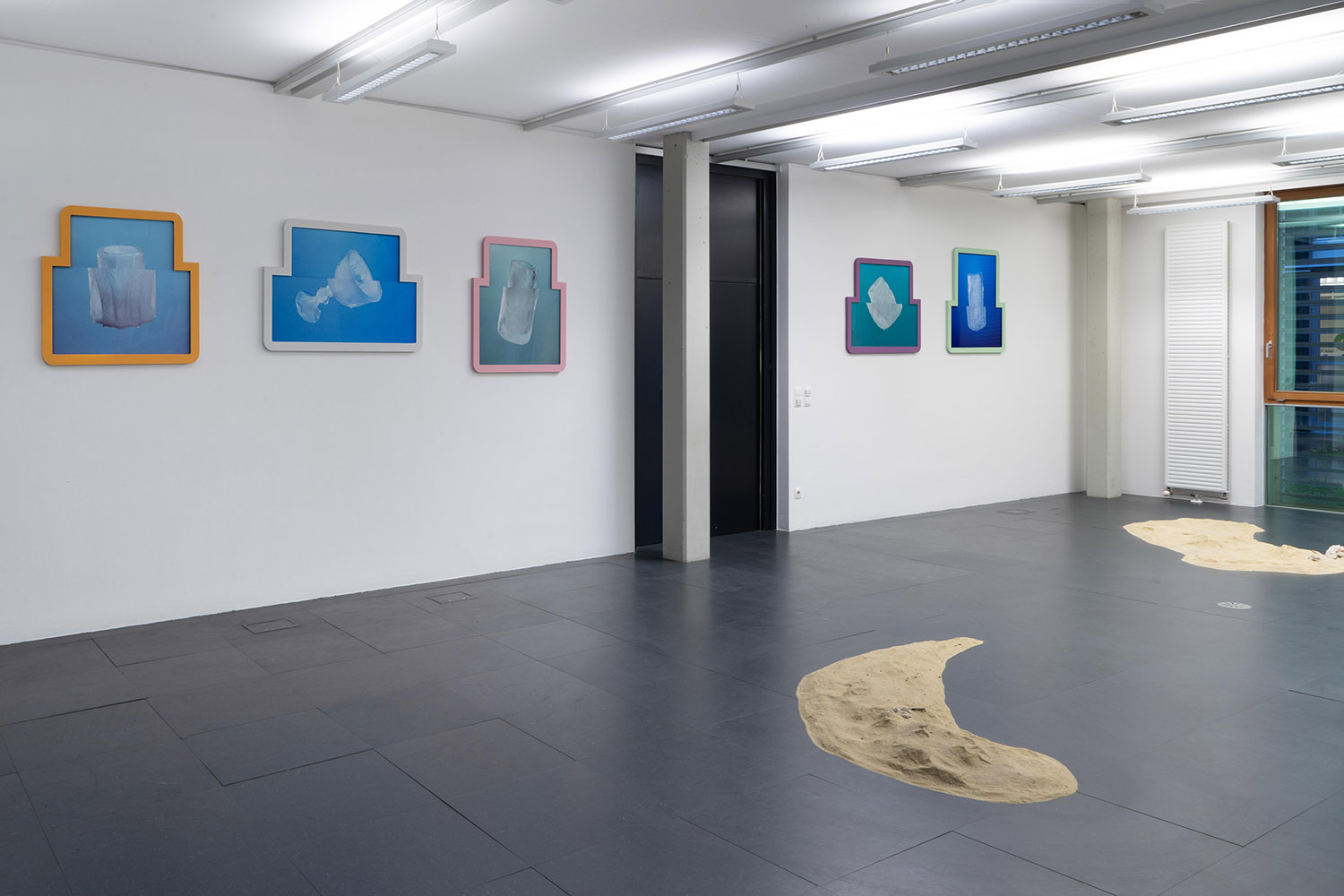
The work series developed for Kunstraum Lakeside situates the annual theme of the glitch not in a technical malfunction but in human perception. Mara Novak focuses on the phenomenon of the optical magnification of objects underwater and links her investigations into this perceptual “dysfunction” to the climate crisis. Installed at a comparatively high level in the exhibition space, the portrait photographs of cocktail glasses made of ice seem to have been taken above and below an imaginary water level. Even the frames of the large-format photographs display a jump in size. The scaling of the photographic image is achieved through pure analog manipulation in the darkroom, successively exposing the lower and upper areas of the image. To arrive at a uniform background requires precise knowledge of the material and a long process of gradually approaching the intended result.
For Mara Novak, who sees her practice as sculptural, the photographic material acts a co-producer of her images. Only the autonomy of the material, its familiar properties and unpredictable reactions lead to photographs that are more than just the product of an artistic vision. Despite the inherent reproducibility of photography, she employs imaging processes that can never be repeated exactly, which results in one-of-a-kind photographs.
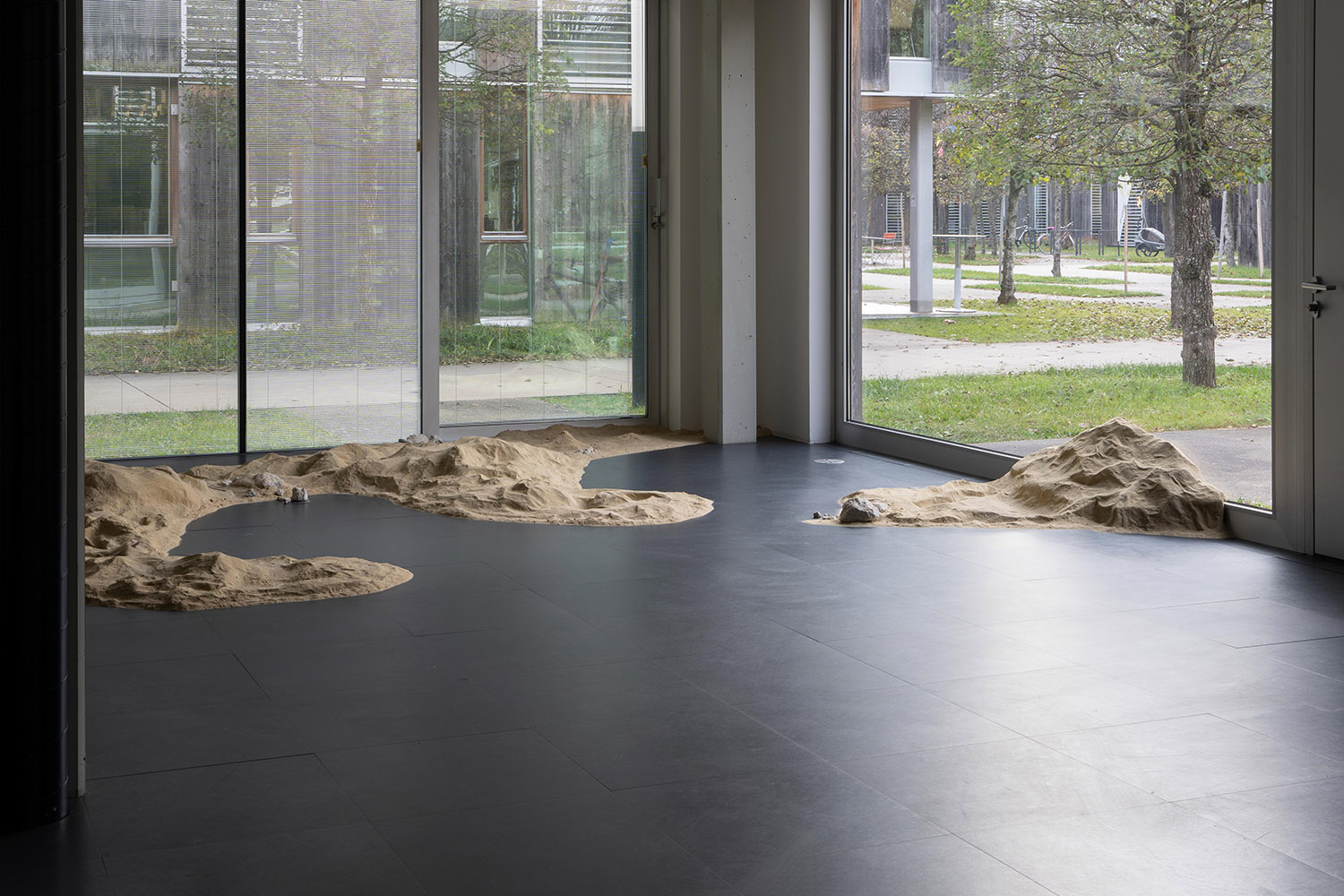
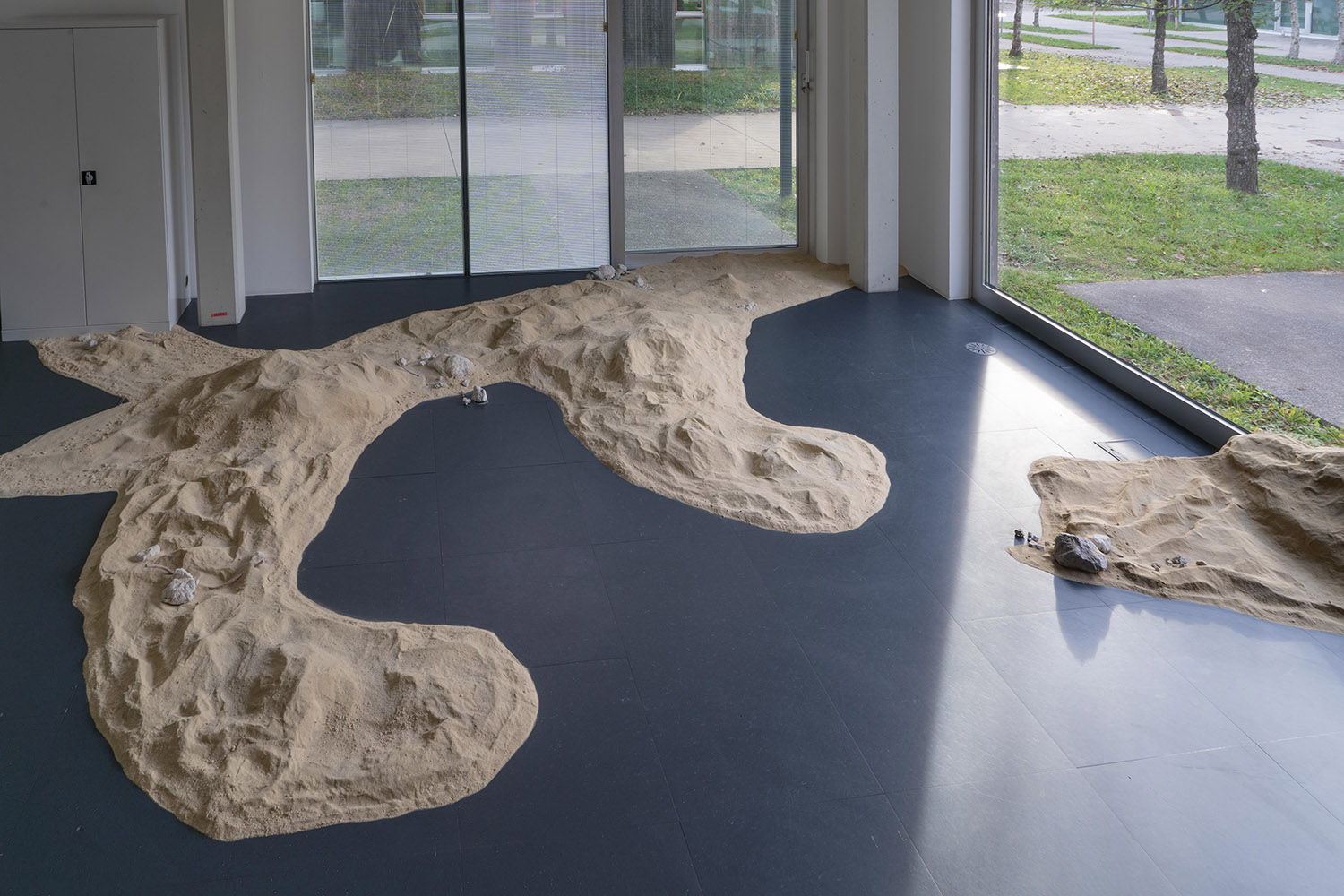
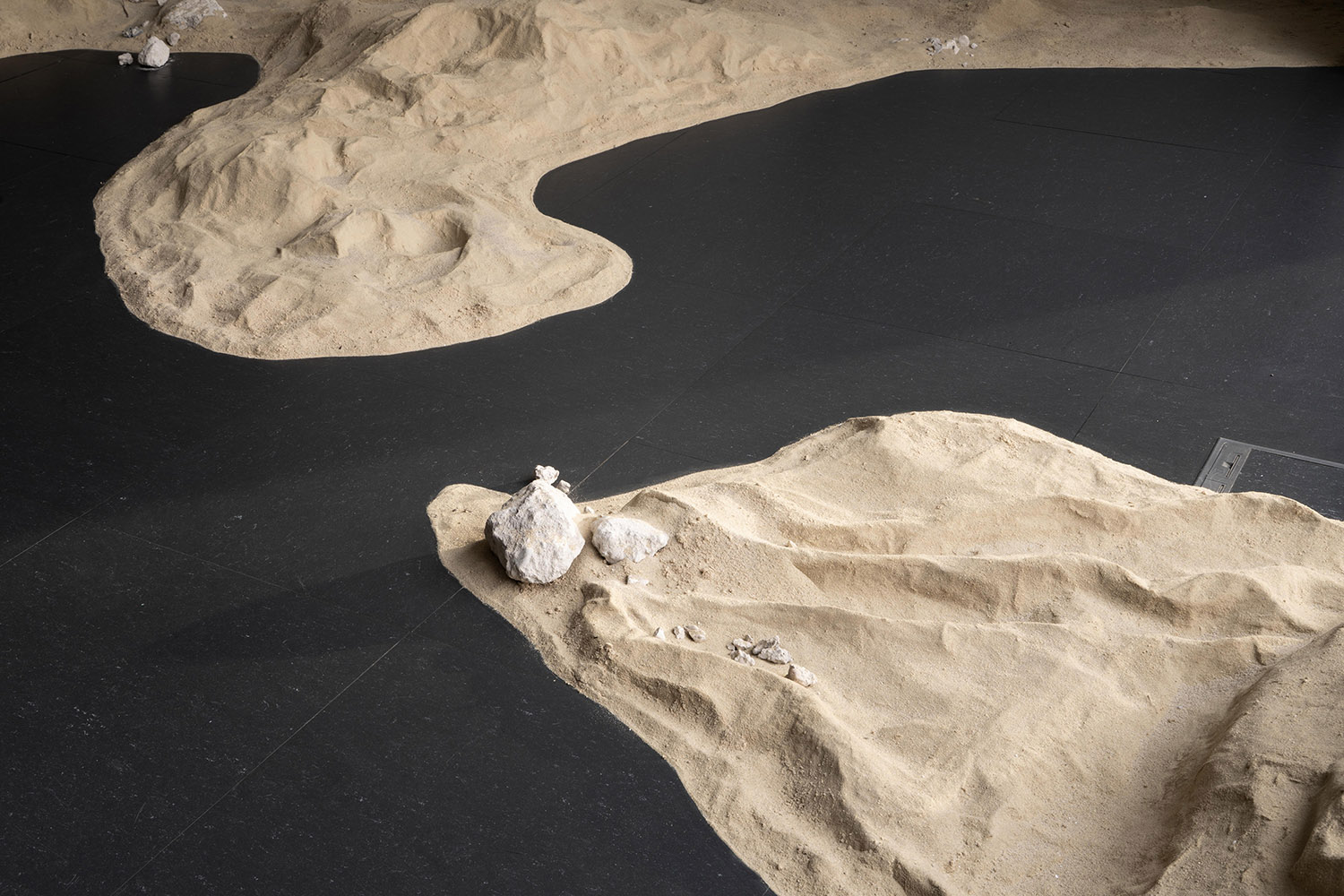
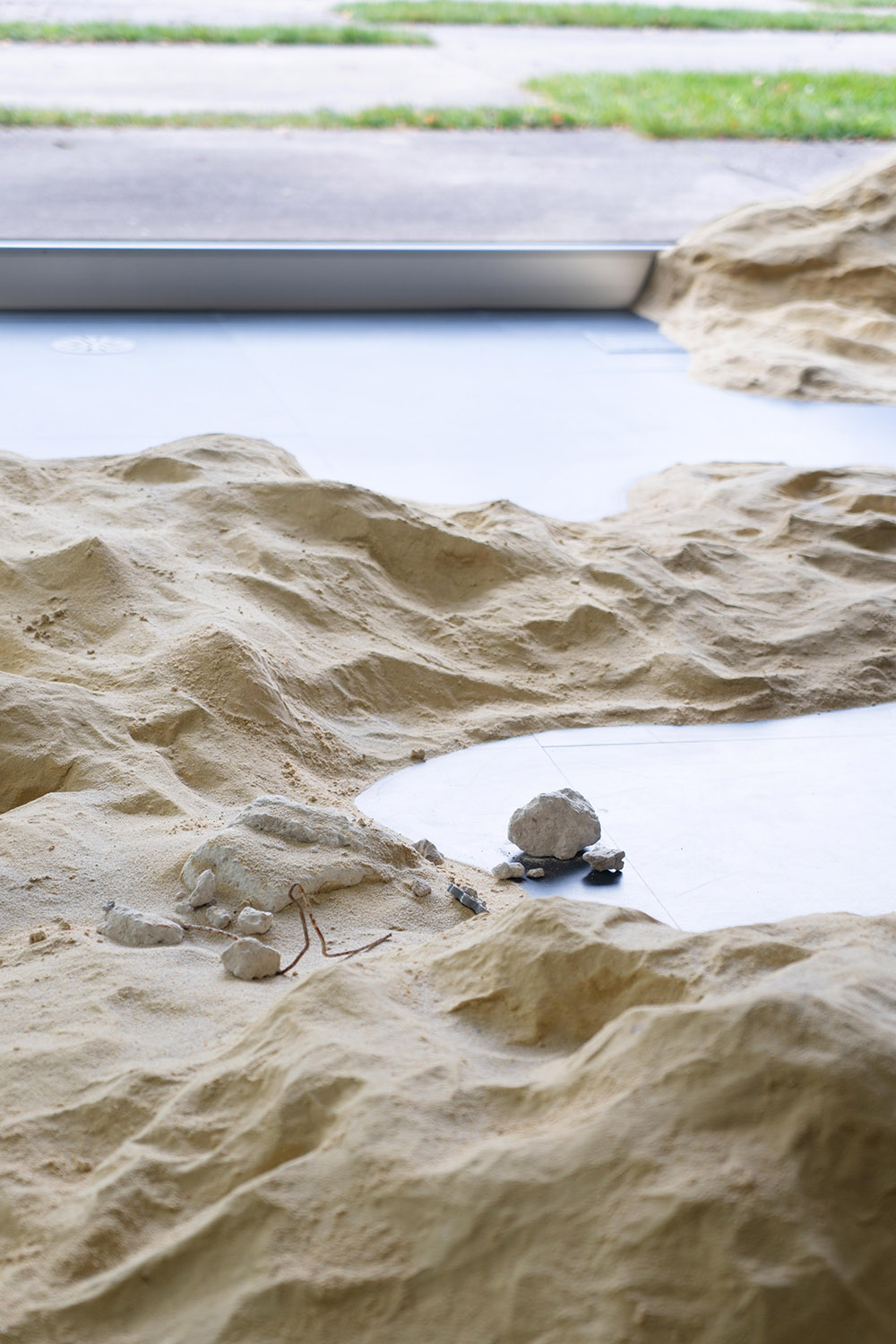
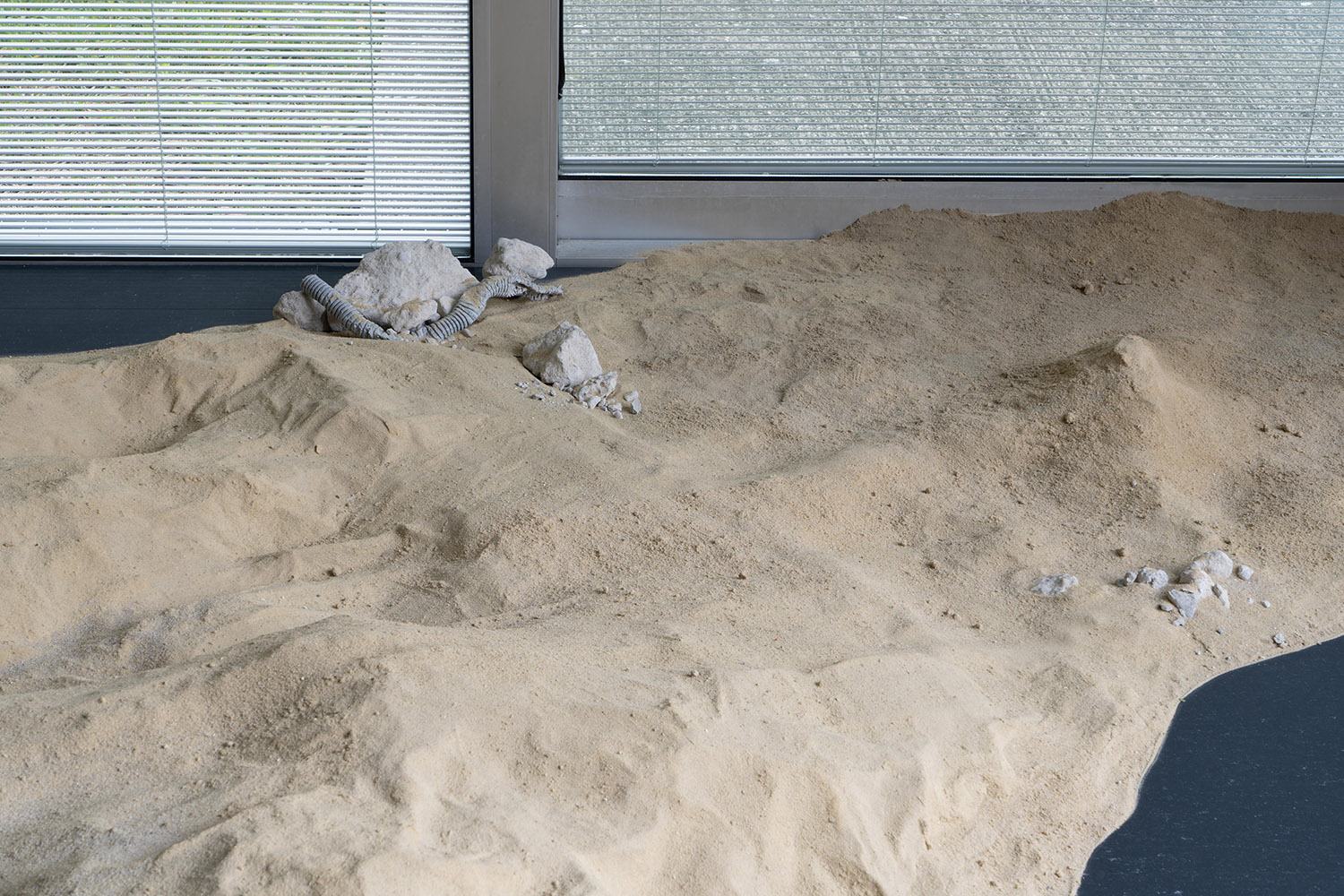
Part of the exhibition My drink tastes like apocalypse features model-like sculptures of the Palm Islands, the artificial archipelago off Dubai that has been under construction in the waters of the Persian Gulf since the early 2000s. The land masses, built up from millions of cubic meters of sand and rock, are not only symbols of the Emirate’s immense financial power and touristic ambitions, they also have a significant real impact on the ecosystem of the Persian Gulf. The construction of the islands has altered natural seawater currents, eroded coastlines, destroyed marine habitats such as coral reefs, and led to increased water turbidity.
Novak’s sculptures, miniatures of the Anthropocene, materialize this entangled dynamic: the artificial ground for luxury real estate, leisure worlds, and maritime exclusivity is presented as a precarious edifice whose very existence is threatened by the same ecological processes that it has helped to trigger. While the Palm Islands are already exposed to the risk of rising sea levels, Novak’s sculptures strike a balance between the “not yet” and “no longer” built-up. Displayed on the floor of the exhibition space, they resemble artificial underwater worlds in aquariums. Fragmentation and shifts in scale reveal the fragility of these man-made paradises and therewith the hubris of the prevailing belief that it is possible to control nature.
In My drink tastes like apocalypse, the artist draws attention to our unbridled consumerism and cognitive dissonance in the face of anthropogenic global warming—but without raising a finger of admonishment. Rather, she prompts the question of whether the current economic system, as part of the technosphere, is not a glitch in the planetary order. Mara Novak appropriates and recontextualizes the visual marketing language of high-end real estate and commodities to tackle this dilemma. Withdrawn from the interpretive context of real estate corporations and luxury brands, the artist paradigmatically highlights the absurdity of present-day economic and political decision-making. And she does so with a hand for a good story, with technical precision, a sense of beauty, and a healthy dose of humor.
Mara Novak (b. 1987 in Austria) lives and works in Vienna.
www.maranovak.com
* See https://arcticice.ae (last accessed on November 4, 2025). Shortly after this text was written, the arcticice.ae website was taken down. Instead of the featured stories about “Arctic Ice Dubai” and “Arctic Ice Greenland,” from mid-November 2025 onwards, a similarly designed yet significantly reduced version https://arctic-ice.eu was found online. The ice cubes offered now come from Slovenian glaciers as opposed to the polar region.
** See https://arcticice.ae/pages/the-story (last accessed on November 4, 2025).
