Opening, September 23, 2025, 6 pm
Exhibition, September 24 – November 7, 2025
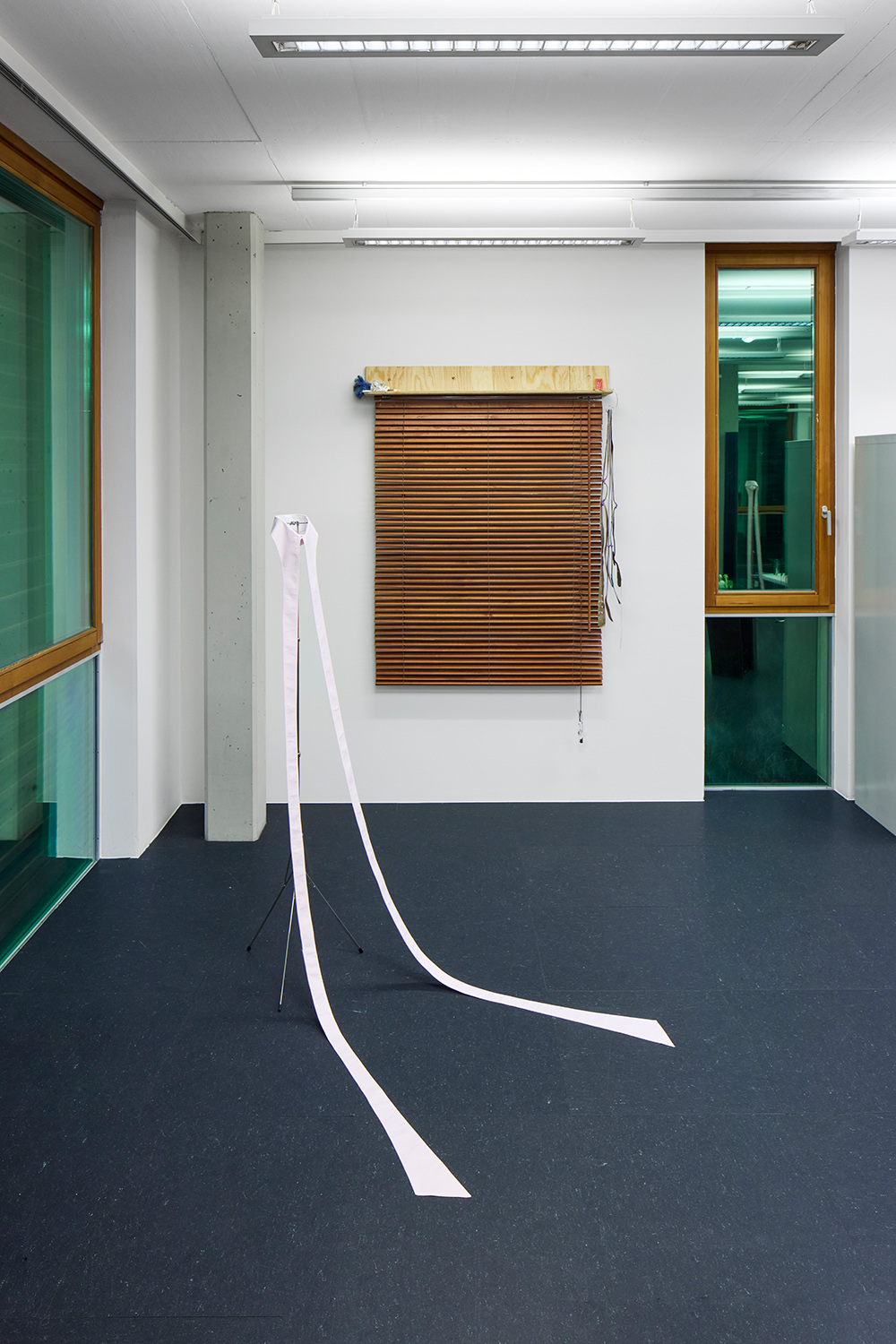
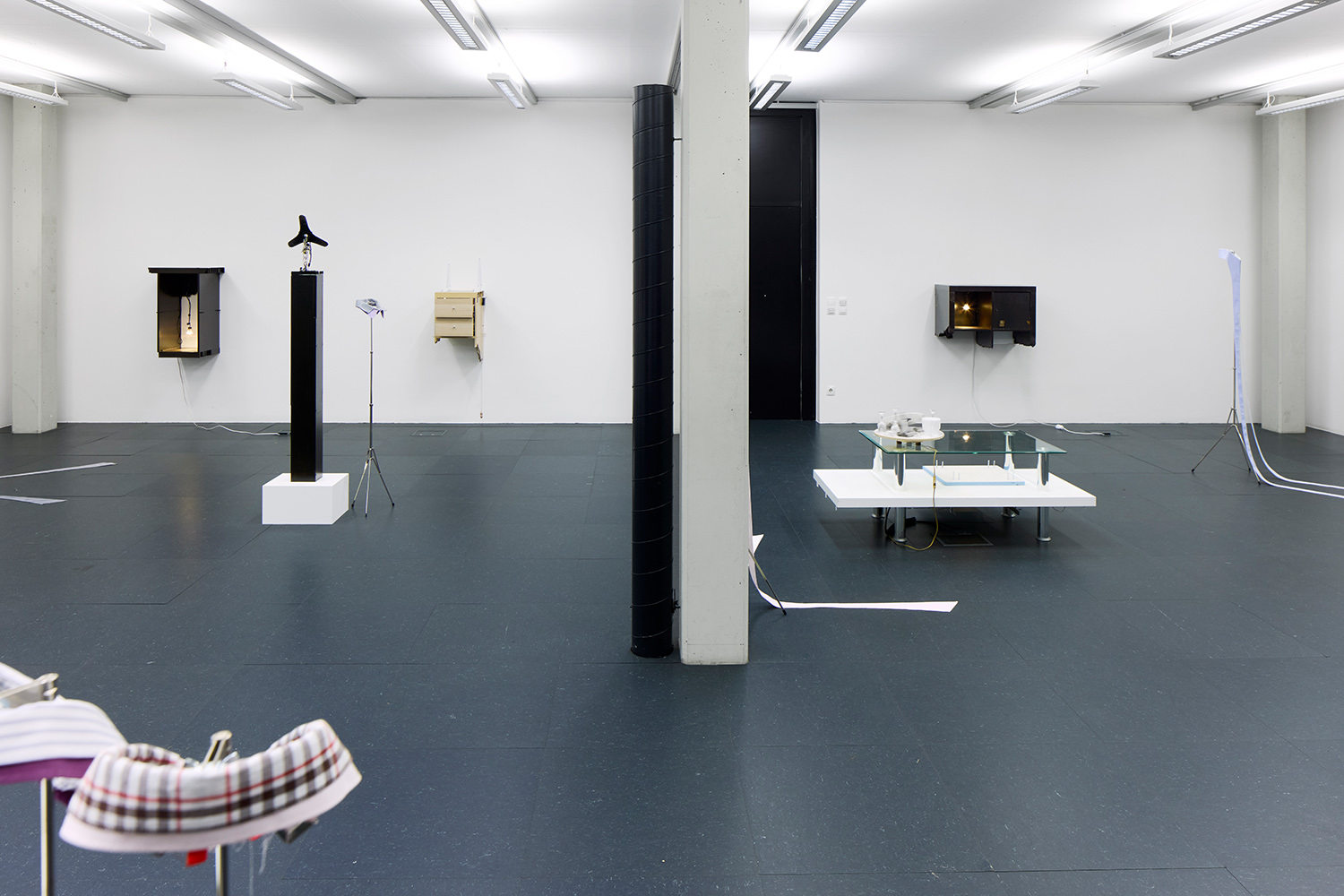
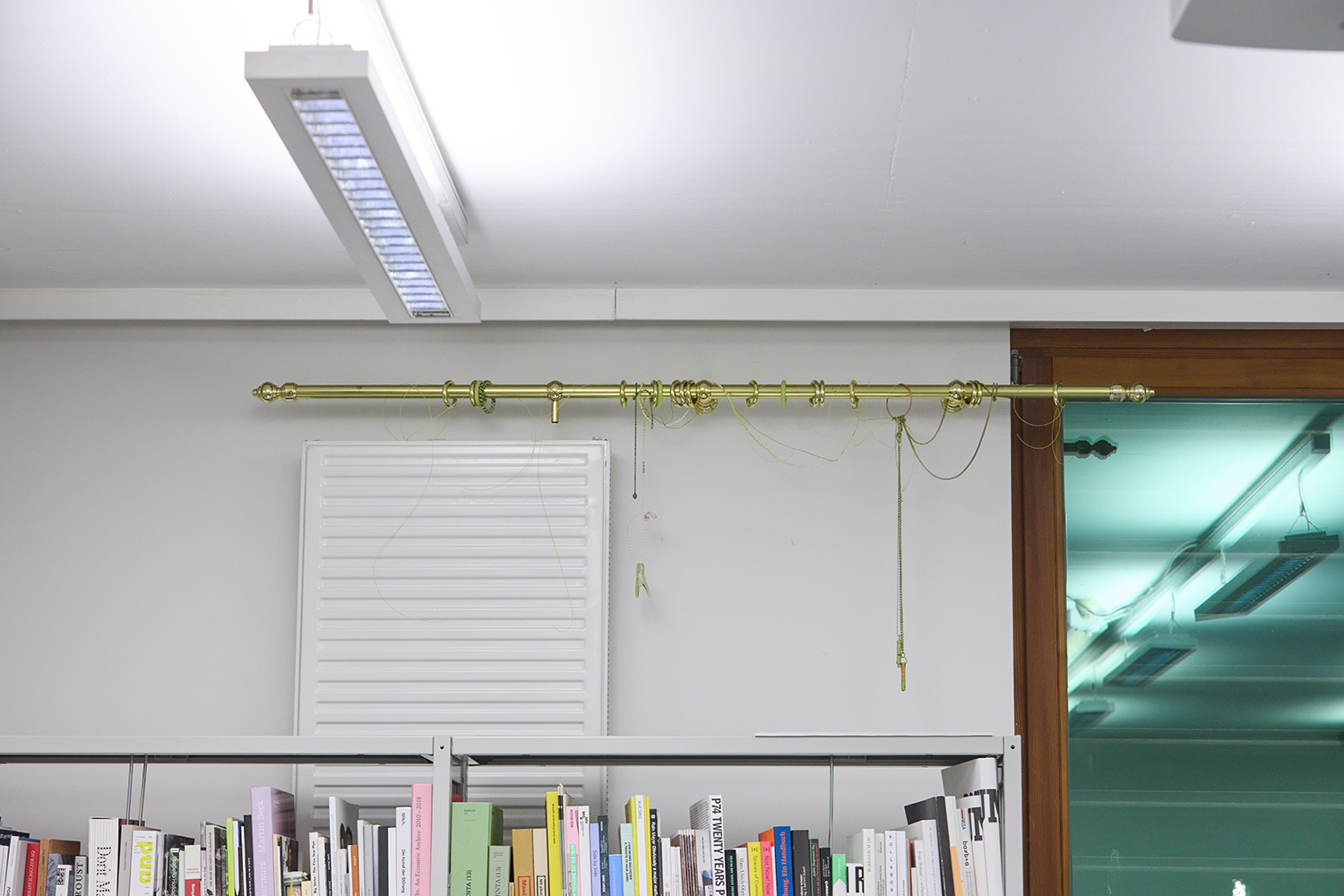
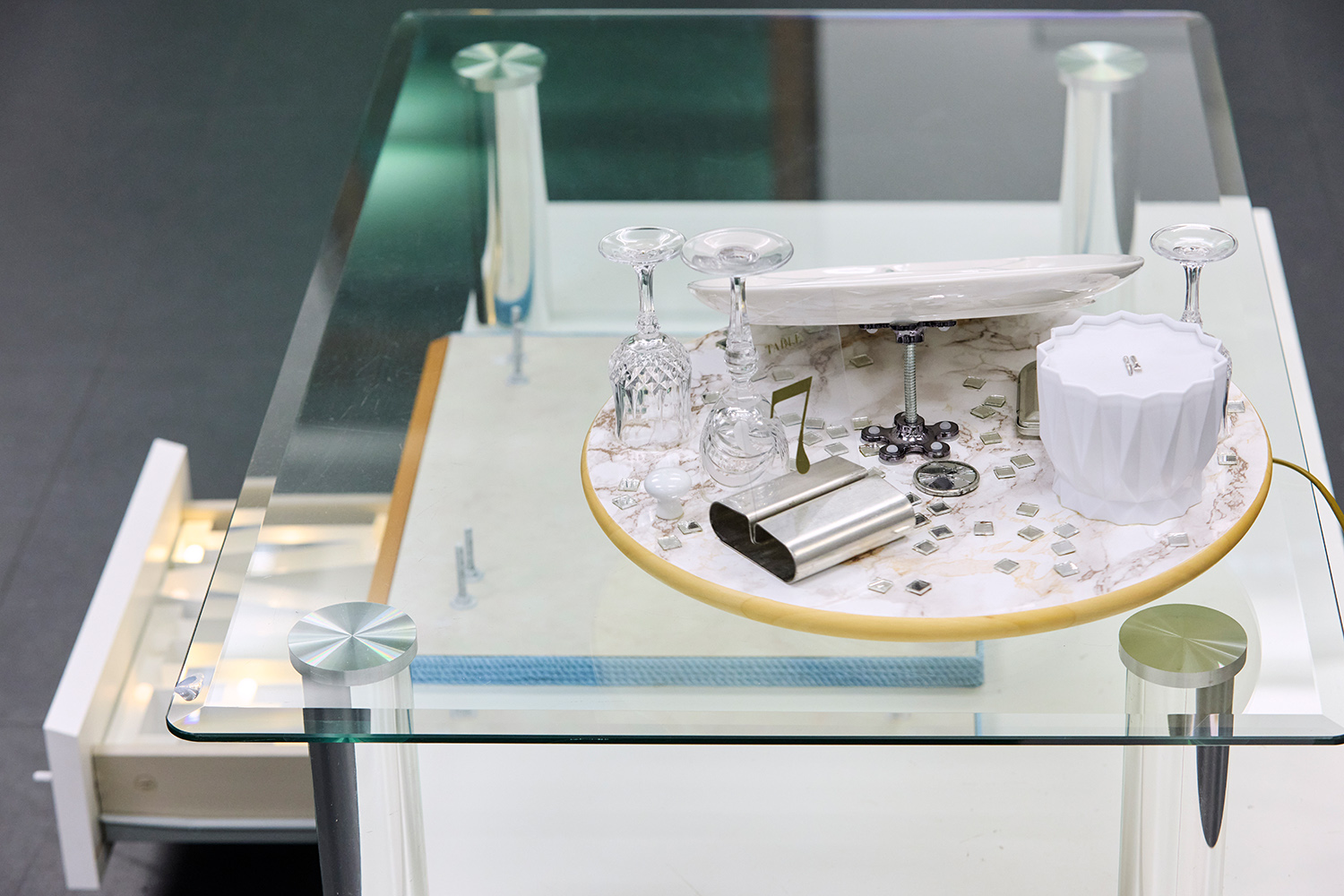
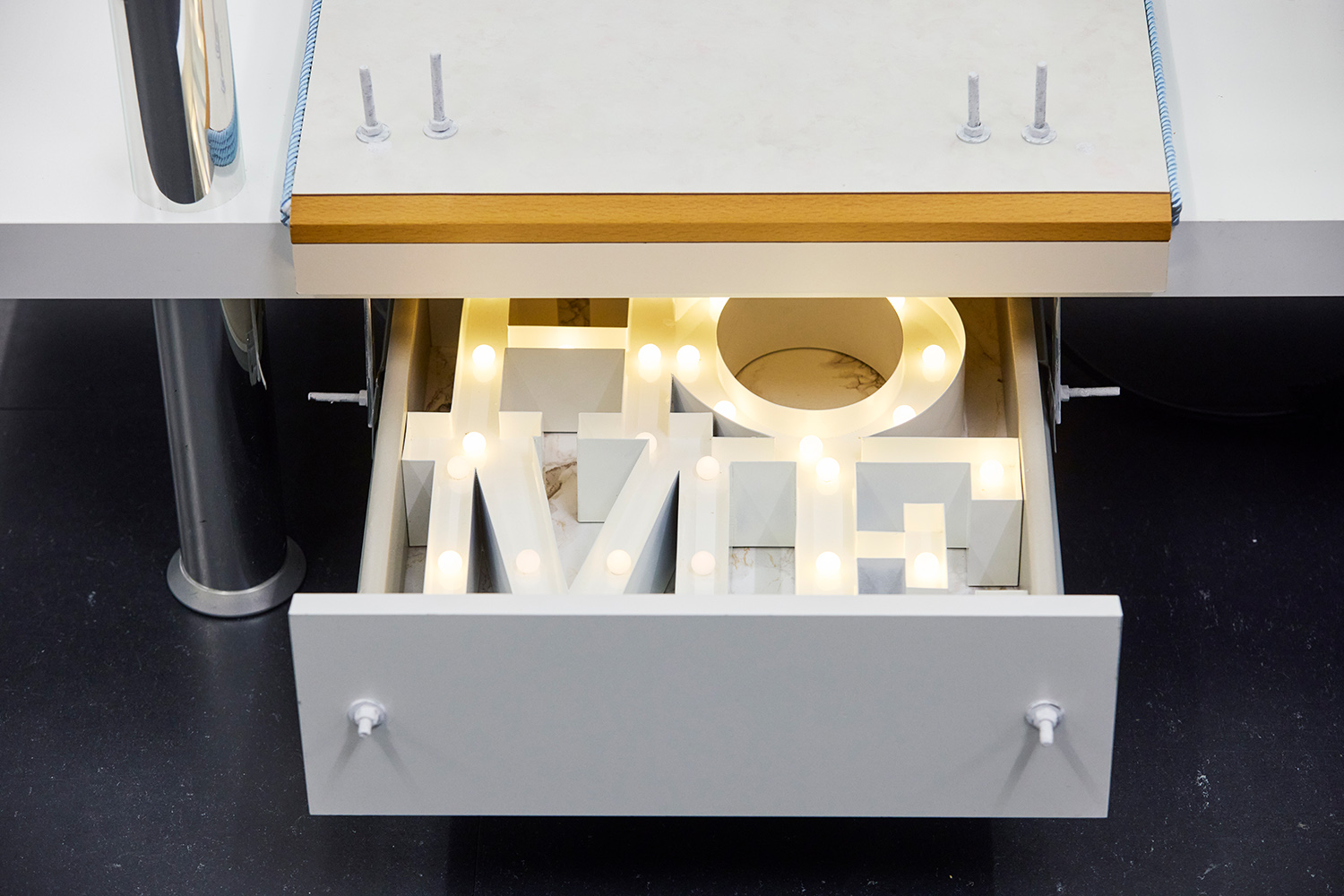
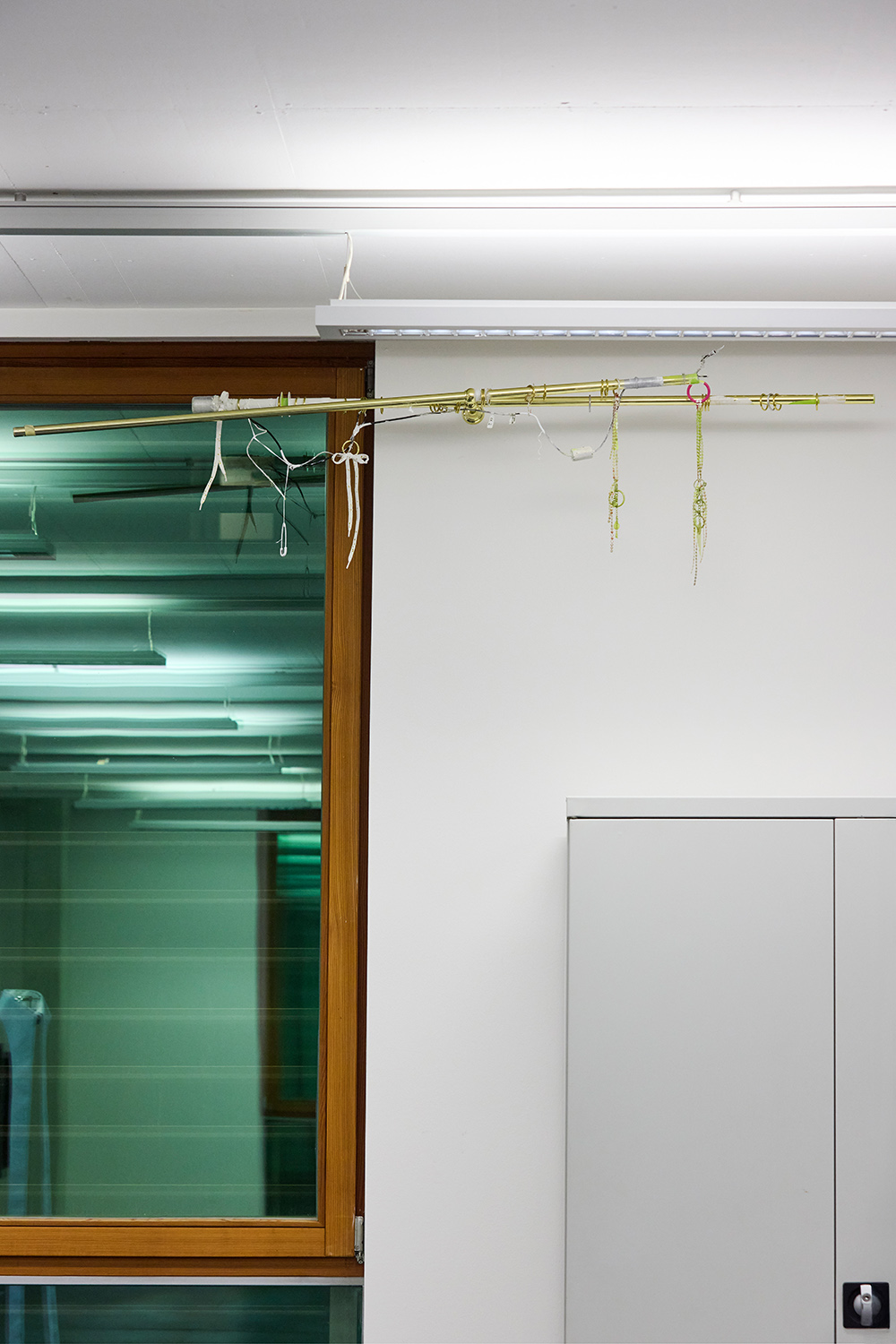
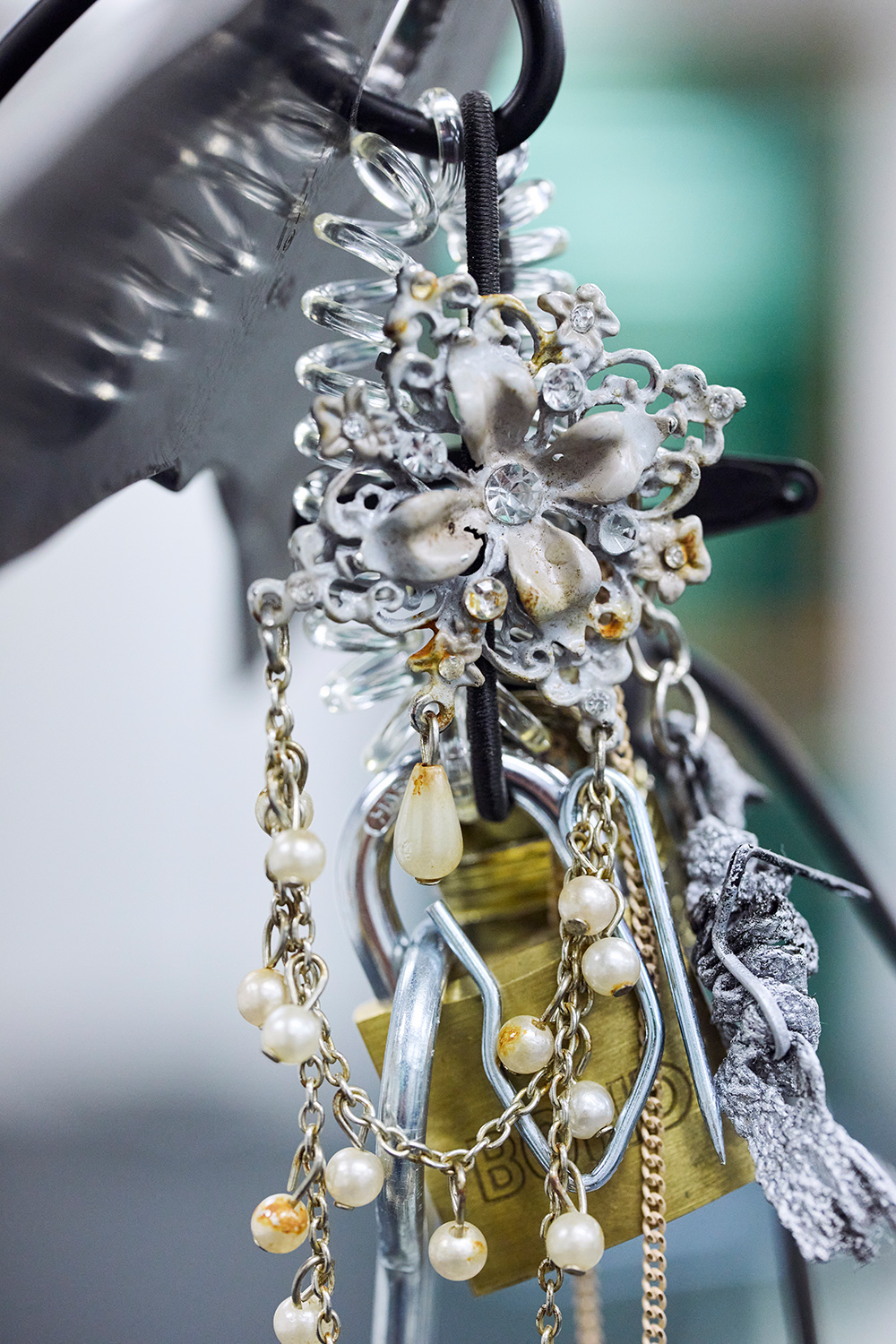
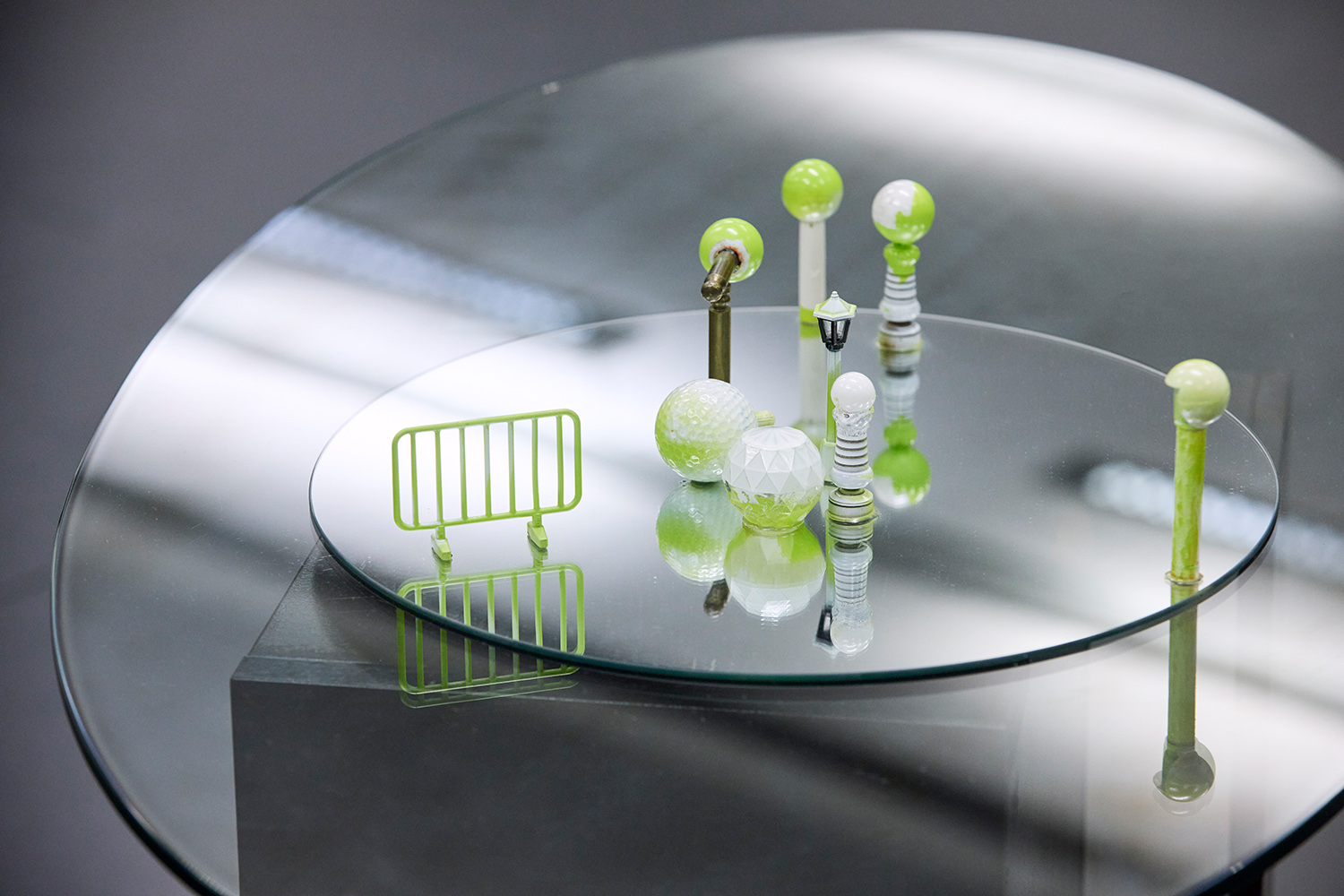
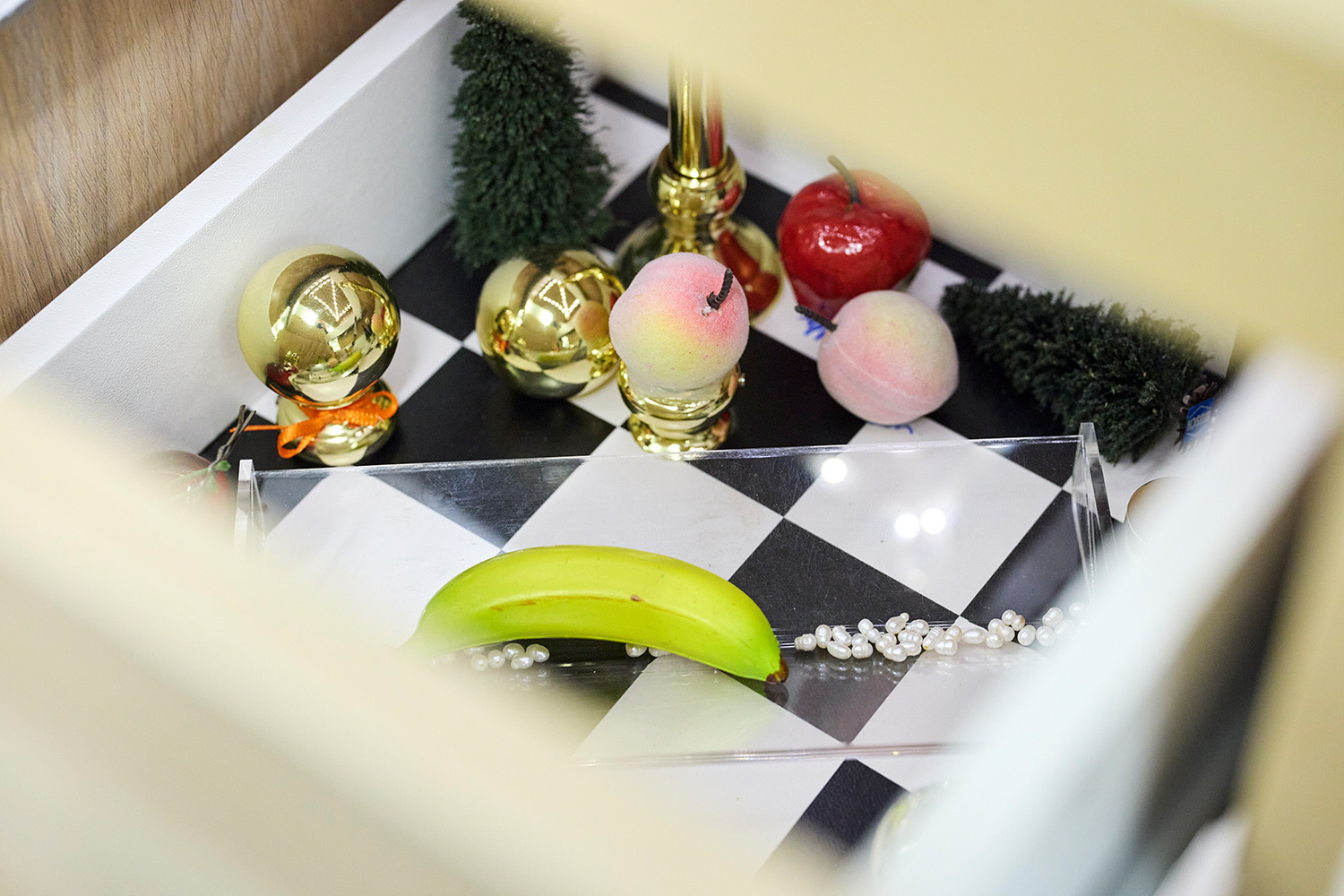
Remnants of wood and self-sticking film with a marblesque surface, a ceramic angel, clothes hangers, leather belts, and plastic buckles, off-the-shelf wooden blinds, probably from IKEA or maybe a hardware store, yellow adhesive sheets, the laminated picture of a butterfly, glass beads and aluminum chains, hair clips, candles, and a feather duster.
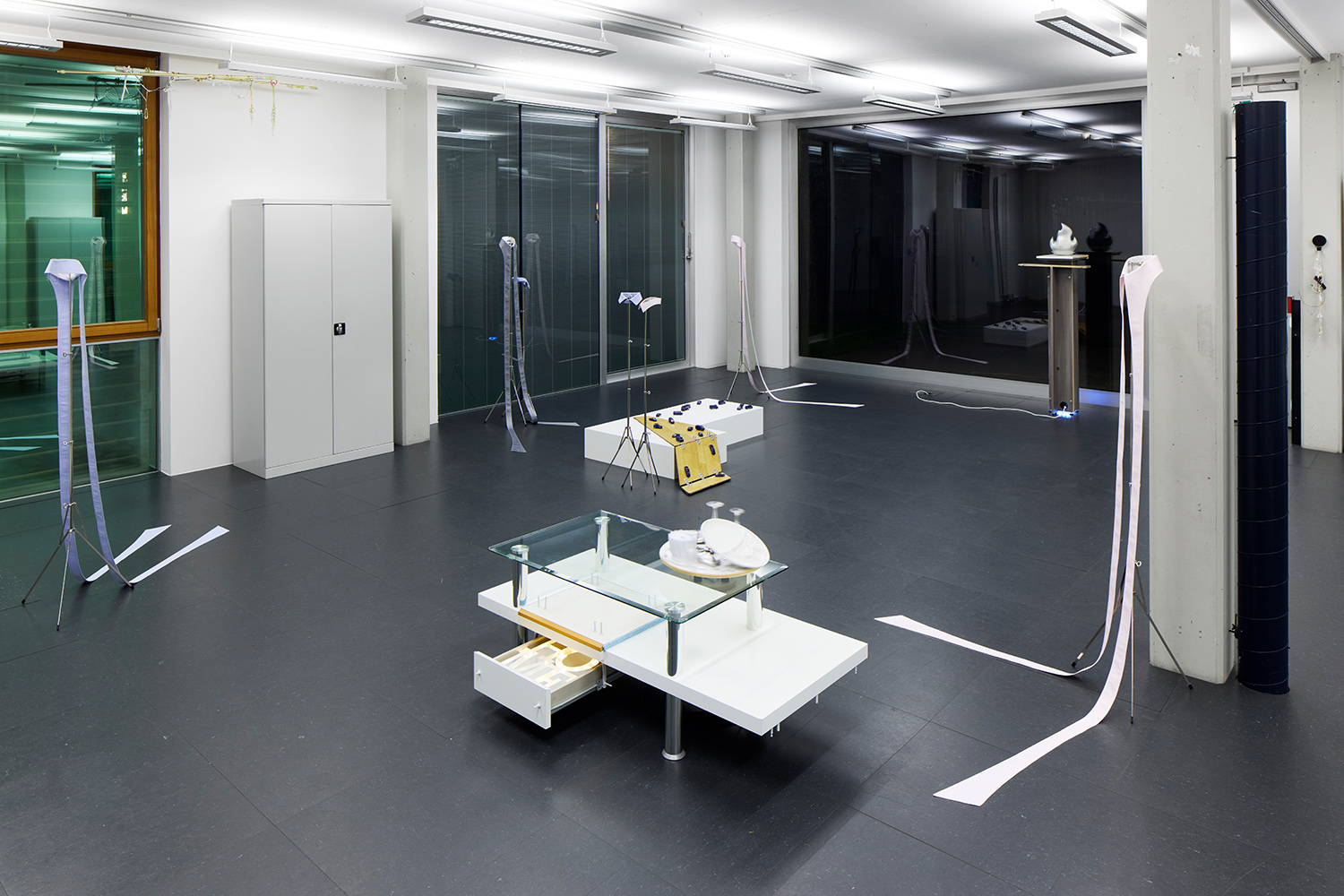
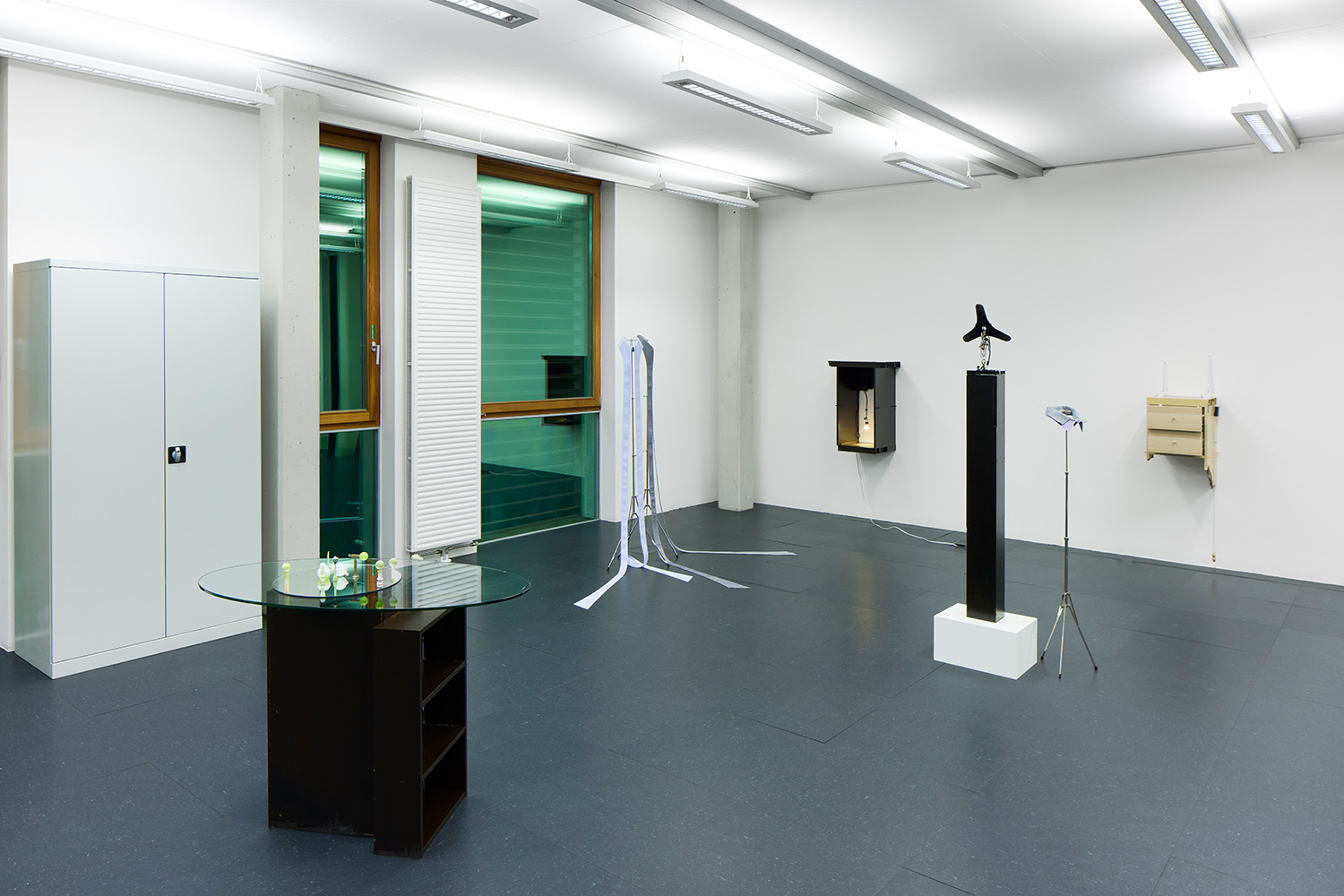
It’s A Fine Day People Look Out Windows (2022) is the title of one of Jonas Morgenthaler’s sculptures. In its bluntness, the object hanging on the wall of Kunstraum Lakeside could be read as an inversion, an antithesis, a commentary on the large display window that is so distinctive of the exhibition space, connecting it to the outside world. Could, that is, “can” in the subjunctive, in a verb form that does not simply state a fact, claiming it as an unchangeable reality, rather it adds another level of reality: one of possibility, of desire, and not least of mere citation. The artist employs a wide variety of materials—found items, objects between everyday and pop culture, modified utilitarian things whose original function only remains as a vestige of convention—to create works that trigger associative chains in the viewer’s mind. Mental leaps, image sequences, and correlations as countless as the potential viewers themselves. Morgenthaler sets objects in a relationship to each other, sometimes communicating, then in contradiction, and inserts them in existing spatial contexts. His small-scale sculptures seem to nestle into the respective surroundings, yet, with their idiosyncratic compositions, they remain foreign bodies.

Photo: Johannes Puch
Jonas Morgenthaler’s practice is akin to the genre of assemblage. His works are three-dimensional collages, Dadaist anti-art objects from the advancing twenty-first century that play with commonplace materials, recombine meanings, and translate familiar forms into surprising constellations. As opposed to using these material compositions—or “xenobjects” in his own words—to assert a specific narration, the artist explores the potential lurking in these compiled things and their impact on narrative systems. By questioning the inherent properties of objects, images, and the way we interact with them in everyday life but also in art, he exposes their nature, one designed for a fixed purpose. Morgenthaler persistently challenges what queer theorist Sara Ahmed refers to as “straight lines,”* social dispositions taken for granted, hegemonies that must go unquestioned in order to maintain power relations and prevailing norms. In the spirit of narrative instability, which Morgenthaler cultivates in his xenobjects, his works are “assemblages,” according to political scientist Jane Bennett, drawing on Gilles Deleuze and Félix Guattari, “ad hoc groupings of diverse elements.” Confederations whose socio-political reach exhibits “uneven topographies”: “Power is not distributed equally across [their] surface. Assemblages are not governed by any central head: no one materiality or type of material has sufficient competence to determine consistently the trajectory or impact of the group.”** Jonas Morgenthaler produces, in the best sense of the word, lost objects, anti-monumental sculptures, statusless and deviant things that emerge solely in the discourse about these very things.
The exhibition title Gap Gardening has a dual meaning: on the one hand, Morgenthaler appropriates the title of a book by poet and translator Rosmarie Waldrop with an ambiguity similar to the moments of iteration intrinsic to his artistic work. In turn, Waldrop’s literary approach also corresponds to the artist’s sculptural practice. “What fascinates me most about Waldrop’s texts is how she plays with linguistic fragmentation and disjunction, not to mention her systematic exploration of language as material,” says Jonas Morgenthaler: “Like a gardener searching for hidden meanings between flower beds, Waldrop trawls through language to find forms more fluid than fixed. Her writing is dedicated to gaps and the openness that accompanies them.”
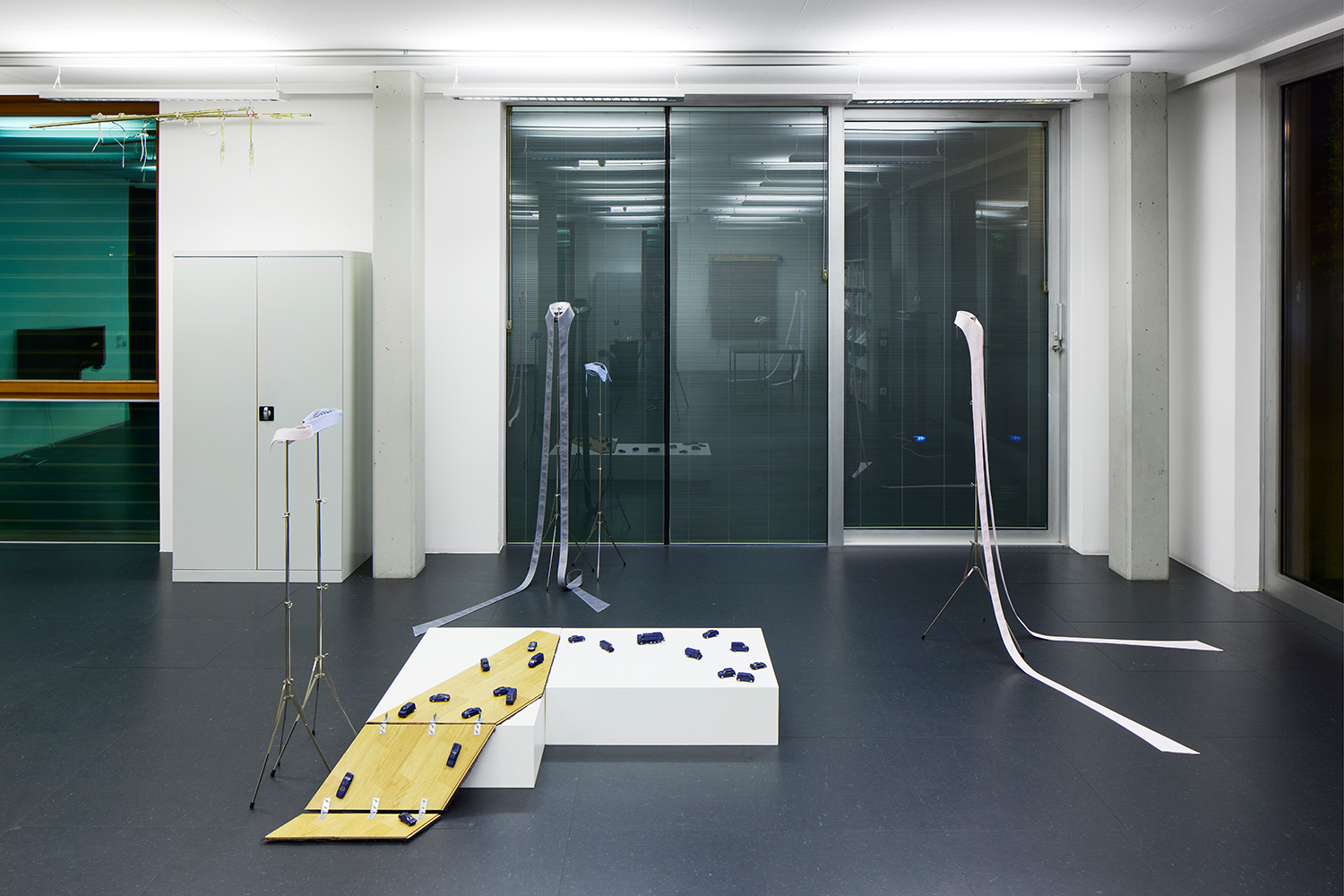
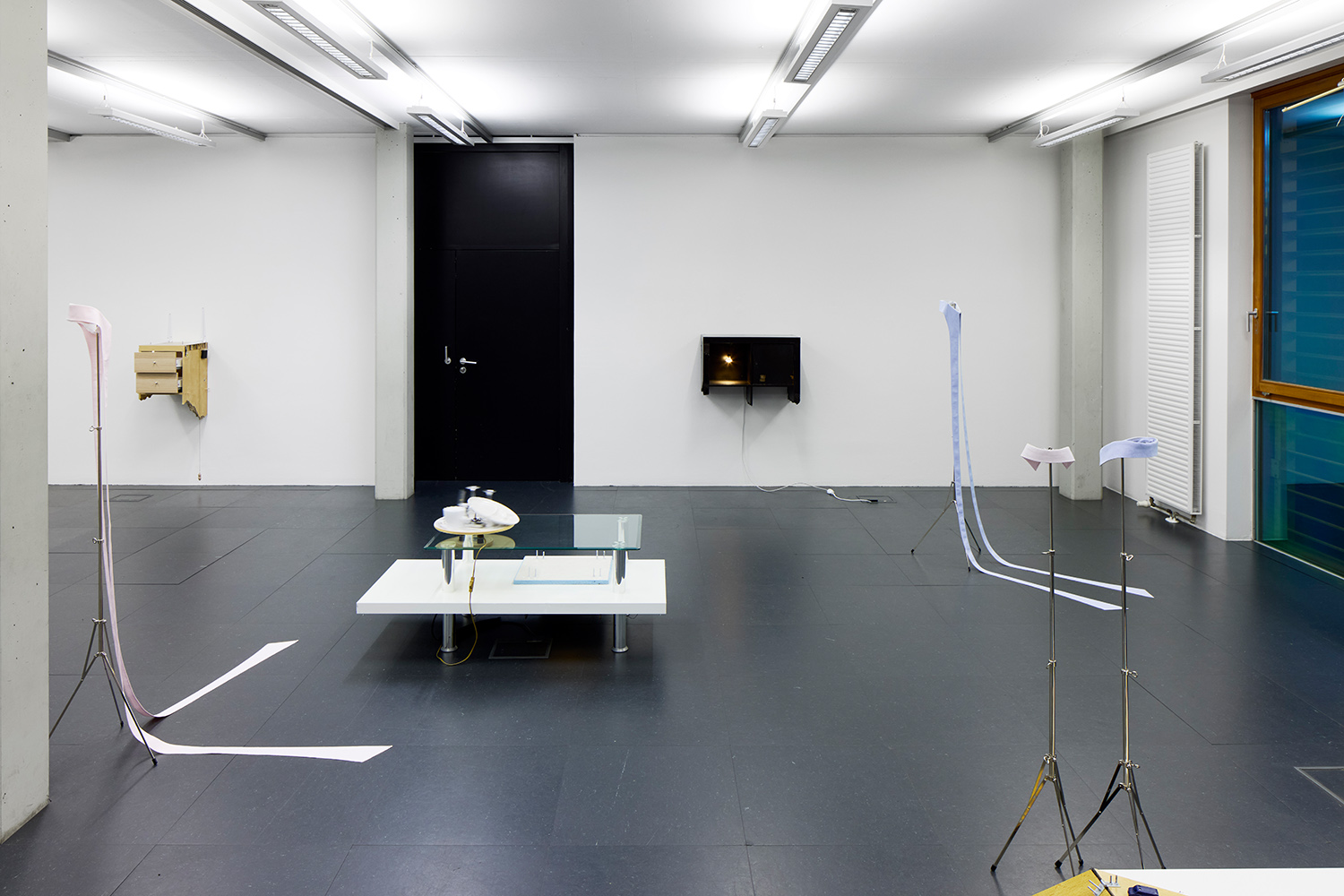
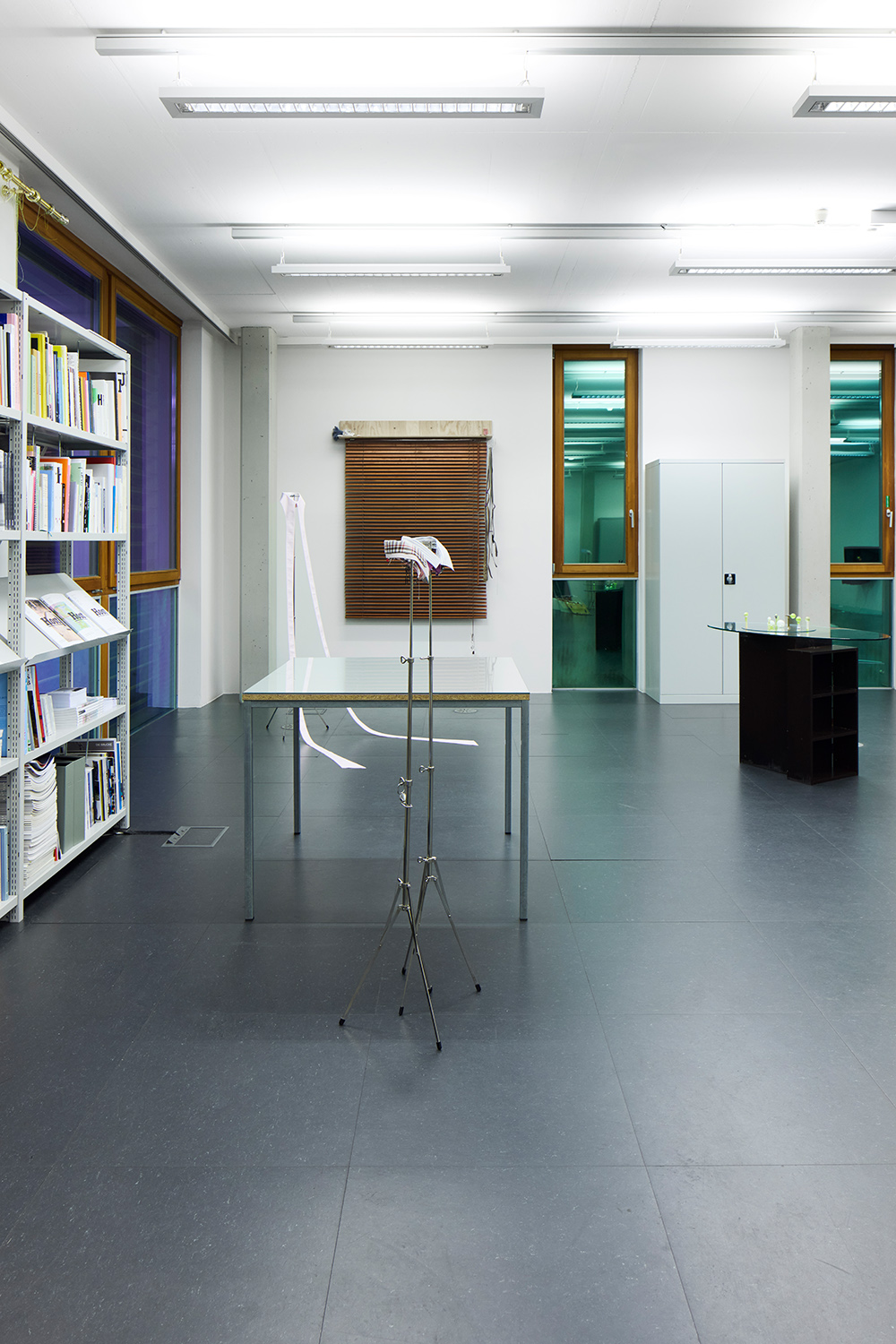
Gap Gardening is a large-scale installation whose operating principles mirror those of his xenobjects. The rules governing the composition of elements do not aim to produce meaning, on the contrary, they resist precisely this form of production. Concept and counter-concept. Morgenthaler’s sculptures and their arrangement in space create structures that welcome subjectivity while maintaining a formal or conceptual otherness; configurations that allow for simultaneity, indeterminacy, and nuances. In Gap Gardening, Morgenthaler seeks connections between elements, not in the production of meaning but in the disruption of such parameters. Ultimately, it is about introducing a glitch into perceptual and interpretative processes, which has the potential to counteract normative narratives.
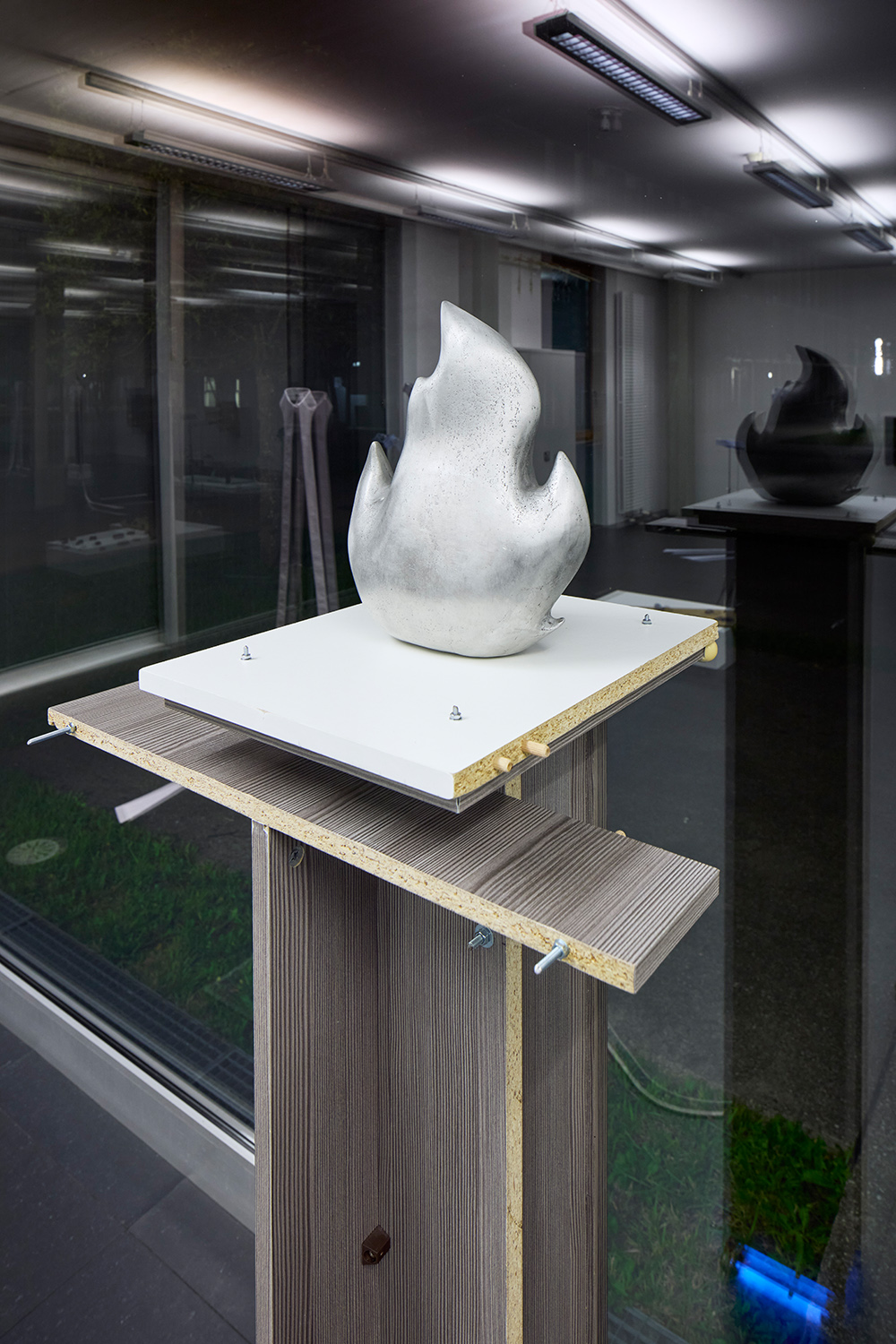
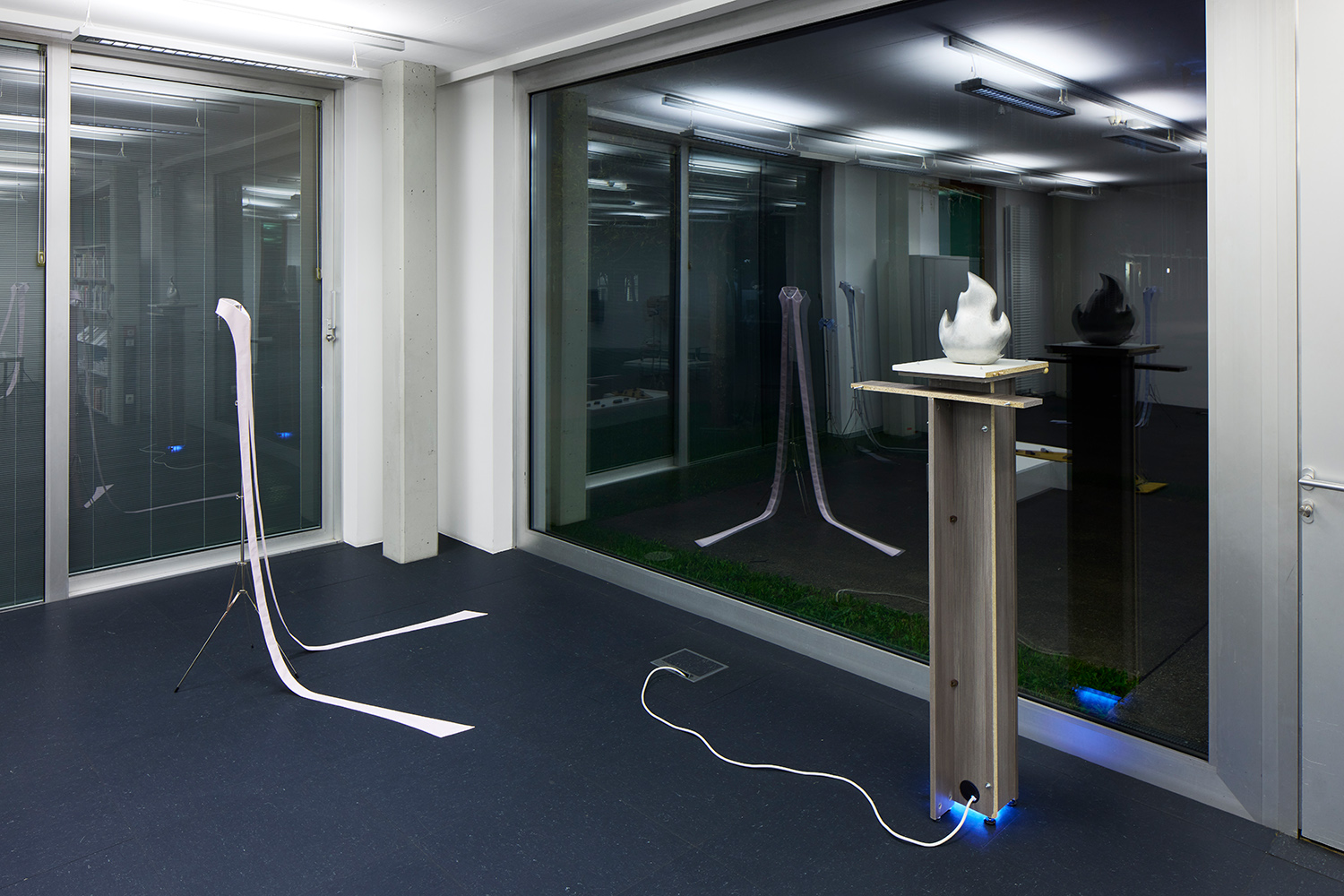
Alongside sculptures that seem to be casually scattered around the exhibition space, with titles as seductive as they are cryptic—In In Flames (2023), Welcome Wellness (2023/2025), or they don’t know what they do does IRL (2025), Jonas Morgenthaler presents two special series: Cross Collar Sadness (2023–ongoing) and Cross Collar Sadness (2025) feature small and larger stainless steel music stands propping up modified shirt collars, some extra-long reaching almost to the floor, adorned with keyrings, wallet chains, and padlocks, compositions with a human or at least human-like scale. These sculptures are not merely silent companions of the other works in the space: they appear to be observers, sovereign figures in their own right—standing there, commanding attention, and radiating an uncanny independence. Character heads without heads that occupy precisely those interpretative gaps where Jonas Morgenthaler’s fragile and poetic practice opens a resonant space for new perceptions and projections.
Jonas Morgenthaler (b. 1995 in Switzerland) lives and works in Vienna.
www.xenobjects.blog
* Cf. Sarah Ahmed, Queer Phenomenology. Orientations, Objects, Others (Duke University Press, 2006).
** Jane Bennett, Vibrant Matter. A Political Ecology of Things (Duke University Press, 2010), 23–24.
*** Excerpts from conversations with the artist, 2025.
