Opening, April 21, 2026, 6 pm
Exhibition, April 22 – May 22, 2026
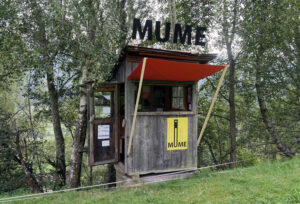
MUME Museo Mexicano is a nomadic anti-museum founded by Oscar Cueto to provoke new narratives in the entangled web of ever-changing geopolitical circumstances and global migration. Under the name of an institution, Cueto invites international artists to develop collaborative projects in Austria and beyond. The realization and format of each edition of MUME are tailored to the contents of the respective project in order to respond to contemporary challenges from various artistic perspectives and open spaces for discussions on cultural and social norms outside of the confines of the established cultural discourse. Migration, a central theme, is exemplified through collaboration, by listening to and amplifying the voices of often overlooked communities who operate outside of ethnic, social, geographical, economic, or political privilege. By dismantling outdated perceptions and beliefs, redefining the function of institutions and conventional roles of art, abolishing vertical hierarchies, and distancing itself from the prevailing commodification strategies in art, MUME becomes a dynamic space where artistic production can be experienced not only from an aesthetic perspective but also as an expression of political and social responsibility.
An “anti-museum” like MUME is conceived as a critical take on traditional, often elitist and normative museum structures. In the words of Oscar Cueto, “With MUME, I raise the question of whether it is still possible to envision the museum as a tool that serves the needs of the community, rather than engaging in national branding and city marketing or reproducing itself in the form of franchise models. Is there a future for the museum as a place (in time and space) where communities can come together to share values and experiences, preserve memories, and decide together when a new beginning is necessary?” MUME rejects common notions of museums as permanent, static institutions that exhibit artworks as isolated objects. Instead, it understands art as a process in constant flux and interaction with social, political, and cultural contexts. Contrary to avant-garde museums or formats staged by artists as proclamations of personal visions, the anti-museum offers a counter-model to the institutionalized art world that bridges the divide between art and society and promotes dialogue with marginalized perspectives.
In the exhibition Blueprint for No Museum, Oscar Cueto intervenes in the context of Kunstraum Lakeside: an exhibition space that, much like MUME, is not a museum but an institution set for more than 20 years on the periphery of Austria’s art scene, which is otherwise concentrated in the major urban centers. It is an institution with all the mechanisms of inclusion and exclusion that have evolved over time along with the ever-changing programs, priorities, tastes, and preferences of various curators and manifest in ways that evade its own introspection. Conceived as an artistic project by Josef Dabernig, the Kunstraum has, ever since its foundation, seen itself as a “thorn in the flesh,” as it were, of the Science and Technology Park that hosts it—a place where economic, technological, and therewith social conditions are viewed primarily through the lens of enhancing efficiency and maximizing the profits of individual companies as opposed to serving the common good. But what happens when the Kunstraum goes largely unnoticed as a tool for (self-)reflection? When, instead of its critical potential and contribution to questioning prevailing orders, the emphasis is only placed on its function as a site for the distribution of cultural capital? In other words, when Kunstraum Lakeside operates more like a museum than fulfilling its declared mission of being a “thorn in the flesh”? Then it is high time to radically, and literally, open up the Kunstraum.
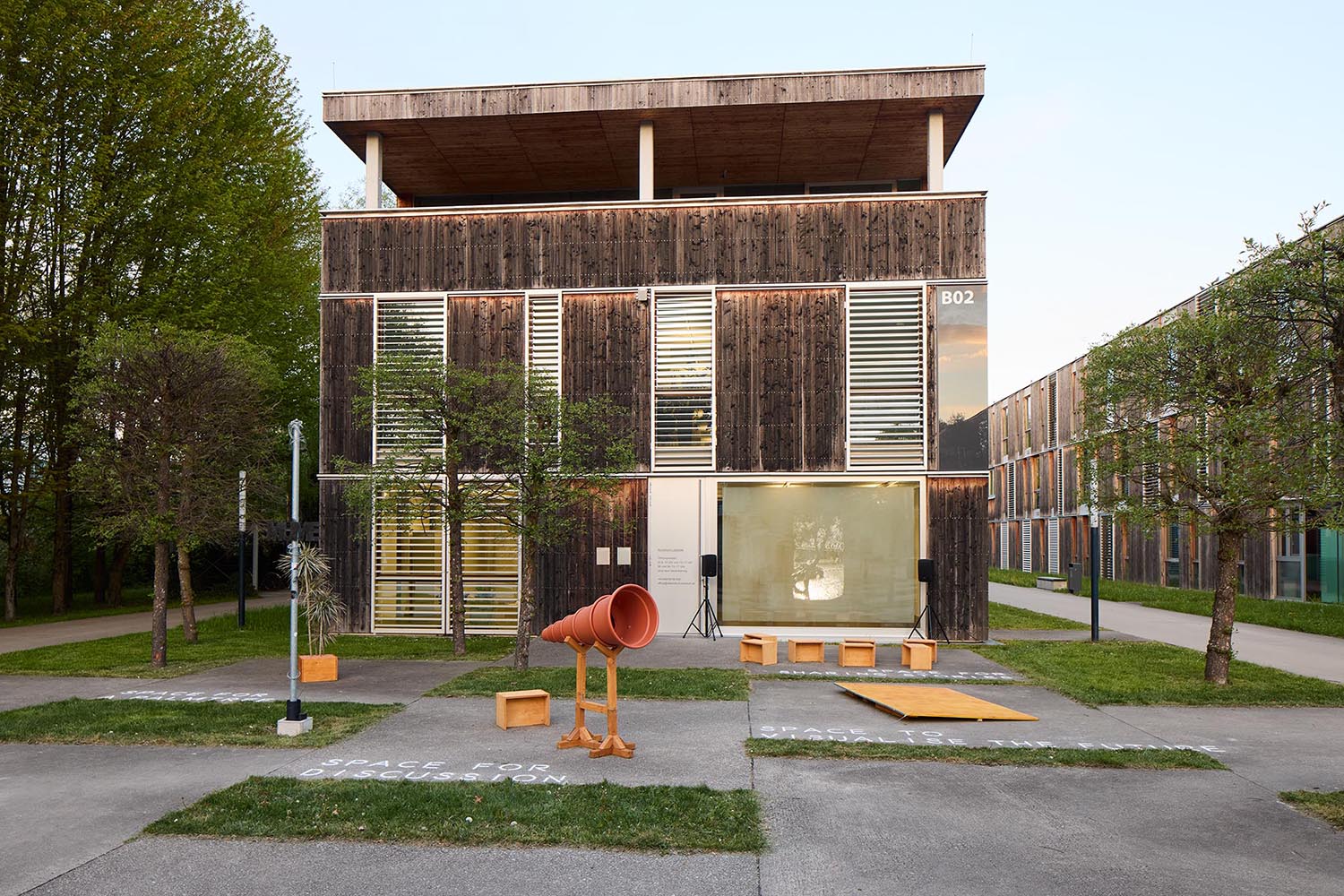
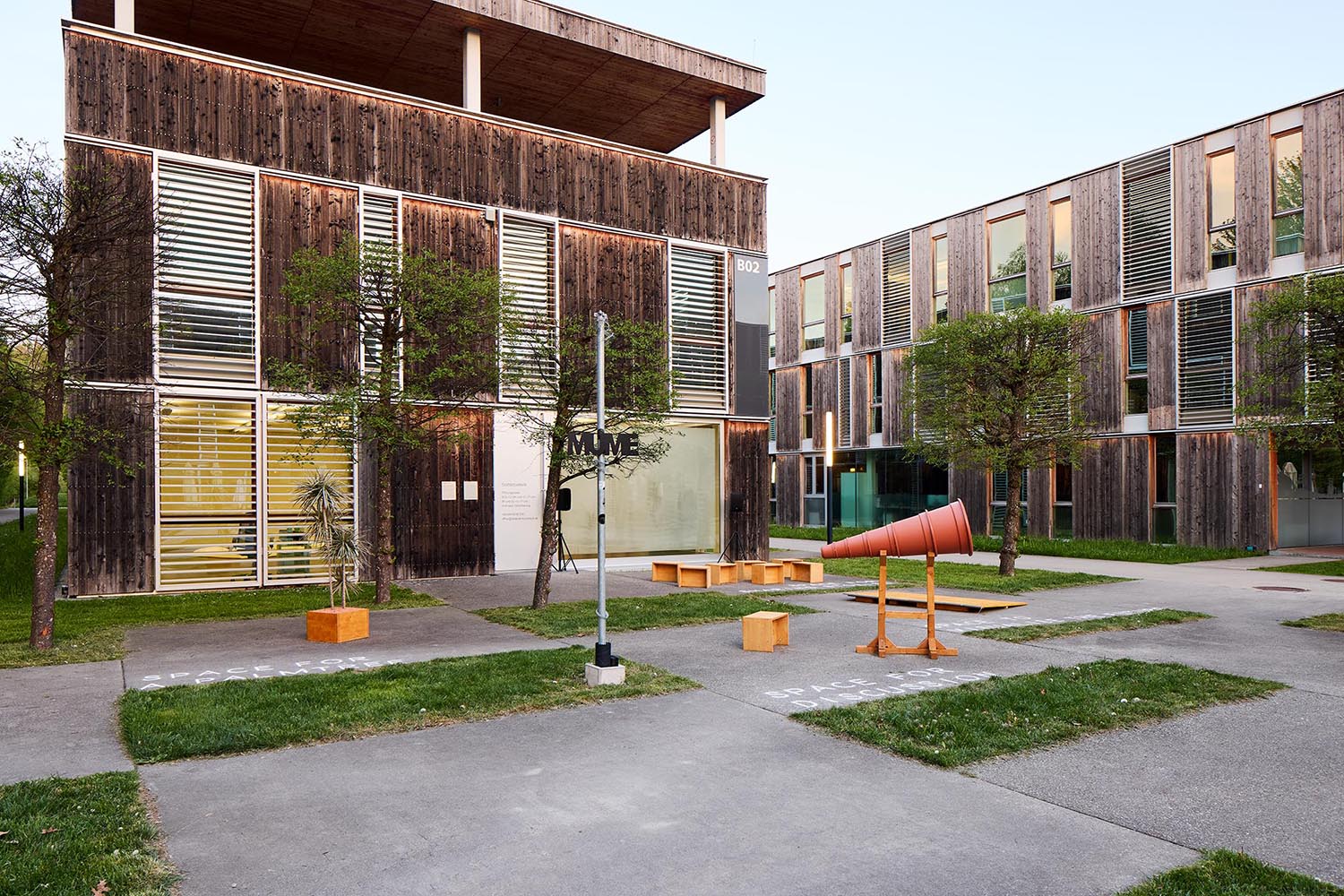
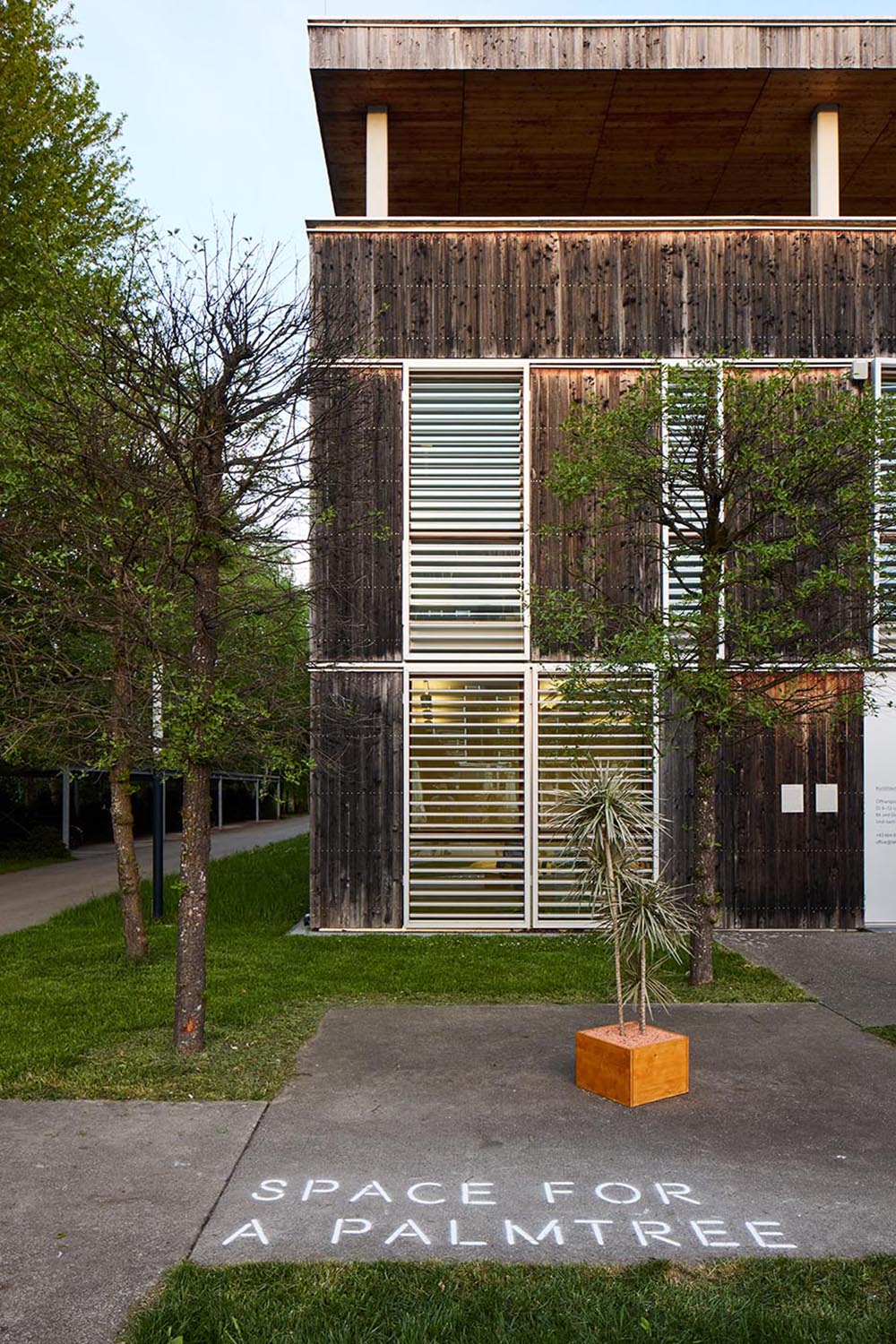
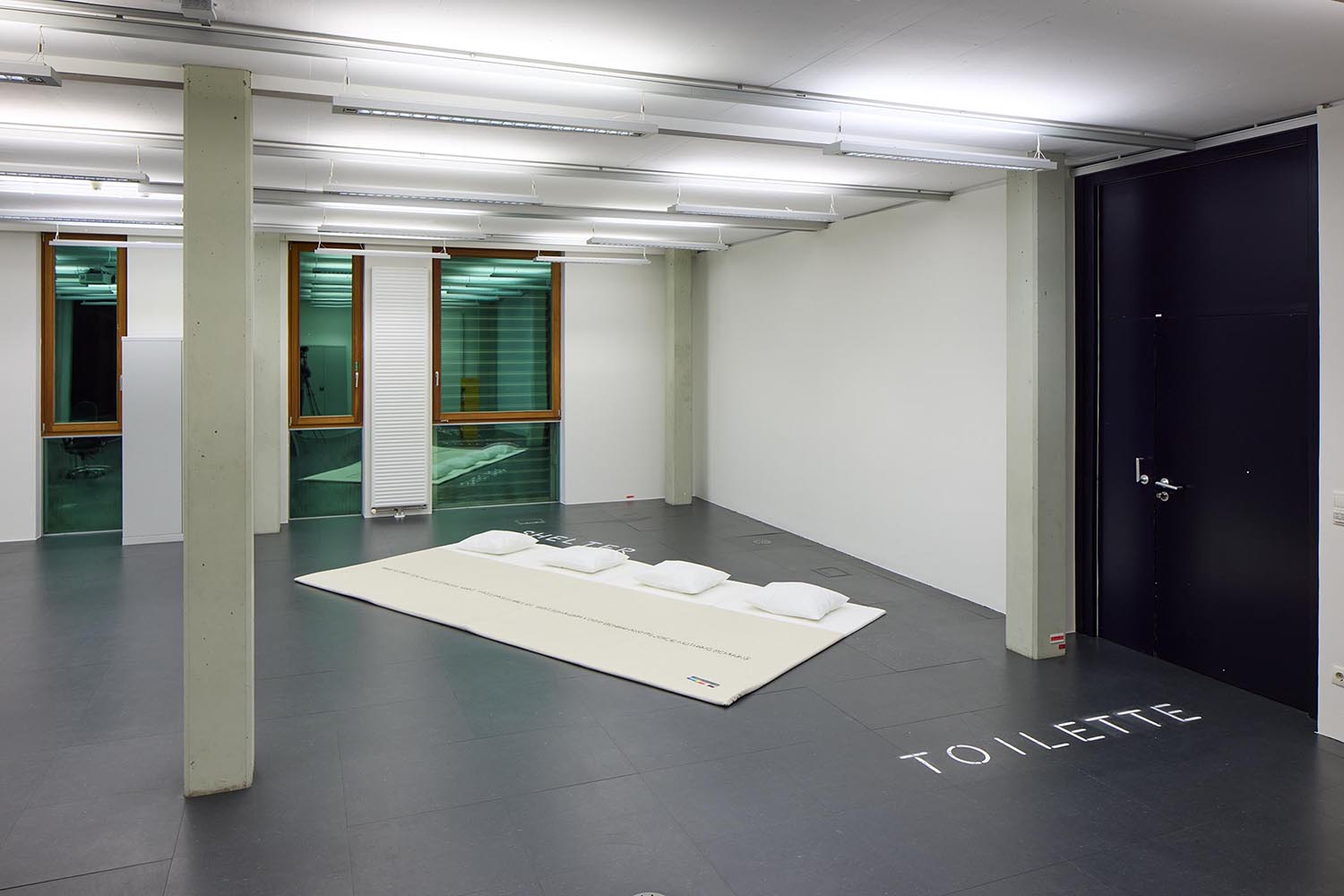
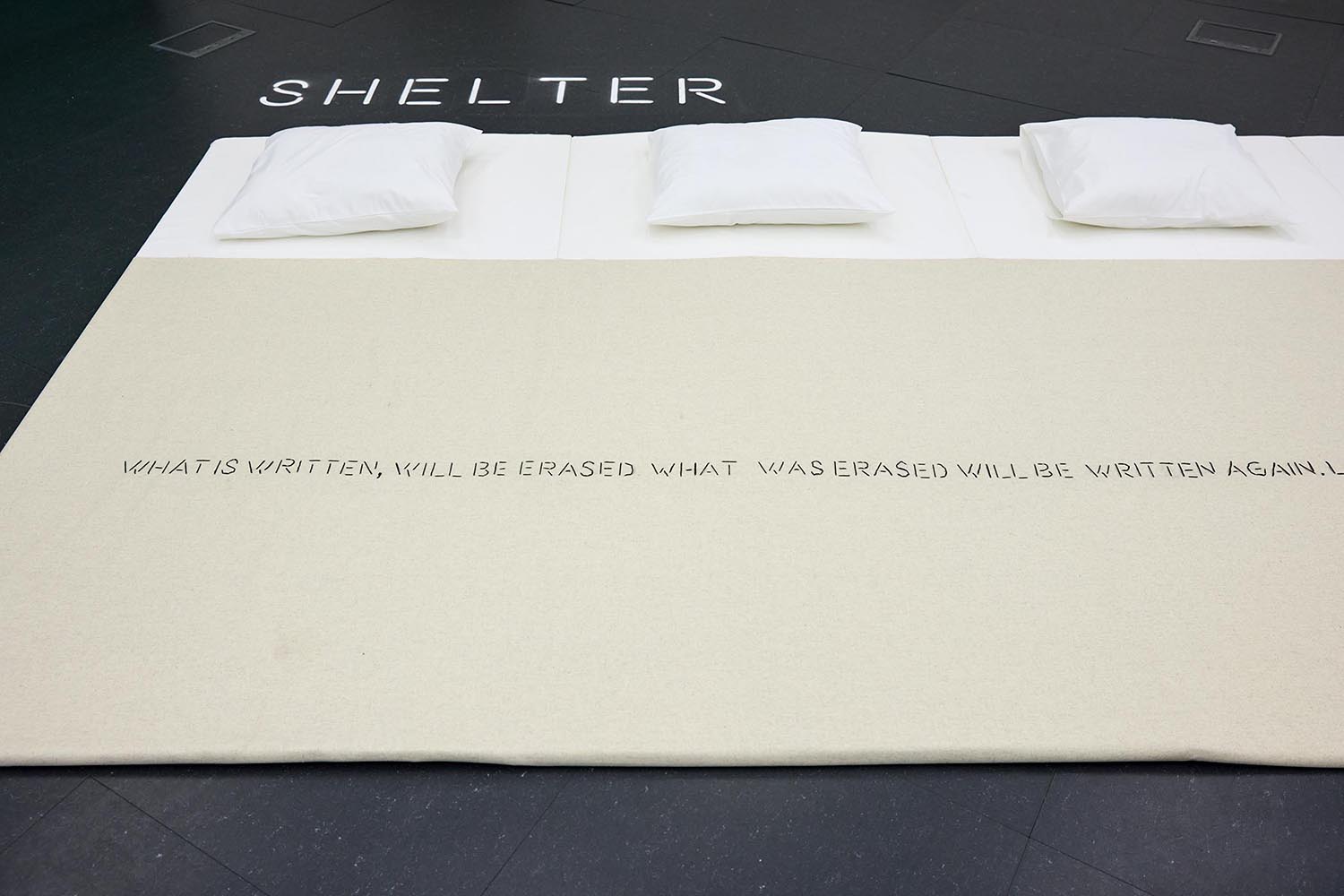
Blueprint for No Museum leaves the exhibition space empty with only a few exemptions. Inside, there is nothing but a sleeping area for several people, and the restroom in the same building satisfies basic human needs. Oscar Cueto’s installation takes place largely outdoors: where employees of local companies cross paths to and from work, where they take their lunch breaks, where passersby occasionally walk their dogs. Blueprint for No Museum is set in a transitional space, a “non-place” as coined by anthropologist Marc Augé, which, unlike the organic growth of cities over time, does not thrive on relationships and identities but was sketched out on the drawing board.
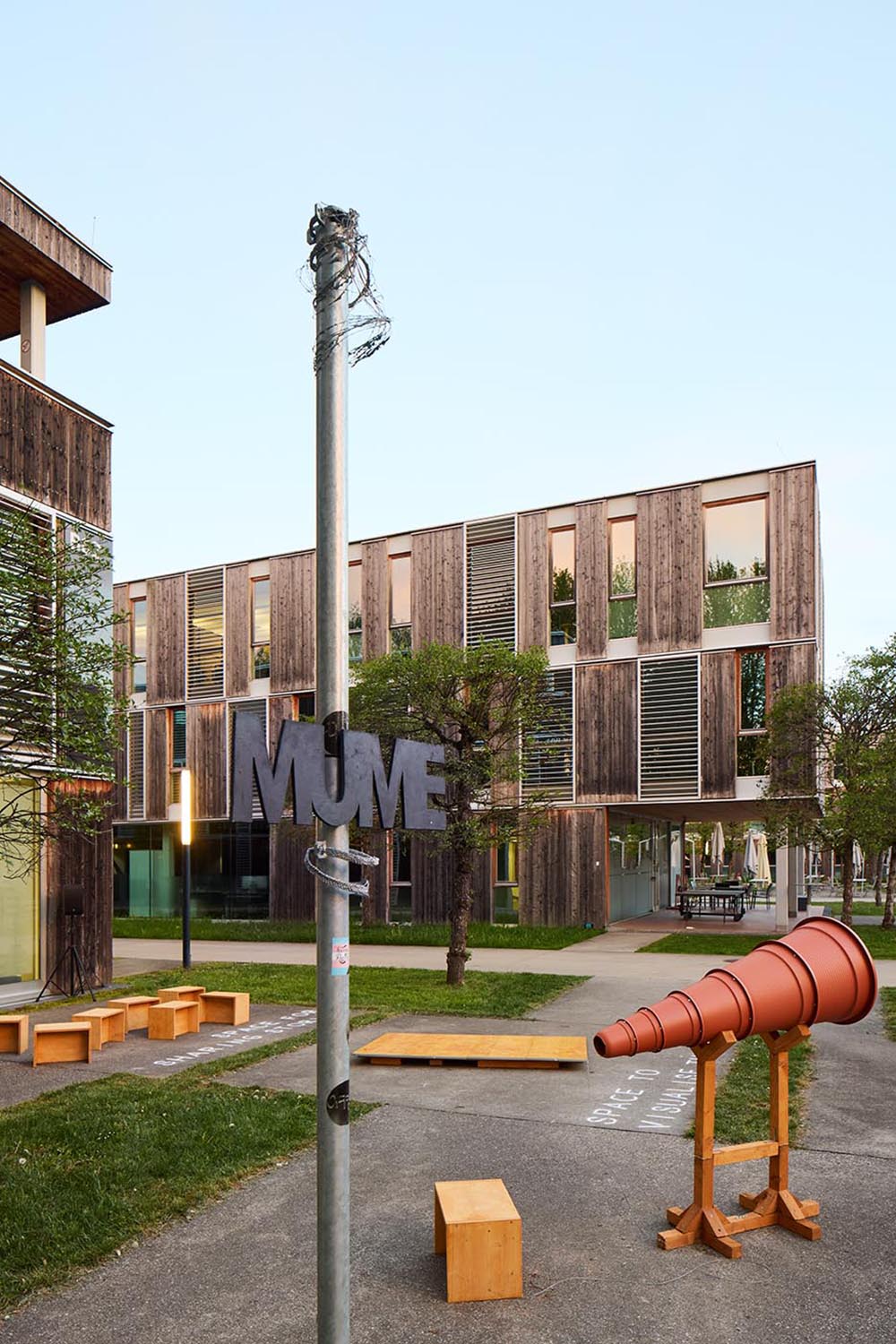
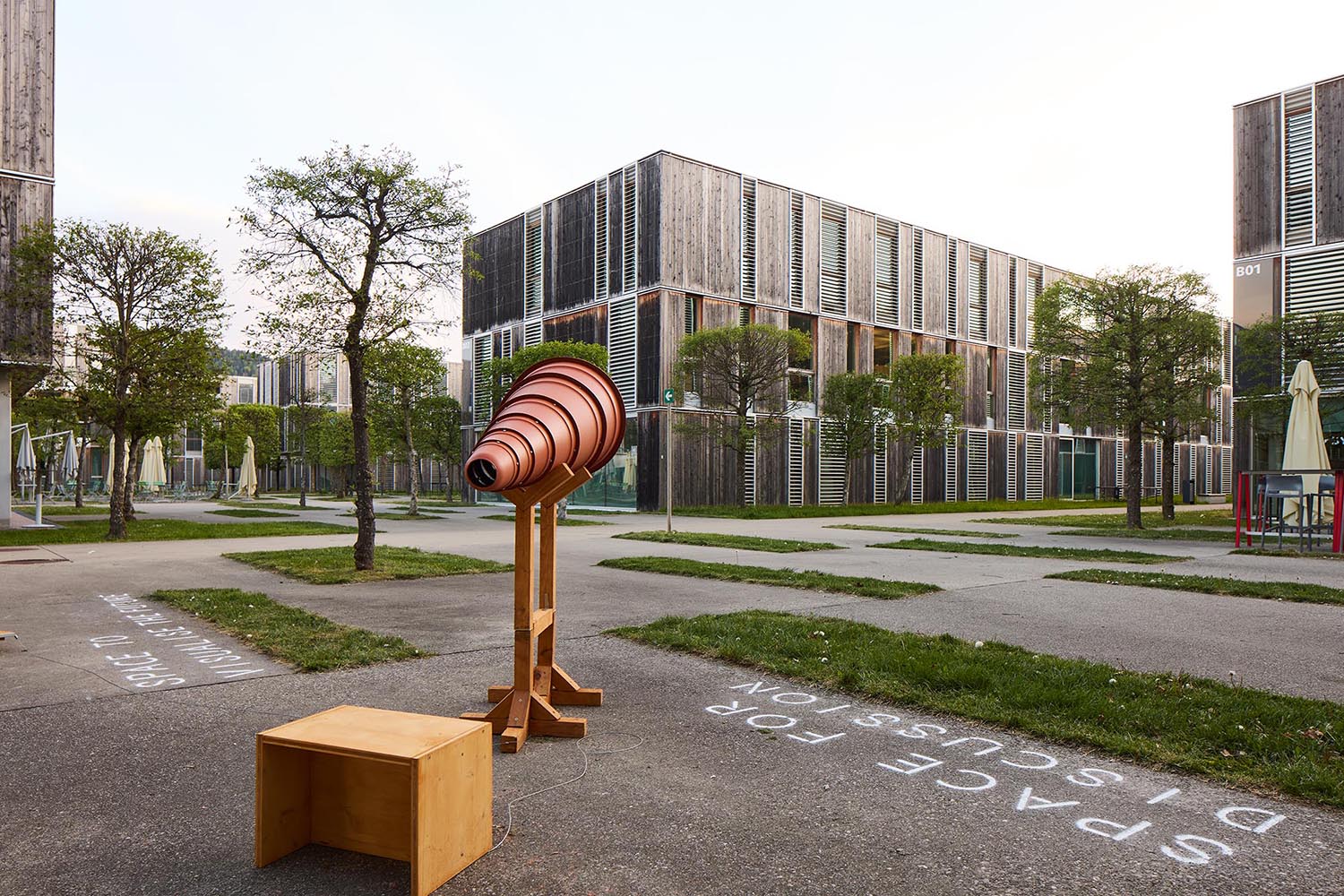
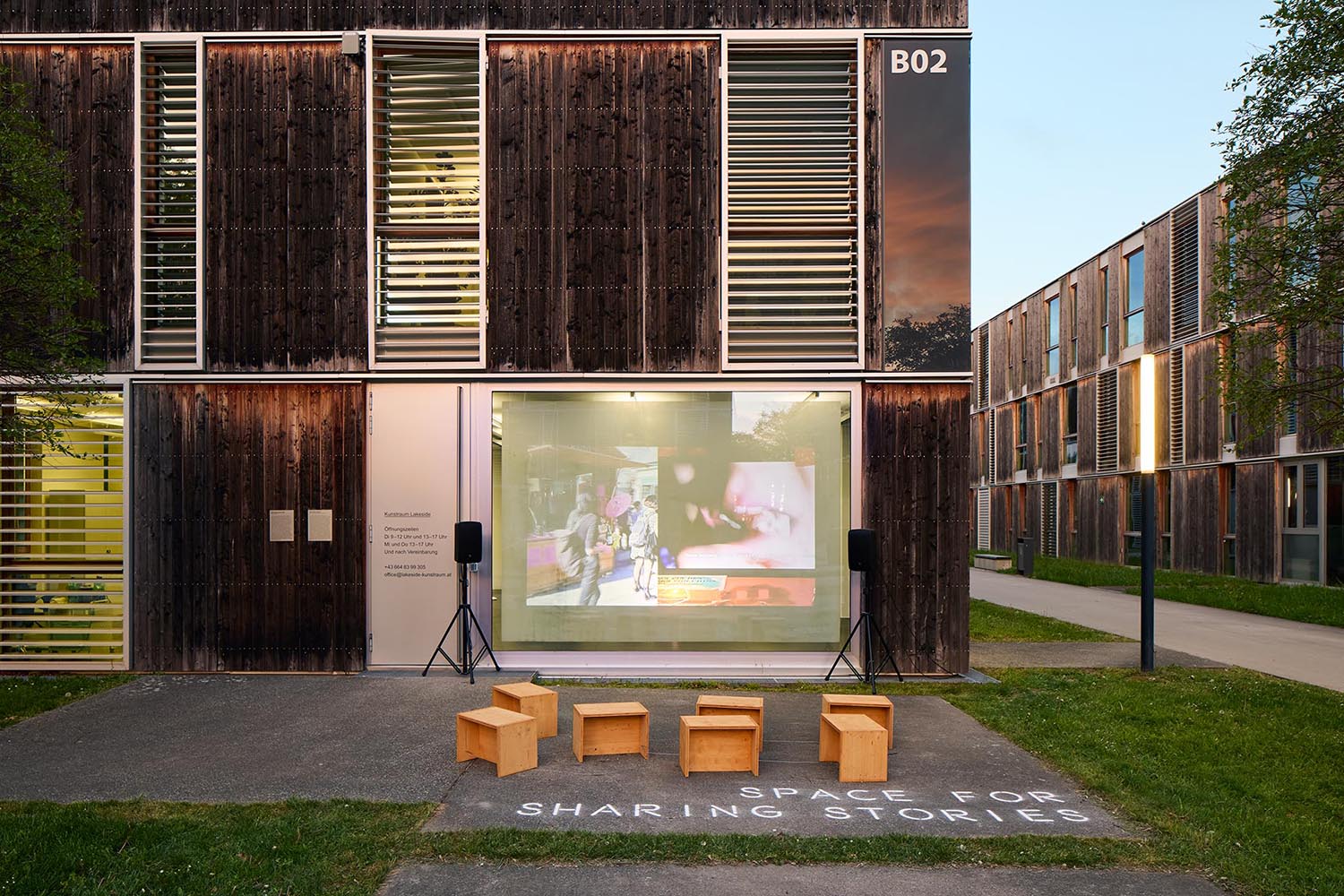
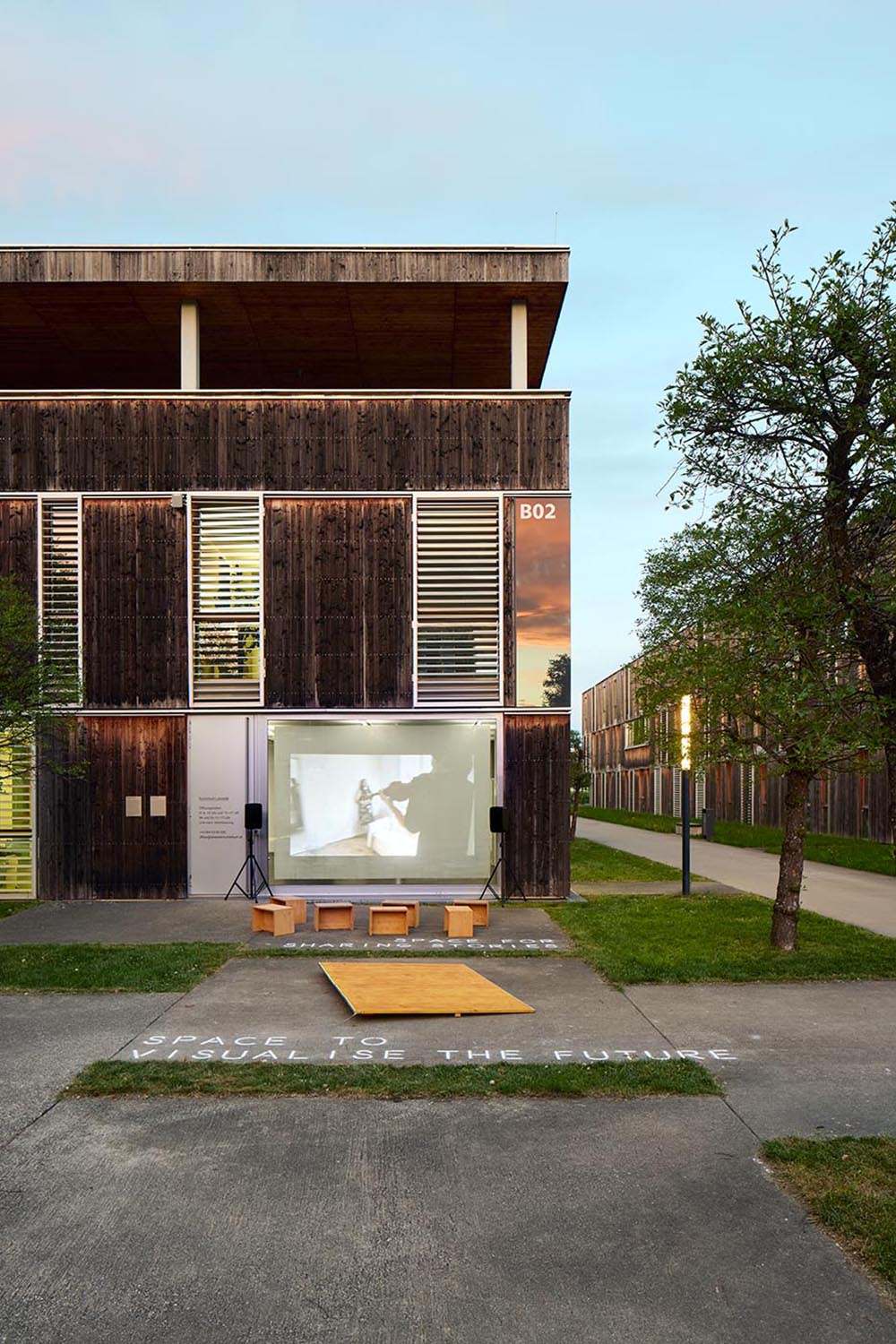
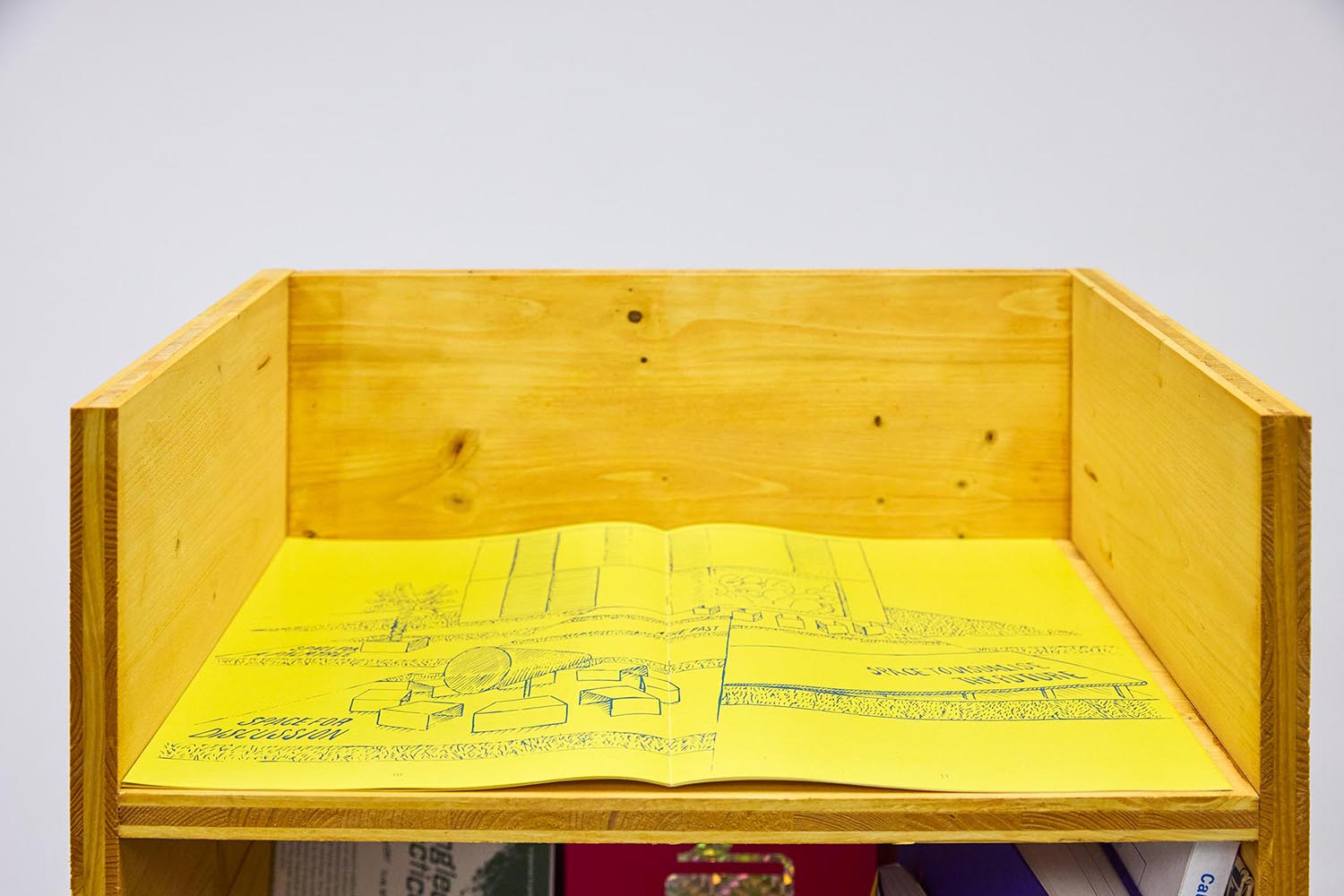
With simple structures made from off-the-shelf wood panels, Oscar Cueto transforms the space in front of Kunstraum Lakeside, a concrete forecourt punctuated by patches of grass. He arranges these objects in various constellations—as small tables, seating elements, or as a container for a palm tree. Together, they form different spatial typologies: spaces for discussion, for collective storytelling, spaces for reflecting on the past and the future in the present—community spaces. Cueto’s structures, indeed sculptures in the tradition of Minimal Art, should foster a sense of community not only in their placement but also their form. Following the motto “Build More, Buy Less!” the designs originate from the open-source and do-it-yourself project Hartz-IV-Möbel (Hartz IV was the name for social welfare benefits in Germany until 2023) by Berlin-based architect Van Bo Le-Menzel. Faced with mounting economic difficulties around 2010, he designed DIY instructions for “Bauhaus”-style furniture in the spirit of social design concepts.
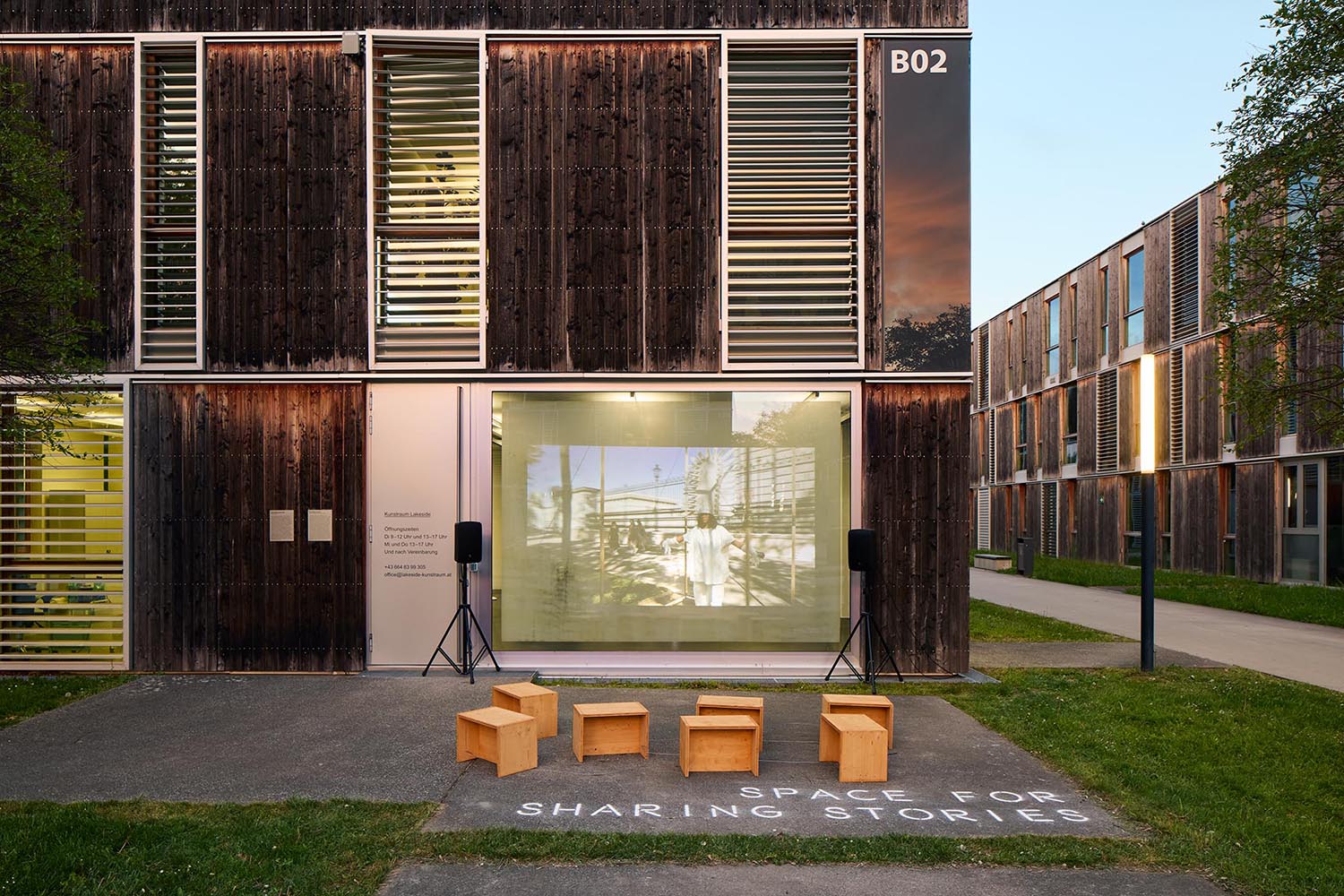
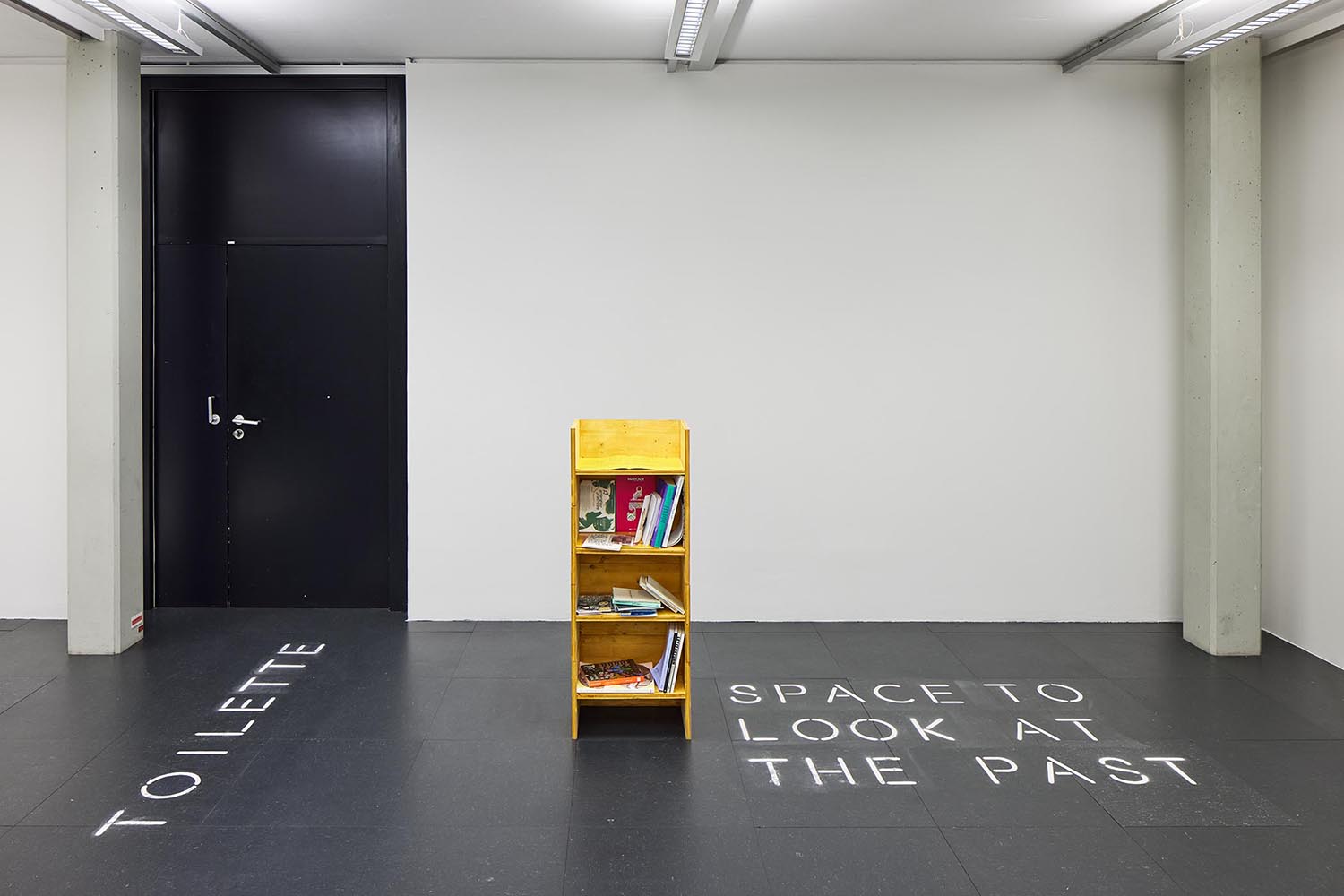
The spaces Cueto creates around the Kunstraum can be used in multiple ways, too. For example, the large display window transforms on occasion into a cinema screen for films by the artist’s colleagues, such as Marie-Christine Camus, Marisa Raygoza, Larissa Escobedo, Israel Martinez, Yanieb Fabre, and Juanjosé Rivas, which have been shown at various venues as part of the MUME Museo Mexicano program over the past ten years. In this case, the sculptures form theater seat rows. In another setting on the forecourt, the same sculptures are positioned in a circle and invite visitors to engage in group discussions—an idea further amplified by an oversized megaphone in the middle of the group. A ramp made from the same type of wood panels encourages visitors to adopt new viewpoints and discover MUME’s visions of the future on the horizon, ones based on collaboration, migration, and geopolitical transformation. Inside the Kunstraum, a seating sculpture doubles as a nightstand in the sleeping area, which the artist temporarily opens to the public. Other components combine to form a bookshelf that displays publications by the Fehras Publishing Practices collective as recommended reading material. Fehras’s publishing work focuses on the history and present state of publishing in relation to the socio-political and cultural context of the Eastern Mediterranean, North Africa, and the Arab diaspora. Further contributions include books by Enar de Dios Rodríguez and Andrea Steves, Juan Pablo Macías, Lorena Moreno Vera, Maiz, Gabriela Sandoval, Carla Ripley, RRD, Frida Robles and Kathrin Heindrich, Israel Martínez, Miguel A. López, IN_SITE, Manuela Picallo Gil, Helena Tahir and PrivatePrint.
True to the self-help ethos, Oscar Cueto’s exhibition at Kunstraum Lakeside—and, more broadly, at MUME Museo Mexicano—is per se a DIY manual. Not a DIY manual for building a museum but a manual for no museum. An exercise not in accumulating and preserving cultural capital but in cultural attitude: an exploration of continuously evolving artistic strategies and methods of social sustainability, an open-ended cartography of action fields staked out by autonomy, ongoing learning through practice, creativity instead of consumption, resource conservation through repair and reuse, and, last but not least, knowledge sharing for the good of the community. At Kunstraum Lakeside and the Science and Technology Park, Blueprint for No Museum sits like a thorn in the flesh in the thorn in the flesh. With his anti-museum, Oscar Cueto inscribes himself into an institutional script underlying a matrix of economic, scientific, and cultural research, practices, and discourse. While it stands for the mediation and reconciliation of divergent perspectives on shared social conditions and was born out of a spirit of resistance, the inherent institutional (self-)constraints inevitably play a decisive role, just as in any other institution. Cueto exposes precisely this script.
Oscar Cueto (b. 1976 in Mexico) lives and works in Vienna and Mexico City.
www.oscarcueto.com
Publication
Accompanying the exhibition, a publication will be released that looks back on MUME’s activities since its founding in 2017.