Permanent installation
Opening, May 8, 2025
As part of the exhibition I am the grass. Let me work
In cooperation with ERINNERUNGS Jahr 2025 LETO SPOMINJANJA
Julius Pristauz’s artistic practice is marked by permeability: installations and architectural settings with a performative approach or performances in which objects, sculptures, even entire spaces become protagonists; found objects freed from the constraints of fixed functions but have the potential to be used as tools; membranous surfaces that are translucent yet obscure the view of what lies behind; topics of queer subjectivity that evade appropriation by social, political, or cultural categories; autobiographical works that point beyond their own horizons to modes of collective action; contemporary pop culture that is aware of historical contexts.
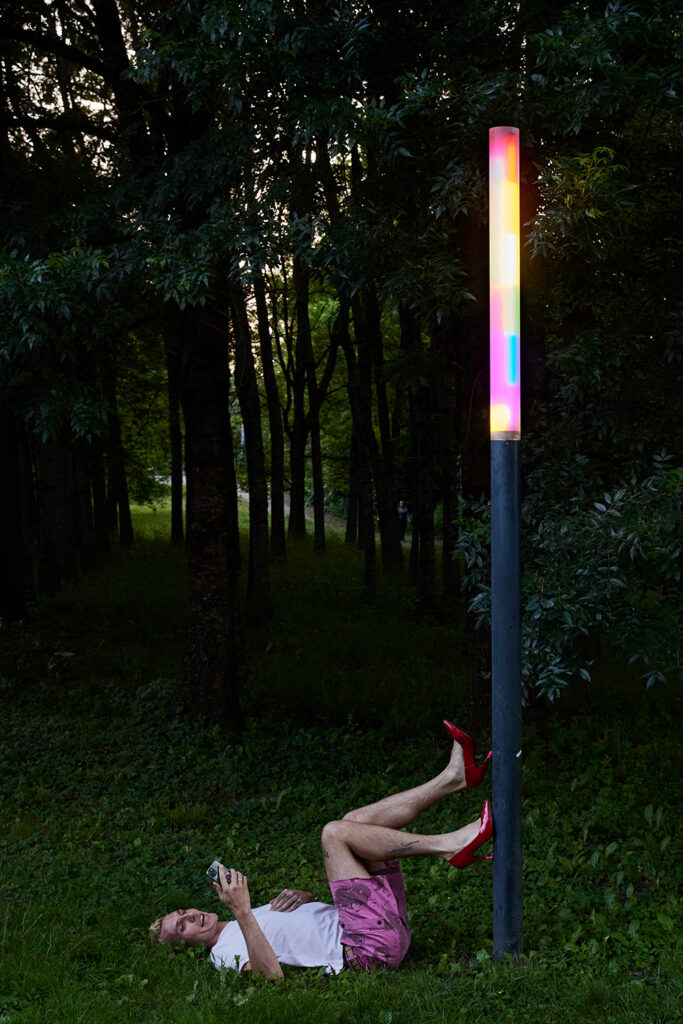
notes on “forever more” (autobiographical blur)
Performance, June 12, 2025, after sundown
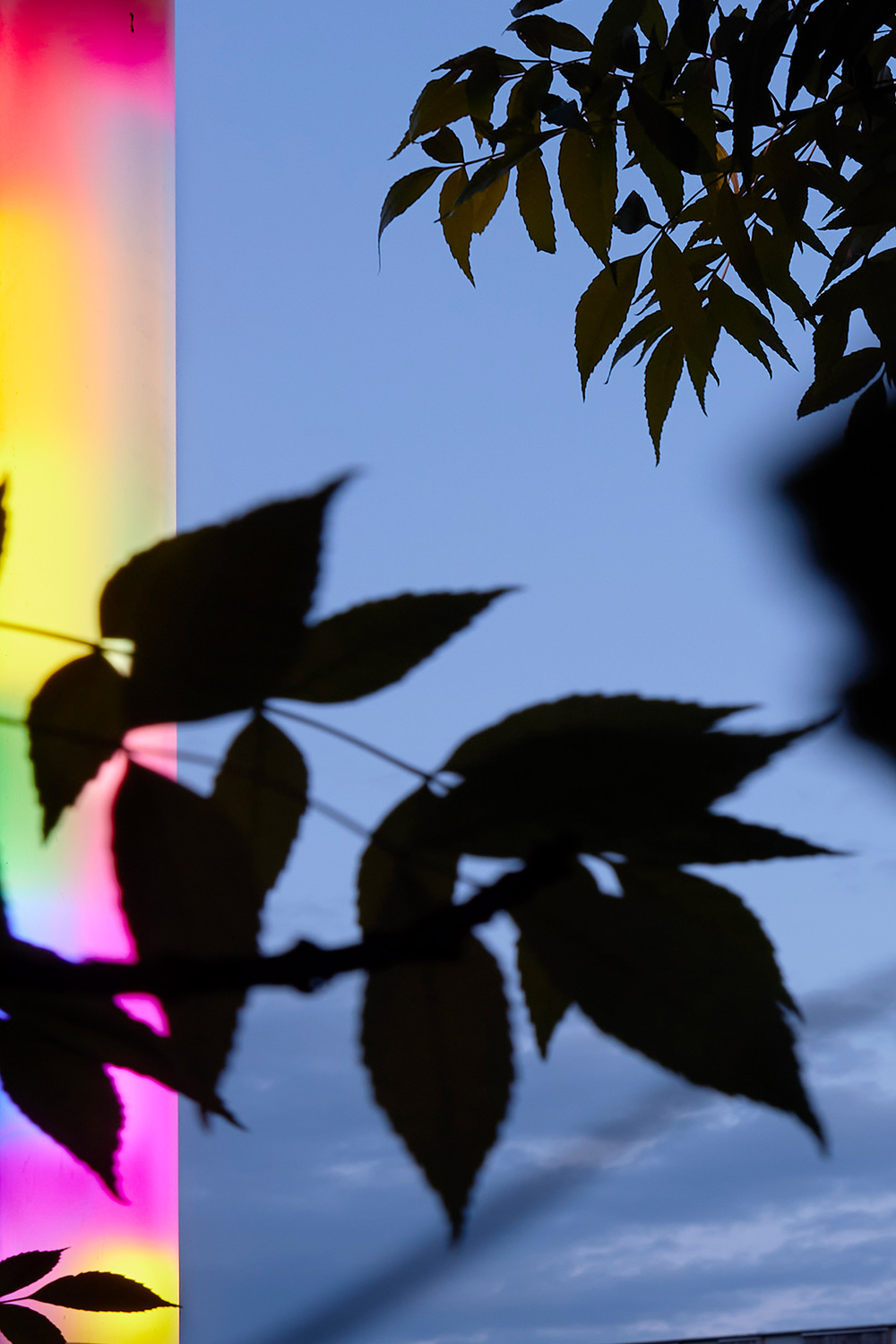
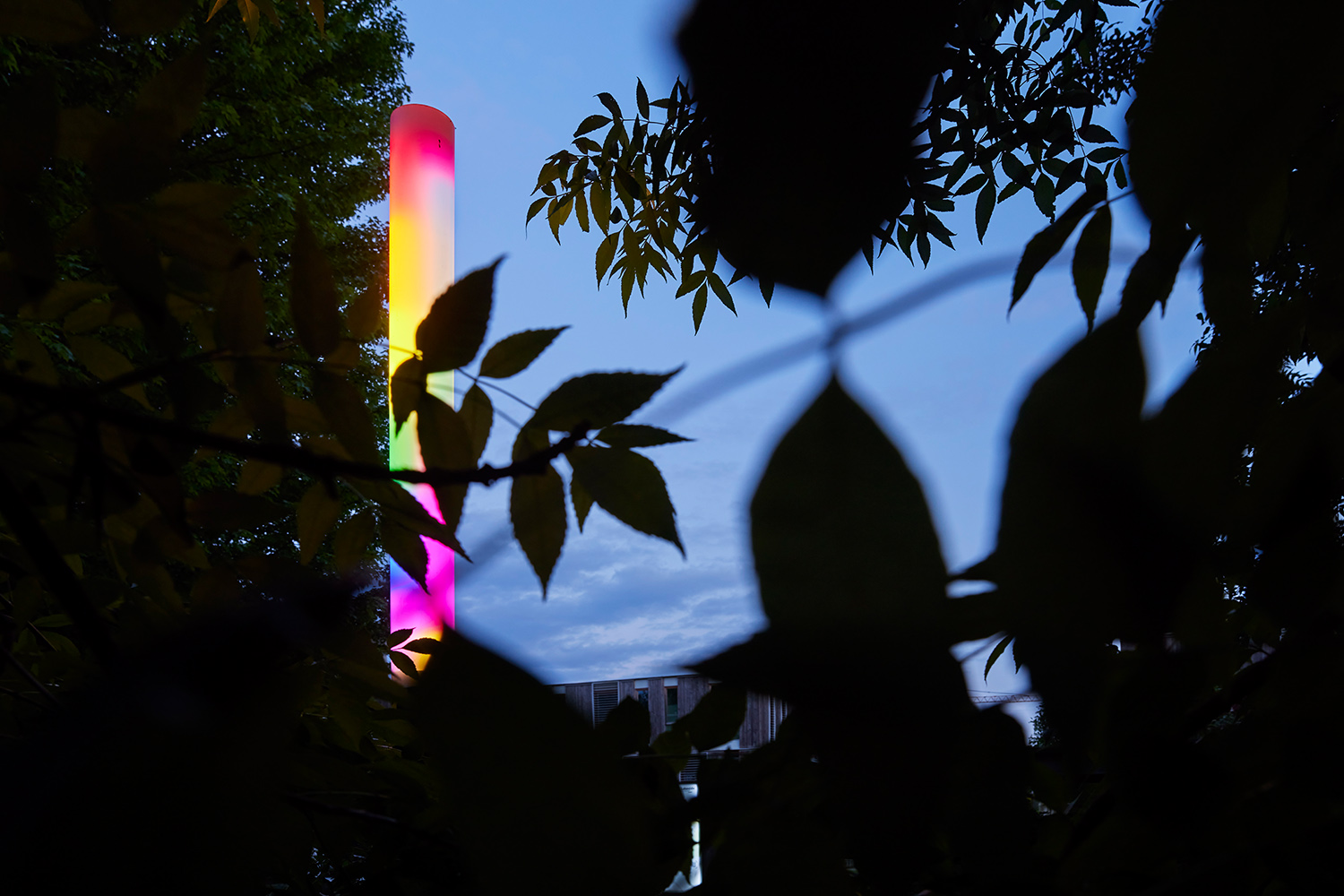
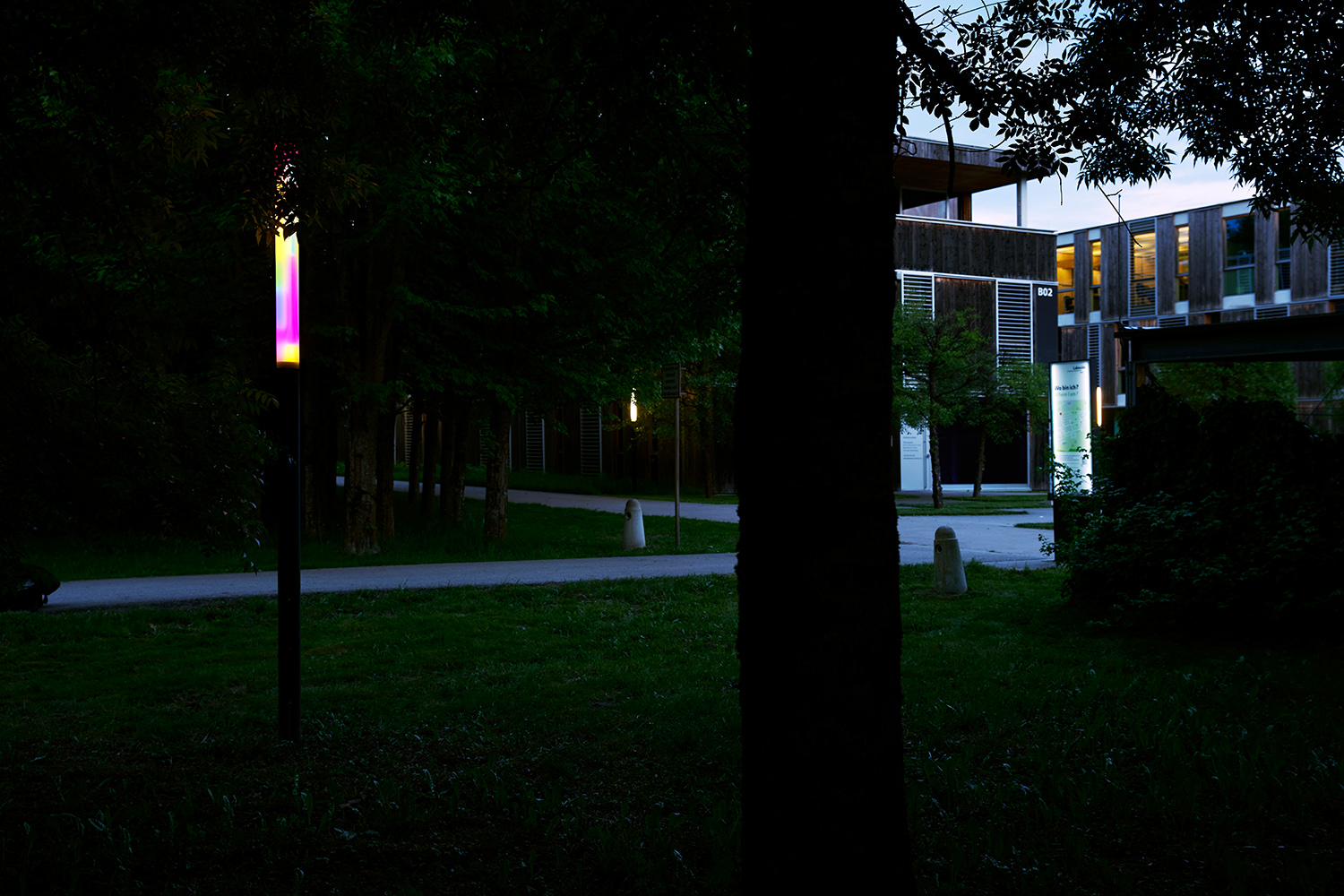
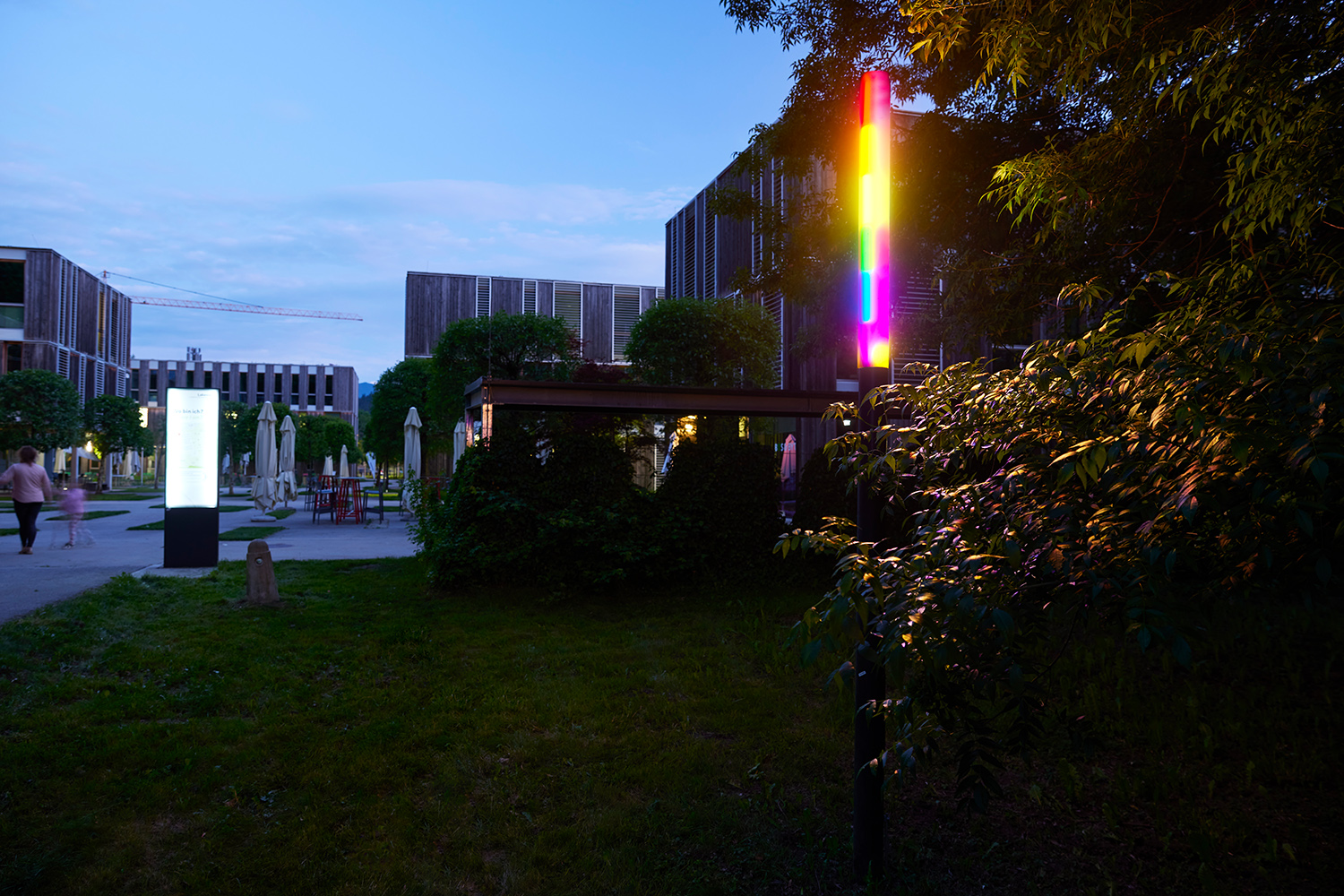
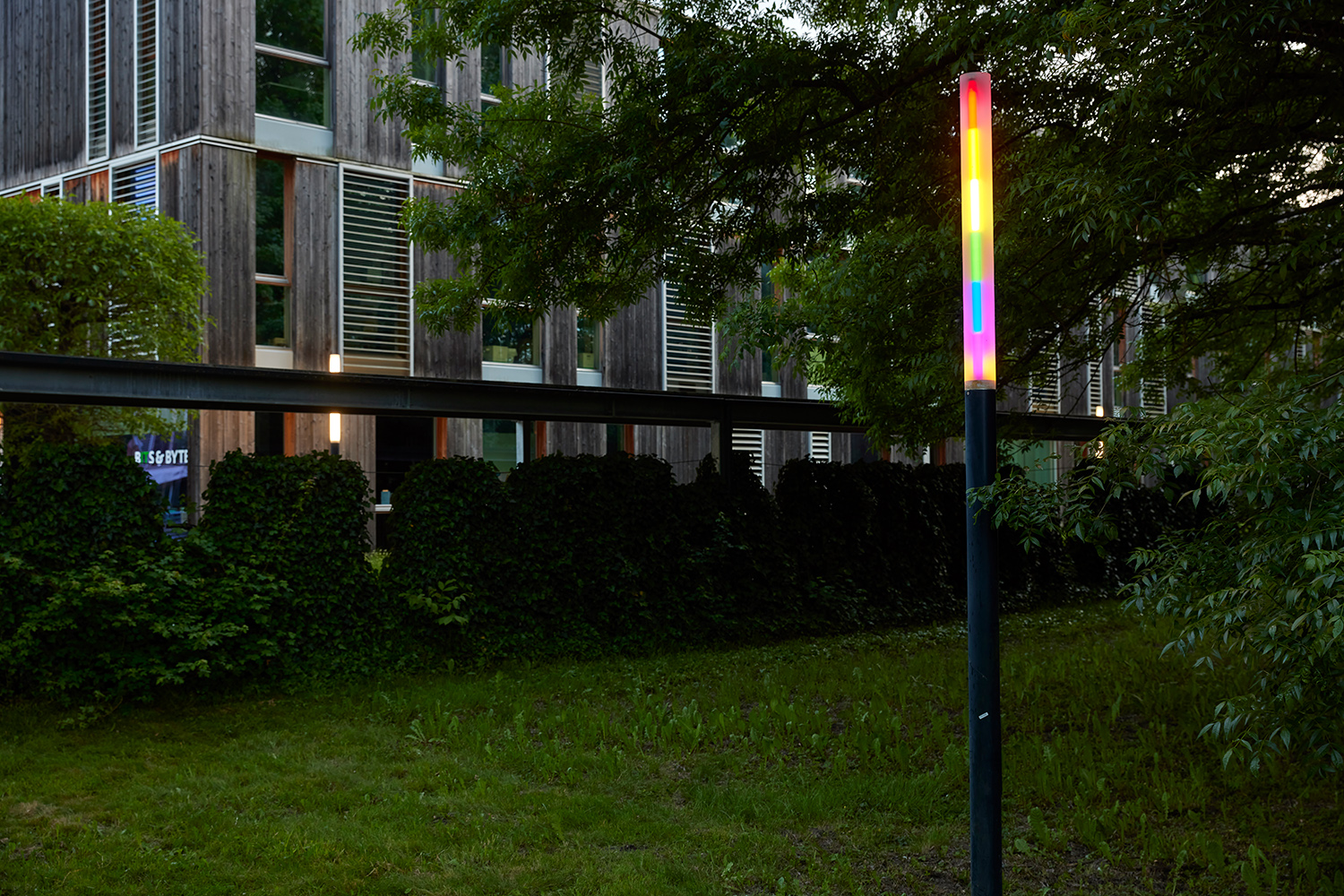
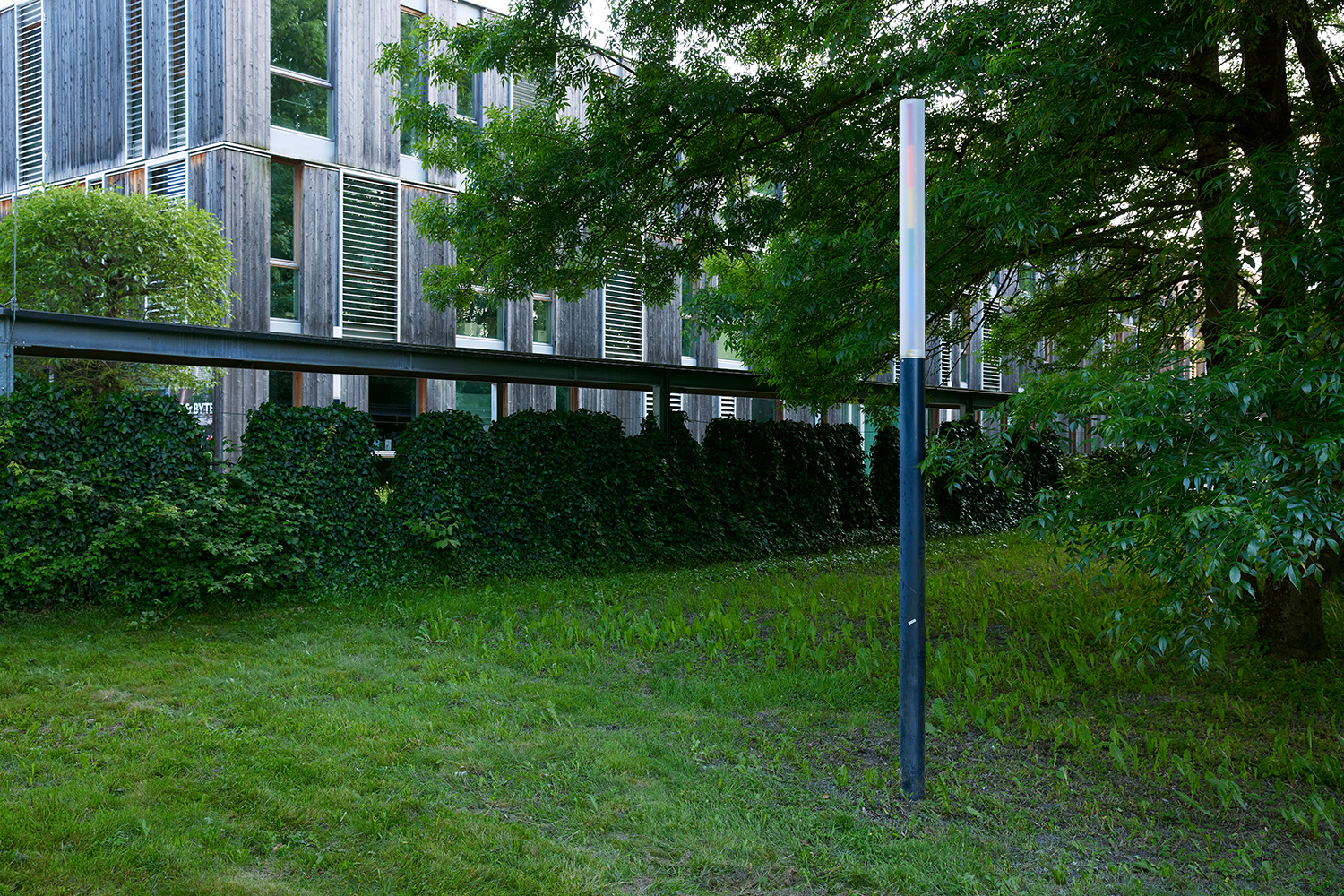
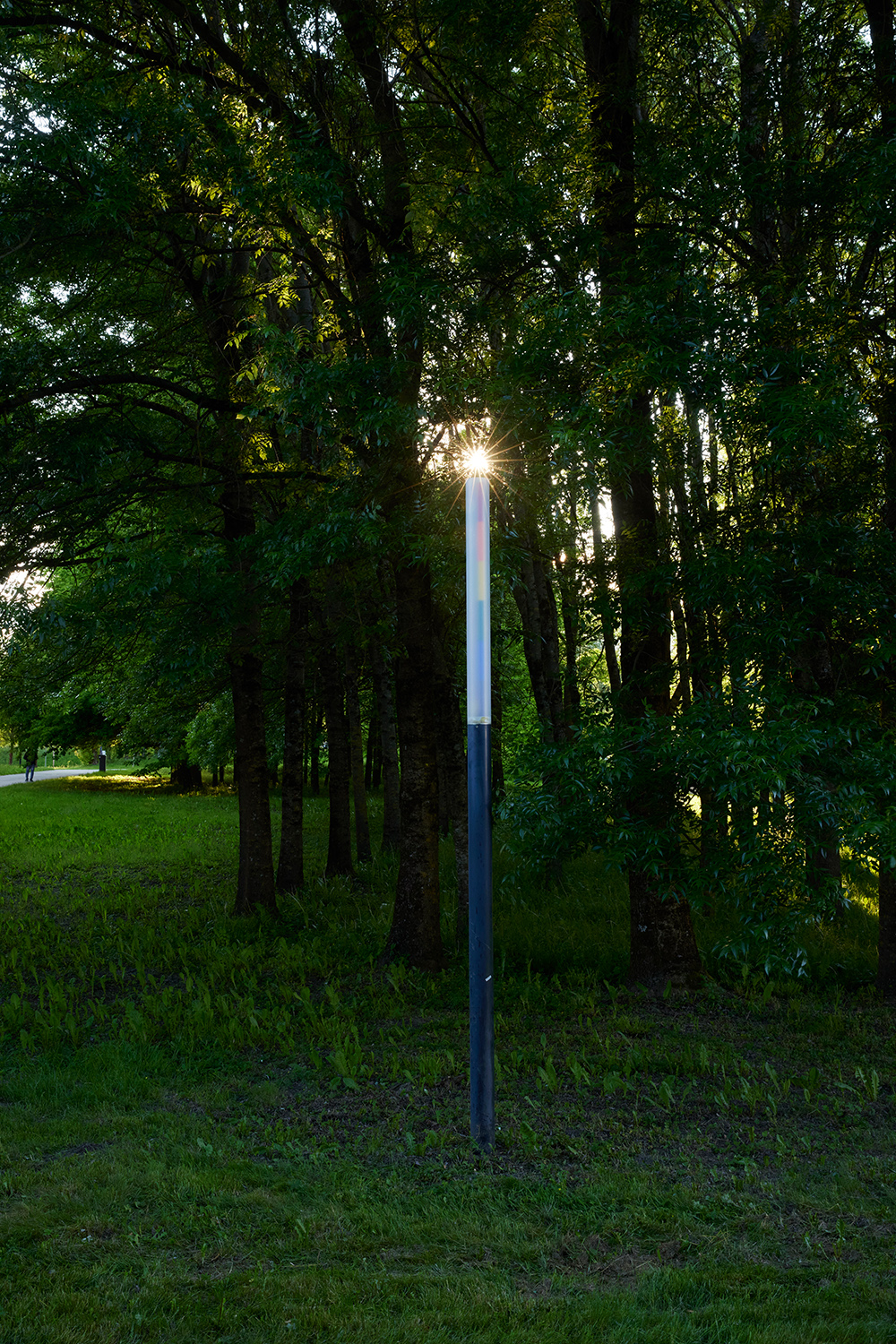
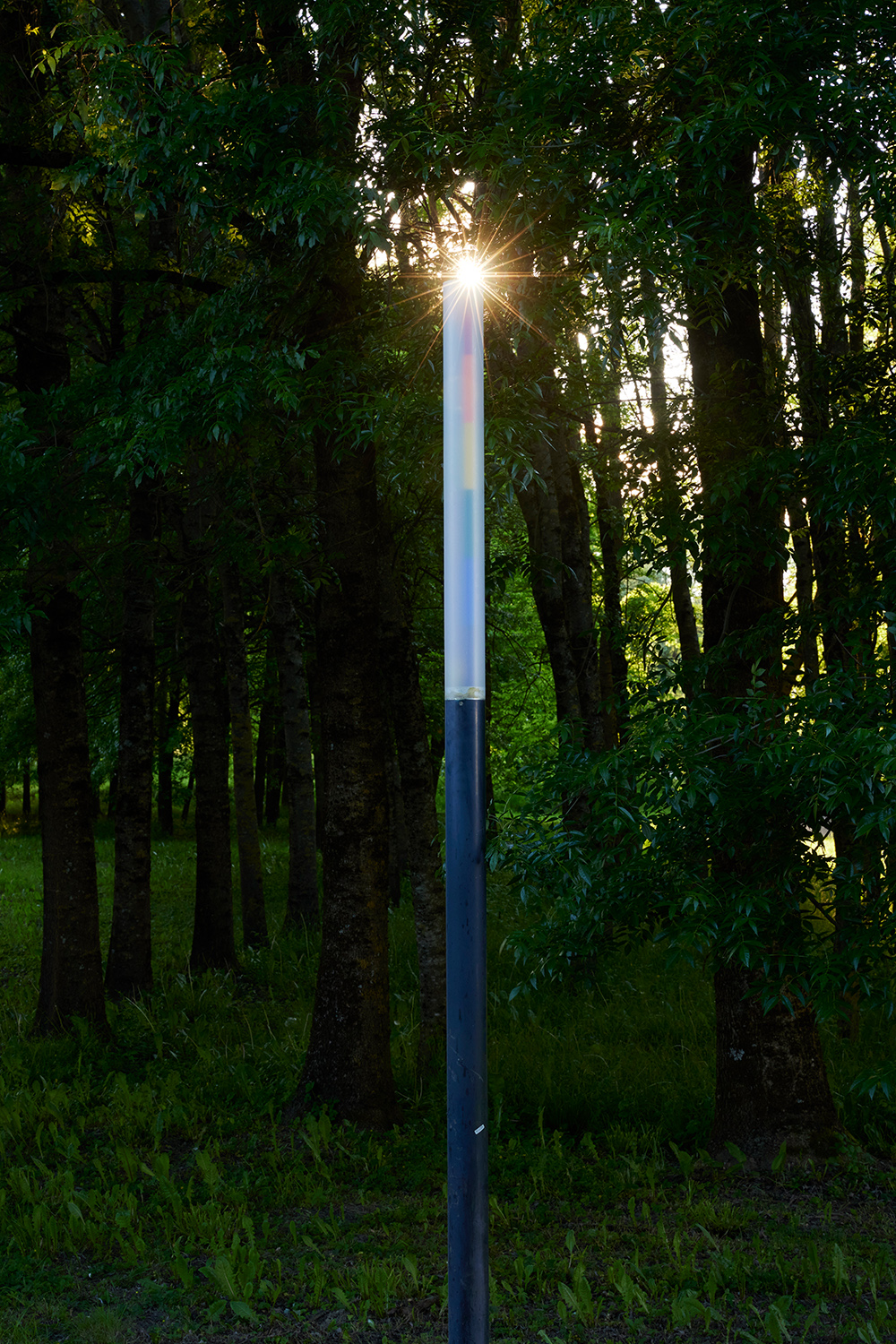
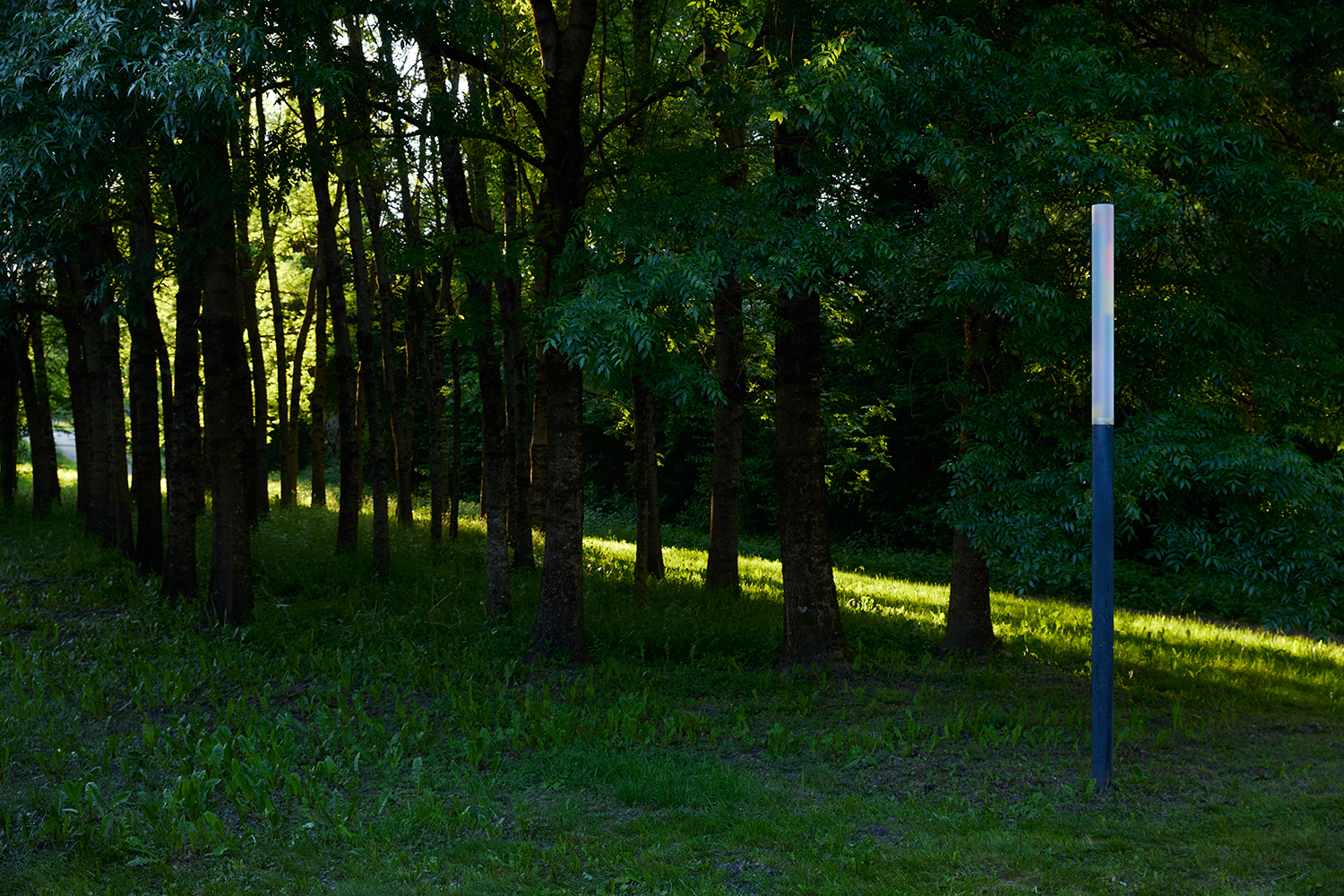
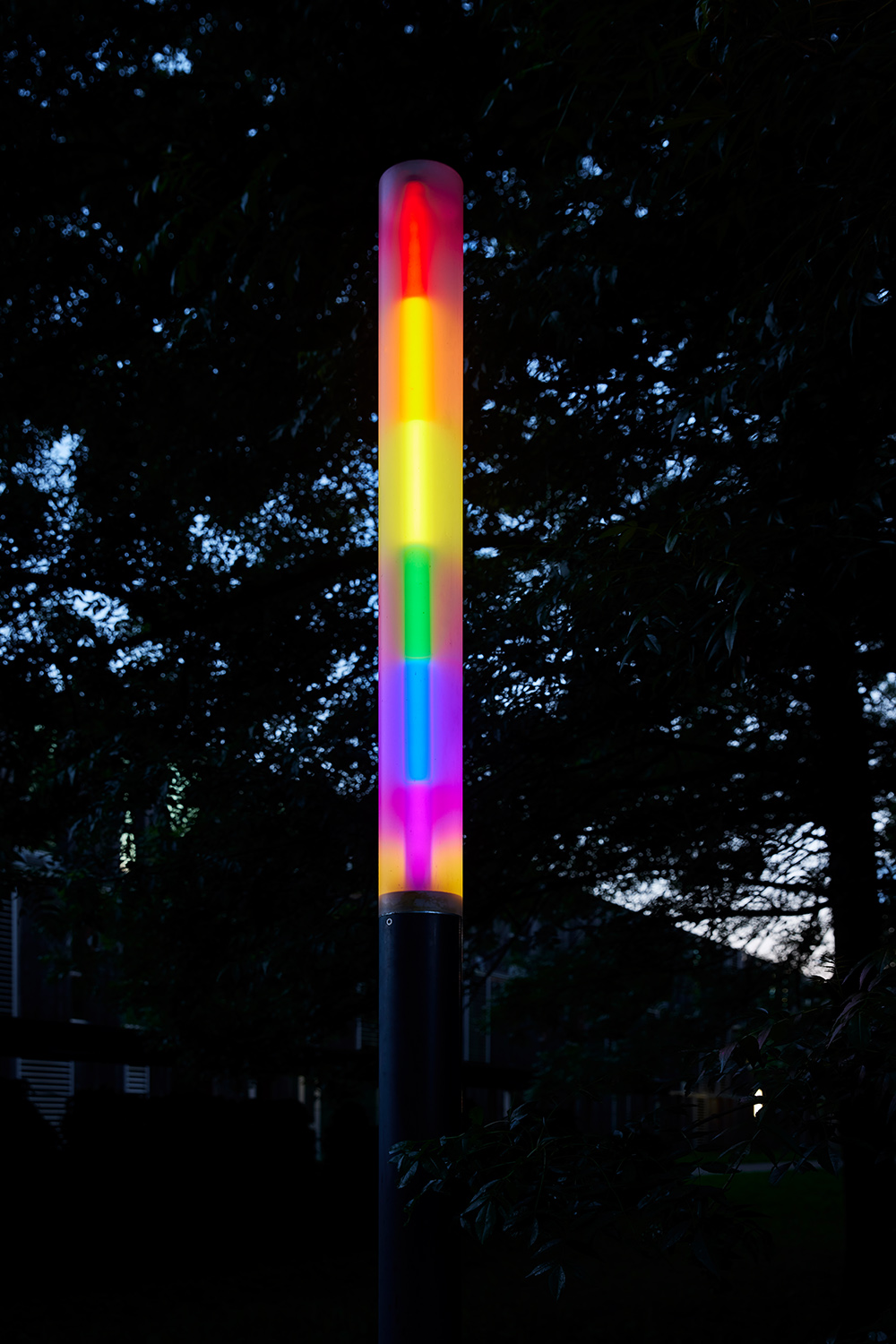
In forever more (structural blur), Julius Pristauz deploys all of these means to draw public attention to the longstanding and ongoing discrimination and persecution of people. Because they are gay, lesbian, or trans, because they desire both men and women, or because they do not fit into a normative world view for whatever reason. Pristauz has made a monument in the Lakeside Science & Technology Park for all these people who do not (want to) live and/or love according to established conventions. A subtly modified light fixture becomes a sign, a sculpture. Situated between the Technology Park and the University of Klagenfurt, it is quite inconspicuous during the day. At first glance, the light is virtually identical to the other lights. It occupies the space intended for it. It fulfills its purpose. Only upon a closer look can a color spectrum be made out behind the frosted glass of the cylindrical lamp—as a soft shimmer, a hint, a possibility among many. “Unlike a possibility, a thing that simply might happen, a potentiality is a certain mode of nonbeing that is eminent,” writes queer theorist José Esteban Muñoz in Cruising Utopia about the unique aspects of queer alternative economies that operate outside normative concepts of life, “a thing that is present but not actually existing in the present tense.”*
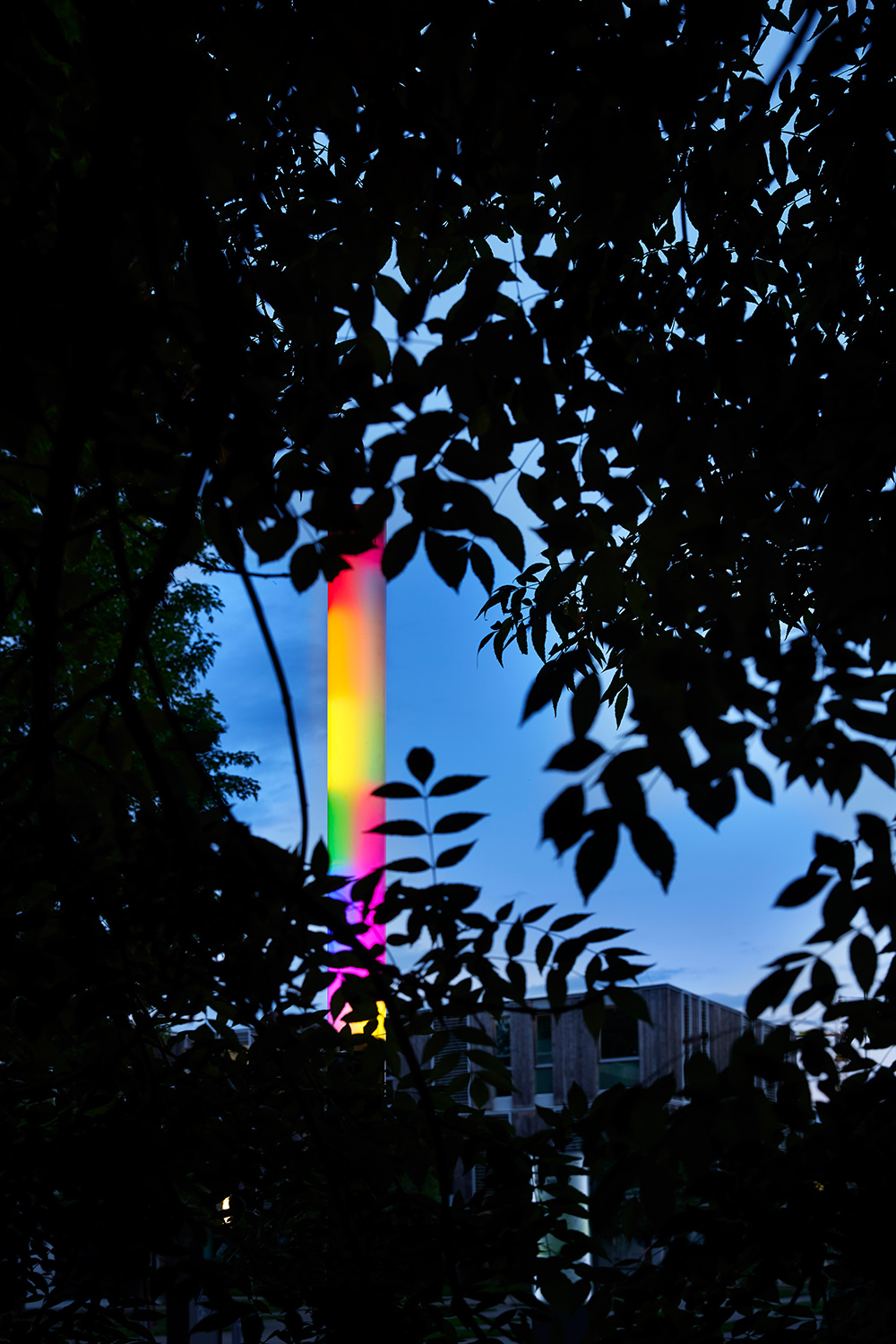
The monument only unfolds its full potential in the dark. Dancing out of line, it behaves like a dysfunction, revealing the system and structure in which it occurs. The nocturnal glitch “manifests with such variance, generating ruptures between the recognized and recognizable, and amplifying within such ruptures, extending them to become fantastic landscapes of possibility,” says Legacy Russell about the technological glitch as a social phenomenon. It is “the opportunity to recognize and realize ourselves, ‘reflecting’ to truly see one another as we move and modify.”** Situated somewhat off to the side, in a transition zone, the lamp is different than its neighbors, but it still fulfils its purpose of guiding the way. In the belief that light outlasts time,*** Julius Pristauz’s intervention forever more (structural blur) sends a strong signal for equality and diversity in the cityscape of the Science and Technology Park. This at a time when hard-won rights around the world are once again under threat of being curtailed and restricted by politics. Light, which provides orientation in the dark, can take on a dazzling spectrum, spreads in waves, and is able to penetrate translucent materials and bodies, performs what it stands for here: radiant and enduring permeability.
Julius Pristauz (b. 1998 in Austria) lives and works in Berlin.
www.juliuspristauz.eu
* José Esteban Muñoz, Cruising Utopia. The Then and Now of Queer Futurity (New York: New York University Press, 2019), 9.
** Legacy Russell, Glitch Feminism: A Manifesto, (London: Verso, 2020), eBook.
*** The sculpture is part of the exhibition I am the grass. Let me work, which focuses on the complex interplay between remembering and forgetting—80 years after the end of the Second World War—in Klagenfurt and beyond the city limits. With forever more (structural blur), Julius Pristauz commemorates all the people who were persecuted by the Nazi regime in Carinthia because of their sexual orientation.